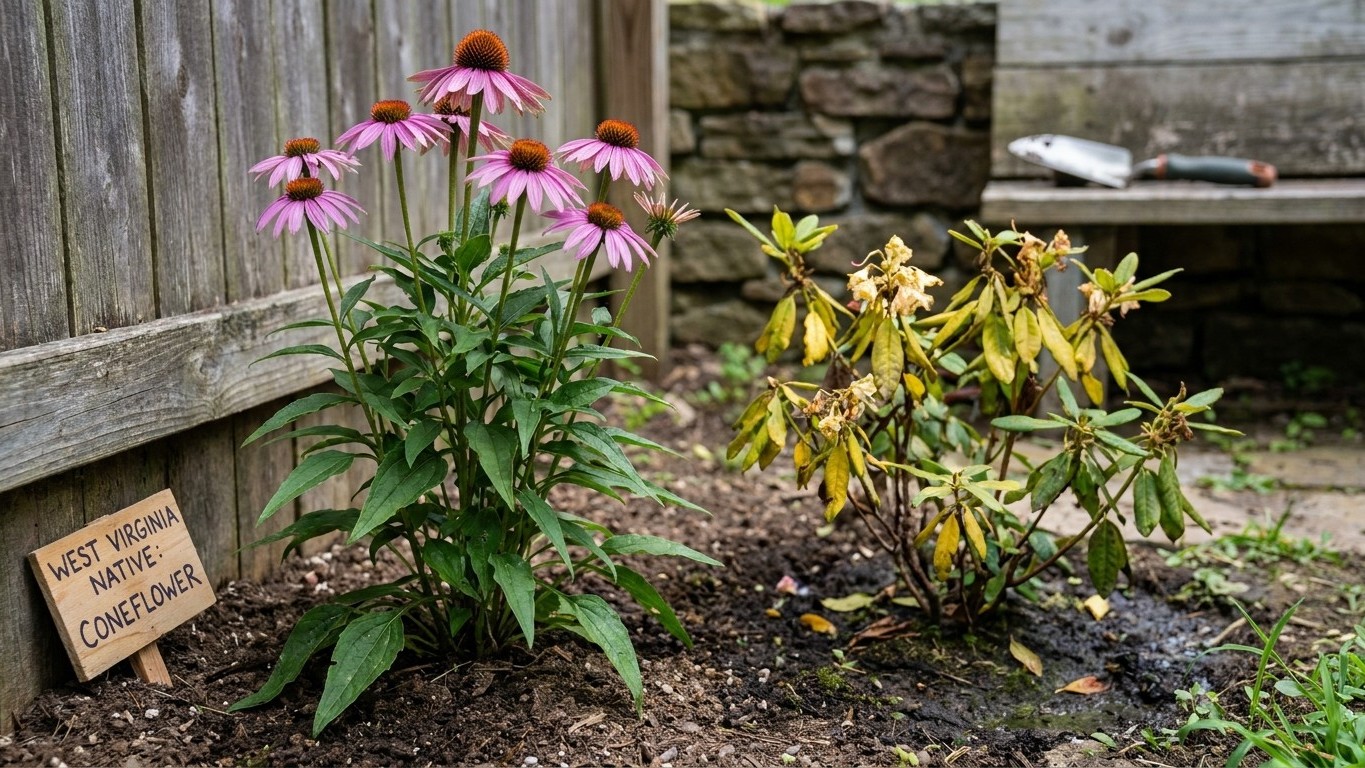

Flowers that thrive in West Virginia are the ones built for a cold winter and a humid, moderately hot summer: peonies, daylilies, coneflowers, black-eyed Susans and garden phlox all perform well across the state’s USDA zones 5a to 7a, per the USDA Plant Hardiness Zone Map’s 2023 update. What struggles is anything bred for dry heat or a long frost-free season, since Charleston averages just 16.0 days a year above 90°F, according to NOAA’s 1991-2020 climate normals. Check the USDA zone printed on a plant tag against your own elevation before you buy, since the state spans two full zones from river valley to ridge.
What thrives in West Virginia

Your flowers either handle a real winter or they don’t, and here that’s the whole game — the coldest month’s average low sits around 26°F, and anything bred for a milder range dies back a little more each year until it just stops coming up. Peonies, daylilies, coneflowers, black-eyed Susans and garden phlox shrug that off without a second thought. Before you plant anything new, check the zone on the tag against where your yard actually sits, because a ridge forty miles from the valley can be a whole zone colder.
West Virginia’s USDA hardiness range runs from 5a to 7a statewide, per the USDA Plant Hardiness Zone Map’s 2023 update built on the 1991-2020 normals. Charleston itself sits toward the warmer end of that range, but higher elevations in the eastern counties and the mountains run colder, sometimes by a full zone or more. A flower that overwinters fine in a Kanawha Valley garden can die back completely on a ridge forty miles away, so match the plant tag to your own elevation, not to the state average.
Heat and humidity matter as much as cold
Summer is the other filter. Charleston sees 16.0 days a year at 90°F or above on NOAA’s normals, and the humidity that comes with those days is harder on plants than the heat itself. Powdery mildew, black spot and root rot from waterlogged clay all show up faster in humid heat than in dry heat. This is exactly where plants bred for the arid Southwest fall apart here: a lavender or a rosemary that laughs off drought in a garden covered in our Arizona flowers guide often rots at the crown in a wet West Virginia July, because the problem there is water loss and the problem here is water sitting.
The families that handle both ends, cold winters and humid summers, tend to be the same ones that show up in every reliable West Virginia border: the daisy family (coneflower, black-eyed Susan, Shasta daisy), the peony family, and mint-family perennials like bee balm and salvia that tolerate wet feet better than true Mediterranean herbs.
- Cold-hardy to at least USDA zone 5: survives the average winter low without dieback to the roots
- Tolerant of humid heat: resists powdery mildew and fungal leaf spot through a wet summer
- Adapted to clay or heavy loam: won’t rot if drainage is imperfect
Native plants worth the space
A native plant that has spent thousands of years in this region’s soil and rainfall pattern does not need you to baby it once it is established. It arrives with a root system built for the local clay, a bloom time timed to the local pollinator calendar, and no expectation of the extra water and fertilizer a nursery-bred hybrid often demands. That is the whole case for natives in a border: lower long-term maintenance, not necessarily a showier flower.
Purple coneflower (Echinacea purpurea), black-eyed Susan (Rudbeckia hirta) and wild bergamot (Monarda fistulosa) are native across the wider Appalachian and eastern U.S. region and are about as forgiving as a perennial gets here. Butterfly weed (Asclepias tuberosa) is the milkweed most gardeners plant on purpose, since it is the only host plant monarch caterpillars can eat, and it tolerates the state’s summer humidity better than some of the moisture-loving milkweed species. New England aster (Symphyotrichum novae-angliae) closes out the season in September and October with a wave of purple that native bees rely on when little else is blooming.
Shade natives for the woodland edge
Not every native flower wants full sun. Virginia bluebells (Mertensia virginica) and foamflower (Tiarella cordifolia) are native to eastern woodlands and do well under the dappled shade of a tree line, blooming in spring before deciduous canopy leafs out and then going dormant or staying low through summer. If your lot backs onto woods, a shade native does something a sun perennial cannot: it fills a spot most nursery perennials sulk in.
The pollinator argument is not abstract. A native flower’s bloom shape, nectar chemistry and bloom timing evolved alongside the specific bees, moths and butterflies that still live in the region. A hybridized cultivar bred for a fuller, denser flower head sometimes trades away the nectar or pollen access those insects need, even when it looks similar from the sidewalk. Planting even one bed of straight-species natives among your hybrids gives local pollinators something a fancier flower often can’t.
Perennials that come back

At USDA zones 5a to 7a, a solid list of perennials comes back reliably year after year without special winter protection: peony, daylily, hosta, garden phlox, bearded iris, Shasta daisy and sedum (now often sold as Hylotelephium). These are the backbone plants of most established West Virginia gardens because they tolerate both the winter low and the humid summer without much fuss.
What’s perennial elsewhere but treated as an annual here
Some plants sold in the perennial section are only perennial in a warmer climate and get grown as annuals in West Virginia, replanted every spring. Lantana and many tropical salvias, such as Salvia guaranitica, are perennial into USDA zone 8 or warmer but rarely survive a Charleston winter, let alone a colder ridge. Gaura and Verbena bonariensis are borderline: they may limp through a mild winter in the valley and die outright at higher elevation. This is the same confusion gardeners run into in states with a similarly wide hardiness spread, like the range covered in our New York flowers guide, where a plant tag’s zone rating means one thing in a river valley and another in the hills forty minutes away.
Reading a plant tag correctly means checking the zone number against your specific location, not the state’s overall range. A tag reading “hardy to zone 6” is a safe bet in Charleston, which runs closer to zone 6b-7a, but risky at a higher-elevation property sitting in zone 5a. When the tag and your elevation disagree, believe the elevation.
| Plant | Typical tag zone | Bloom season | Reliable across WV 5a-7a? |
|---|---|---|---|
| Peony | 3-8 | Late spring | Yes, statewide |
| Daylily | 3-9 | Summer | Yes, statewide |
| Garden phlox | 4-8 | Mid-late summer | Yes, statewide |
| Sedum (Hylotelephium) | 3-9 | Late summer-fall | Yes, statewide |
| Salvia guaranitica | 7-10 | Summer-fall | Annual in most of WV |
| Lantana | 8-11 | Summer-fall | Annual statewide |
Putting a border together
Start with height and work backward from the viewing point. Tall plants like garden phlox, delphinium and Joe Pye weed go at the back of a bed viewed from one side, or the center of an island bed viewed from all sides. Mid-height plants, coneflower, daylily, black-eyed Susan, fill the middle ground. Low edging plants, creeping phlox, sedum and hardy geranium, hold the front line and hide the bare stems of everything behind them.
Stringing bloom through the whole season
A border that blooms all at once in June and sits green the rest of the year wastes half its potential. Peonies and bearded iris open in late spring. Coneflower, black-eyed Susan and garden phlox carry the mid-summer months, right through the hottest stretch when Charleston is logging most of its 16.0 days above 90°F. Sedum and New England aster close out the season into October, overlapping with the first fall frost window of October 18 to November 1 that NOAA’s Charleston-area normals report, with earlier frost likely at higher elevations.
- Back layer, 3-4 feet: garden phlox, delphinium, Joe Pye weed
- Mid layer, 1-3 feet: coneflower, daylily, black-eyed Susan, bearded iris
- Front layer, under 1 foot: creeping phlox, sedum, hardy geranium
Repeat a color or a plant in blocks of three to five rather than scattering single specimens through the bed. A single coneflower here and a single daylily there reads as clutter from ten feet away, but the same plants massed in groups of three read as an intentional drift of color. Leave real space when you plant. A one-gallon perennial looks lonely in April but a peony or daylily clump doubles in width within two or three seasons, and crowding at planting time is the single most common mistake in a new border, one that means digging and dividing everything two years earlier than planned.
Local help
WVU Extension runs the state’s Master Gardener program, which trains volunteers county by county and is the most reliable source for a plant list tuned to your specific elevation rather than a statewide average. Their extension service office can also confirm your exact USDA zone and point you to county-level frost data more precise than the Charleston figures cited here. For more on gardening elsewhere in the state, our West Virginia guides cover vegetables and shrubs alongside flowers.
Common questions
Can I plant flowers before the last frost date in West Virginia?
Not for anything frost-tender. NOAA’s 1991-2020 normals put Charleston’s last spring freeze between April 9 and April 23, and that window shifts earlier or later depending on elevation, so a tender annual planted in early April at a higher-elevation property is at real risk. Hardy perennials and cold-tolerant plants like pansies can go in earlier.
Why do my perennials from a warmer state keep dying over winter?
The plant’s hardiness rating probably does not reach the winter low here. West Virginia’s USDA zones run 5a to 7a statewide, and a plant rated no colder than zone 8 will not survive an average Charleston winter, let alone a colder mountain location, regardless of mulch or wrapping.
Do I need to deadhead coneflower and black-eyed Susan?
Deadheading extends bloom but is not required. Leaving the spent flower heads through fall and winter gives seed to goldfinches and other birds, and many gardeners leave the last flush standing on purpose for that reason, cutting back in early spring instead.
What flowers actually fail in West Virginia gardens?
Plants bred for dry heat and long frost-free seasons struggle the most, since they meet the opposite conditions here: a real winter and humid summer rain. True lavender and rosemary often rot at the crown in wet clay, and tropical perennials like lantana simply do not survive the winter low without replanting each spring.
Related guides
- Flowers That Actually Thrive in Pennsylvania, and the Ones That Struggle
- Flowers That Actually Thrive in Maryland, and the Ones That Struggle
- Flowers That Actually Thrive in Arizona, and the Ones That Struggle