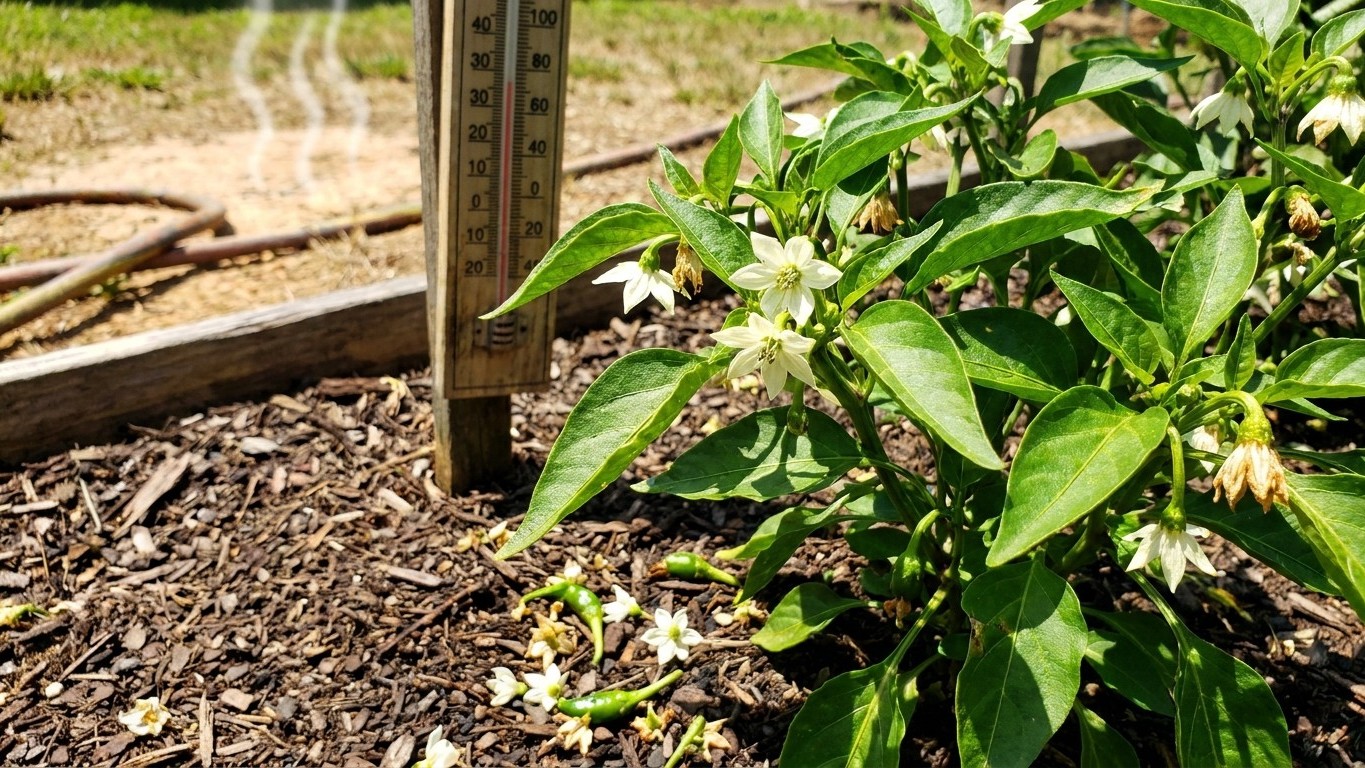

Peppers stop setting fruit in Wisconsin for one of two reasons: a stretch of days pushing past 90 F that stresses the plant into dropping blossoms, or nights that dip below 55 F and stall pollen viability. Wisconsin’s summers rarely deliver sustained extreme heat, but the state’s swing toward cool nights, especially early and late in the season, is the more common culprit here. Get the timing and the temperature window right, and fruit set follows.
The short answer
Start with the number: the Milwaukee reference station averages 7.0 days a year at or above 90 F, based on NOAA NCEI Climate Normals covering 1991-2020. That’s a modest heat load compared to states further south or west. Pepper plants generally hold their blossoms fine through a handful of hot afternoons scattered across a summer. The trouble starts when several of those 90-degree days bunch together, because that’s when daytime heat stress compounds instead of the plant getting overnight recovery. Utah State University Extension notes that pepper fruit set fails once days push above 90 F, and Wisconsin’s low annual count means this end of the problem shows up occasionally, not as a season-long fight.
That’s one side of the equation. The other side matters more for most Wisconsin gardens: nights below 55 F. Pepper flowers need warm nights to keep pollen fertile and functional. When nighttime temperatures drop into the 40s or low 50s, which happens routinely in Wisconsin during late spring and again as fall approaches, blossoms can form and even open, but they won’t convert into peppers. The flower drops, the plant tries again, and the cycle repeats until nights warm back up.
Here’s the catch this site can’t solve for you: it carries days above 90 F for Wisconsin, but it does not carry summer night minima. There’s no published dataset here for how cold your particular yard gets at 2 a.m. in June or September. That number depends heavily on local conditions, elevation, distance from Lake Michigan, whether you’re in a valley that collects cold air, and none of that can be reliably guessed from latitude or from how cold your coldest winter month runs. If your peppers are flowering but not fruiting during a run of cool nights, the fix isn’t a chart, it’s a thermometer left outside your own garden bed for a week. Track your actual nighttime lows before you diagnose the problem as heat, cold, or something else entirely like inconsistent watering.
The practical takeaway: Wisconsin peppers rarely fail from heat alone. When fruit set stalls here, cold nights are the more likely explanation, and only your own outdoor thermometer will confirm it.
When to start seed here
Timing a pepper crop in Wisconsin means working backward from two hard limits: the last spring frost and the point where soil warms enough for transplants to take. Here’s how the arithmetic runs, and how to redo it for your own county.
- Find your last frost window. NOAA NCEI’s 1991-2020 Climate Normals, using the 32 F freeze probability band of 30 to 70 percent, put the last spring frost for the reference station (USW00014839) somewhere between April 16 and April 29. That’s a window, not a single date, and it shifts depending on where you sit in the state. Lake Michigan pushes frost dates later along the shoreline, while inland and northern counties see frost linger longer into spring and return earlier in fall.
- Wait for 60 F soil, not just calendar frost. Frost passing doesn’t mean the ground is warm enough. Pepper transplants stall or sulk in cold soil even when air temperatures look fine. Check soil temperature at a 4-inch depth with a simple soil thermometer before moving transplants outside; 60 F is the threshold worth waiting for.
- Count back 8 to 10 weeks for indoor seed starting. Utah State University Extension recommends starting pepper seed indoors 8 to 10 weeks before that transplant date. If your local frost clears and soil warms by early May, count back to somewhere in late February to early March for sowing seed indoors under lights.
- Build in a buffer for a slow spring. Since the frost window itself spans about two weeks (April 16 to April 29 at the reference station), and soil warming can lag behind air temperature by another week or two in a cold, wet spring, add a cushion rather than transplanting on the earliest possible date. A week’s patience costs far less than a flat of transplants killed by a late frost or stunted by cold soil.
- Adjust for your specific county. If you garden well north of the reference station, or away from the moderating effect of Lake Michigan, push your last-frost assumption later and your indoor sowing date earlier. If you’re in a lakeshore county, the season runs slightly longer at both ends, but don’t assume more than the general shift the Lake Michigan effect is known to cause.
None of this arithmetic is exotic. It’s the same backward count gardeners run everywhere: transplant date minus 8 to 10 weeks equals sowing date, with frost and soil temperature deciding when that transplant date actually falls in your yard rather than on a generic calendar.
What goes wrong here
- Blossom drop during a hot spell. When several of those 90 F days cluster together, and Wisconsin does get a handful most years, plants shed flowers rather than push them into fruit. Remedy: provide afternoon shade during the hottest stretches, keep soil consistently moist (heat stress compounds with drought stress), and don’t fertilize heavily with nitrogen during a heat spike, which pushes leafy growth instead of fruit.
- Blossom drop from a cool night. This is the more frequent Wisconsin failure. A run of nights below 55 F, common in late spring and again in early fall, stalls pollen viability even though the plant looks healthy and keeps flowering. Remedy: there’s no chart to consult here since this site doesn’t track summer night minima, so watch your own outdoor thermometer. If a cool snap is forecast, consider row cover overnight to hold in a few extra degrees of warmth, and accept that flowers formed during the cold stretch likely won’t set fruit; new blossoms after the nights warm back up will.
- Sunscald on exposed fruit. Once fruit does set, direct sun on pepper skin during a hot, bright stretch can bleach and blister the fruit, especially on plants that have lost leaf cover from disease, wind, or over-pruning. Remedy: keep the plant’s natural leaf canopy intact rather than stripping foliage, and use shade cloth over exposed rows during the hottest days rather than after damage appears.
- Blossom-end rot. This shows up as a sunken, dark patch on the fruit’s bottom end and traces back to inconsistent water delivery, not usually a lack of calcium in the soil itself. Wisconsin’s mix of heavy clay soils in some regions and sandy soils in others means watering needs vary widely from yard to yard. Remedy: water on a steady schedule rather than letting soil swing from bone-dry to soaked, and mulch to even out moisture between waterings.
Common questions
Why are my pepper plants flowering but not producing peppers in Wisconsin?
The most common reason here is a run of nights below 55 F, which stalls pollen viability even though flowers keep forming. The other cause, less frequent in Wisconsin, is a cluster of days at or above 90 F. Since this site doesn’t track nighttime lows, check your own outdoor thermometer overnight to see which end of the range you’re hitting.
When should I transplant peppers outside in Wisconsin?
Wait until after your local last frost date and until soil at a 4-inch depth reaches 60 F. NOAA NCEI’s 1991-2020 Climate Normals put the last spring frost for the reference station between April 16 and April 29, though your own county may run later, especially away from the Lake Michigan shoreline.
How early should I start pepper seeds indoors in Wisconsin?
Count back 8 to 10 weeks from your expected outdoor transplant date, per Utah State University Extension guidance. If your soil warms and frost risk clears by early May, that puts indoor sowing somewhere in late February to early March.
Does Wisconsin get too hot for peppers to set fruit?
Rarely, and only in short stretches. The Milwaukee reference station averages just 7.0 days a year at or above 90 F, according to NOAA NCEI Climate Normals. That’s enough heat to occasionally stall fruit set during a cluster of hot days, but it’s not the dominant problem in most Wisconsin gardens; cool nights cause more blossom drop here than heat does.