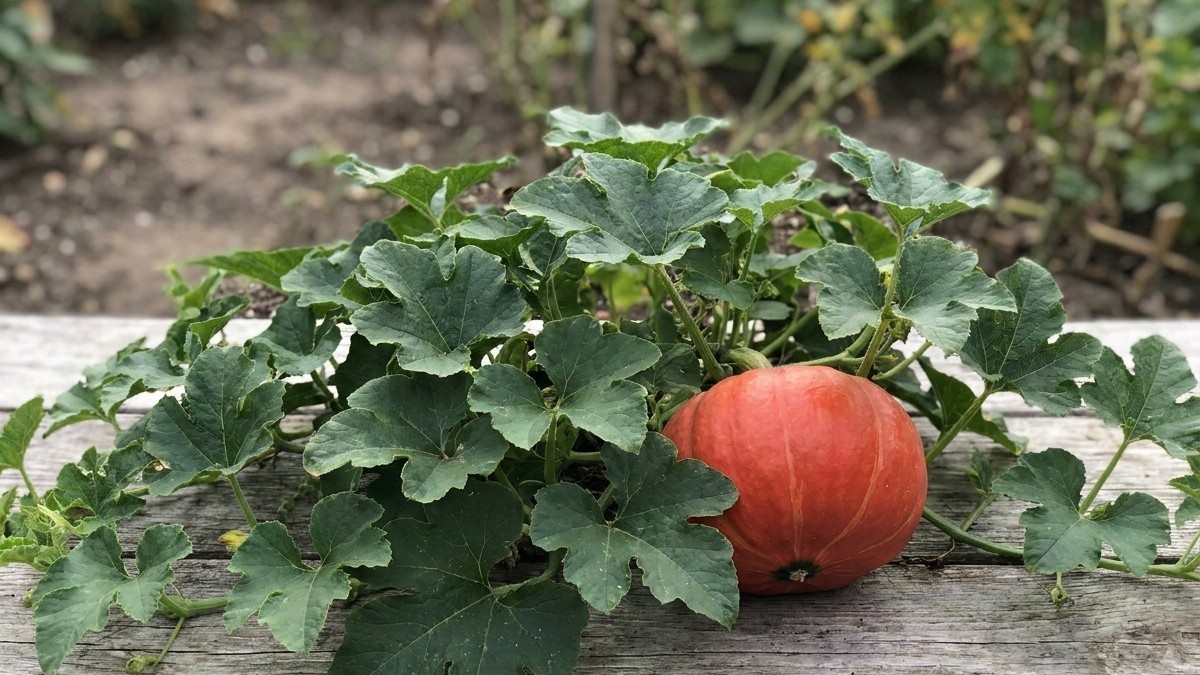

Cut pumpkins before the first hard freeze, with the stem still attached, and store them whole at 45-50 F. Kept that way, they can last up to six months at best. Three things move that window: how late the flowers opened, how close the garden sits to Lake Michigan, and where the pumpkins spend the winter.
When pumpkins are ready in Wisconsin
A pumpkin is ready when the rind has turned its full color, resists a thumbnail, and the stem has dried and gone woody, which usually happens 45-55 days after flowering. Across most of Wisconsin, that puts the cutting window from late September through October, just ahead of the first fall freeze.
Utah State University Extension gives that 45-55 day clock and says to harvest with the stem attached, before frost. The count starts when the flower opens on the vine. It does not start at seeding or transplanting, and that is where most timing mistakes begin. Seed packets list days from sowing, which folds in the weeks the plant spends growing leaves and vines before it ever blooms.
The same extension publication has growers sow when the soil reaches 65 F. That is a soil reading, and it is not the last spring frost. NOAA’s NCEI climate normals put the last spring 32 F freeze between April 16 and April 29, using the band where the odds of a freeze fall between 30 and 70 percent. Soil lags the air by weeks, so a garden can be frost-free in late April and still be too cool for pumpkin seed well into May.
How do you count back from the first frost?
Start with the first fall freeze and subtract 45 to 55 days. NOAA NCEI’s normals for the reference station place the first fall 32 F freeze between October 17 and October 29, again the 30 to 70 percent probability band. Counting back from that window, a flower that opens in late August to mid-September is about the last one with time to finish a fruit. A bloom that opens after that point gives a pumpkin that stays green and soft-skinned when the vines die.
Those late fruits are not worthless, but they will not store well. If a freeze is forecast and some pumpkins are still green, the Will Pumpkins Ripen Before Frost in Wisconsin? guide explains what a cut green pumpkin can and cannot still do. Leaf and vine damage from insects late in summer can also shorten the plant’s effective season, and What Eats Pumpkin in Wisconsin, and When covers the timing of those pests.
Do Lake Michigan and the north change the date?
They do, and by a noticeable margin in places. Lake Michigan delays the first fall freeze along the lakeshore. Inland southern Wisconsin typically freezes in early October, and the north far earlier. A gardener a few miles from the lake may see a freeze while a lakeshore neighbor is still picking. For local dates, your county extension office knows the pattern in your part of the state.
The practical habit is the same everywhere. Watch the forecast as the season turns, and cut every pumpkin worth keeping the day before a freeze is predicted. The overview in Growing Pumpkins in Wisconsin covers the rest of the season, from sowing to vine care.
Keeping them, and for how long
University of Illinois Extension, in its guide Choosing a Pumpkin, states that a whole pumpkin keeps for three to six months in a cool, dark location between 45-50 F. That duration is a ceiling under ideal conditions. A pumpkin with a nick in the rind, a short or missing stem, or a spell of warm weather in storage will fall short of it, sometimes by a lot.
How long does a whole pumpkin keep?
Treat three months as a reasonable goal and six as a bonus. The range is wide because the pumpkin’s starting condition matters as much as the room. A fruit cut at full color, with the stem attached and the rind unbroken, starts with the best odds. One that sat in a frosty field for a night does not, and Utah State’s advice to store pumpkins where they will not freeze reflects that. Frozen flesh turns watery and the fruit breaks down soon after it thaws.
Keep the stem on when you cut. Use pruners instead of twisting the fruit off, since a stem pulled out leaves an open wound that rot can enter. A damp floor invites rot as well, so a dry spot is part of the job even though the extension guidance centers on temperature and darkness.
The Illinois guide adds a second instruction that gets far less attention: store pumpkins away from any ripening fruit or vegetables such as apples, potatoes, or tomatoes. Ripening produce gives off a gas that ages the pumpkin faster. That makes the porch beside the apple crate one of the worst places for a pumpkin you hope to keep, and the same goes for a basement shelf that holds the potato bin.
What about a carved pumpkin?
The 45-50 F range and the three to six months describe a whole, uncut pumpkin. Once the rind is cut, the flesh is exposed to air and moisture, and the keeping time is measured in days rather than months. No storage range applies to a carved pumpkin. If you want a jack-o’-lantern in good shape, carve it close to the day you plan to display it, and save the whole ones for the long haul.
Where in the house that actually is
The numbers on paper are easy. The rooms in a real house are harder. A refrigerator runs colder than the 45-50 F range, and a pumpkin takes up a shelf you would rather use for food. A living room, kitchen, or any heated space runs warmer than that range, which speeds aging. A garage is the wild card. It follows the weather, so it can sit in the right range one week and drop below freezing in the first cold snap, and a Wisconsin garage will do exactly that.
The room that usually comes closest is an unheated basement or a cool storage room on the north or east side of the house, away from the furnace, the water heater, and any ductwork. Foundation walls keep the temperature steadier than the air outside. A cold cellar corner or an enclosed, unheated mudroom can also work in some homes, but they swing more with the weather than a basement does.
Before you move a single pumpkin in, leave a min/max thermometer in the intended spot for several days and read the lows and highs. Skipping that step can cost you the whole crop if the spot drops below freezing, and a cheap thermometer settles the question. A spot that holds near 45-50 F is the target. A spot that dips to freezing overnight, even once, is not storage space.
Once you have a spot, set the pumpkins on a shelf, a pallet, or a sheet of cardboard rather than directly on a concrete floor, and keep them from touching each other so air can move around them. Check them regularly. A pumpkin that develops a soft spot should be used right away, since rot spreads to its neighbors. Keep the apple crate and potato bin in a different room if you can.
Common questions
Can pumpkins stay on the vine after the first frost?
Extension guidance says to harvest before frost. A freeze can damage the fruit itself, and pumpkins that have frozen do not keep. Cut them the day before a freeze is forecast, with stems attached, and move them to a spot that stays above freezing.
Do the 45-55 days start at seeding?
No. The 45-55 days run from flowering, which is when the flower opens on the vine. Sowing happens weeks earlier, once the soil reaches 65 F, and the plant needs time to grow before it flowers at all.
Can I keep pumpkins on the porch all winter?
A porch swings with the weather, and a hard freeze will end a pumpkin’s keeping life. The three to six month figure applies to a cool, dark location between 45-50 F, so a porch works for fall display and little else. Bring pumpkins in before a freeze, and keep them away from a nearby apple crate.
Why shouldn’t pumpkins be stored near apples?
Ripening fruit gives off a gas that ages a pumpkin. University of Illinois Extension advises keeping pumpkins away from ripening fruit and vegetables such as apples, potatoes, and tomatoes. A different room, or at least a different end of the basement, makes a real difference.