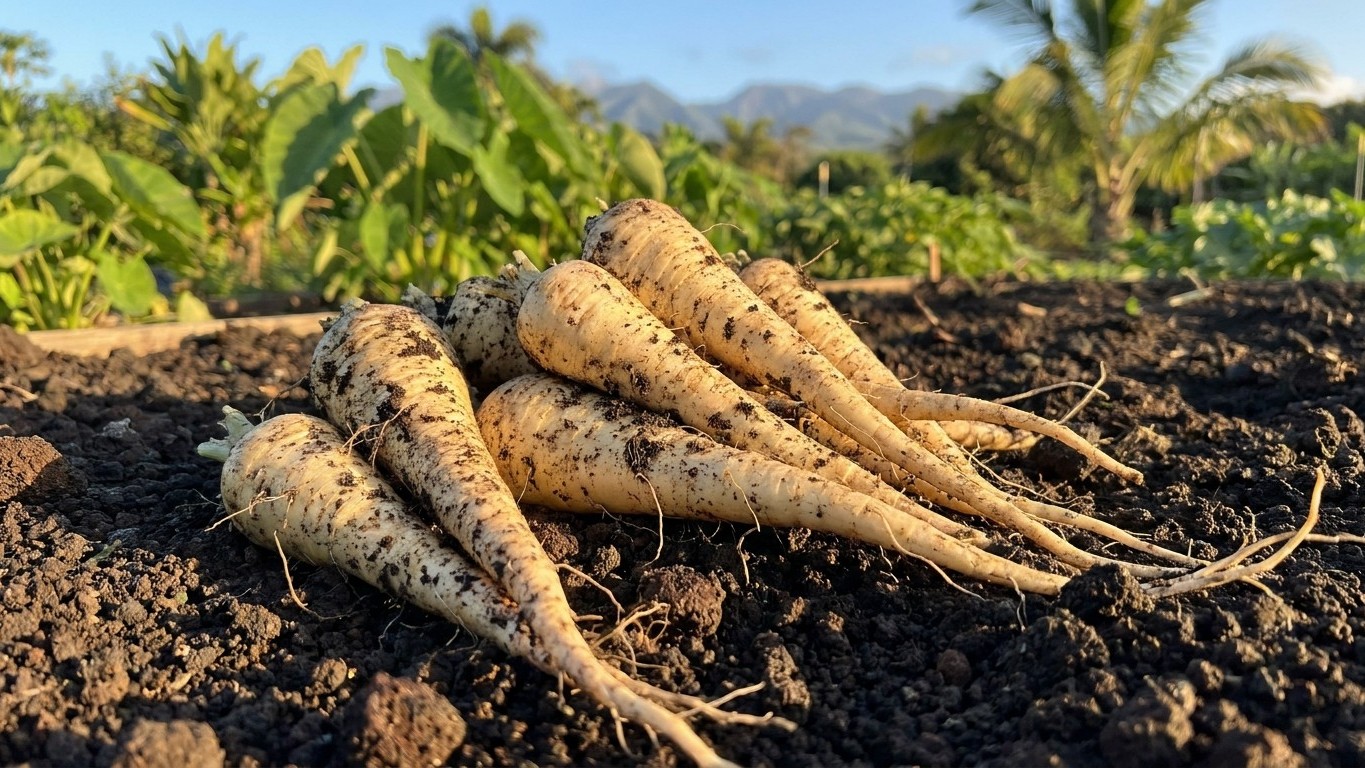

Lift parsnips after several weeks of frost, which in most Wisconsin gardens means November. The roots can stay in the ground well past that, as long as you can still get a fork into the soil. Once dug and stored properly, they keep four to six months. Stored badly, next to the fruit bowl for instance, they turn bitter.
The short answer
Does Wisconsin deliver several frosty weeks? Yes, easily. The mean daily minimum of the coldest month at the Milwaukee reference station is 17.2°F, a long way below freezing, and that is the mild end of the state because Milwaukee sits on Lake Michigan. Inland and farther north, nights run colder and the freezing weather starts earlier. A parsnip grown here will sweeten, not just grow. Cool, frosty weather is what converts the starch stored in the root into sugar, and a Wisconsin fall and early winter supply plenty of it.
That points to a simple rule for timing. Do not dig at the first frost. Let the roots sit through several weeks of cold nights and cool days, then start lifting. Some gardeners dig a few roots every couple of weeks from late October on, tasting as they go, and find the sweetness climbs. The full mechanism is in Will Parsnips Sweeten in Wisconsin?. For the wider growing picture, start with Growing Parsnips in Wisconsin.
The ground is the limit on the late end. Once the soil freezes solid, a spading fork bounces off it. A thick layer of straw or leaves laid over the row after the first hard frosts keeps the soil workable, so you can dig on a mild day in December or January. Roots left under mulch can also be lifted in early spring, as soon as the soil thaws and before new green growth starts. After regrowth begins, the root spends its sugar on new leaves and turns tougher.
How long do parsnips really keep?
USDA Agricultural Handbook 66 says parsnip roots can be stored 4 to 6 months at 32 to 34°F with 98 percent relative humidity. That is a long keeper by any standard. It also assumes those conditions hold steady, and almost no house manages that. A refrigerator crisper is cold enough but drier than 98 percent, so roots shrivel sooner. A cold, damp root cellar or an unheated cellar room gets closer. Parsnips are not chilling sensitive, so cold itself does no harm.
The real danger in storage is ethylene, the gas that ripening fruit gives off. Parsnips make very little of it themselves, but the Handbook notes that exposure to low levels in cold storage causes bitterness. Keep them away from apples, pears and anything else ripening, even when the temperature is right. And when you prep roots for storage, cut off the tops but do not trim into the crown.
Does the season fit?
- Sowing. Parsnips are sown in place, straight into the garden bed, as soon as the soil can be worked. The target is two to three weeks before the last spring frost. At the Milwaukee reference station that frost falls between April 16 and April 29, so sowing runs from early April into mid-April, whenever the ground allows.
- Germination. Bare soil for the first two to three weeks is normal. Keep the bed evenly moist and resist digging it up to re-sow.
- Maturity. Parsnips need 100 to 120 days from seeding, and the count starts on the sowing day, not when seedlings show. A sowing on April 15 gives roots of eating size between late July and mid-August.
- Frost window. The first fall frost at the same station arrives between October 17 and October 29. Roots sown in April are full size two months or more before that.
- Verdict. The season fits comfortably for a spring sowing, with a wide margin left over for the cold weeks that sweeten the roots. Lake Michigan delays the first fall freeze along the shore. Inland southern Wisconsin typically freezes in early October, and the north far earlier, so those gardens have less spare time. A sowing that slips to the end of May or into June will still make roots, but it gives up that margin. Northern gardeners should sow the first week the soil is workable and check the local frost dates with the county extension office.
One wrinkle in that arithmetic: the long gap between roots reaching full size and the first fall frost is not wasted. Roots that size up by August simply sit through the warm weeks, and they do not sweeten until the cold arrives. Sowing earlier does not speed up the sweetening. It only protects you against a bad spring or a slow stand.
What goes wrong here
- Forked roots from heavy or stony ground. A root that hits a stone or a layer of packed clay splits or twists around it. Many yards have clay or stony glacial ground. Parsnips do best in deep, loose, sandy soil, and heavy ground has to be double dug, loosening the soil to a spade’s depth and a second spade’s depth below that. Pull every stone you find. If the bed will not loosen, grow the crop in a raised bed filled with loose soil.
- Forked roots from overwatering. This is a separate cause with its own fix. In soil that is kept constantly soggy, roots can fork and rot even when the ground is loose and clear of stones. Water deeply but less often, let the top inch dry between waterings once plants are up, and avoid watering on a fixed schedule through a wet spell.
- A season that runs out. A late sowing leaves less margin ahead of the first fall frost, and that is tighter inland and in the north. Sow as soon as the soil can be worked. Do not mistake slow germination for failure. Mark the row so you do not re-sow bare ground that is about to sprout.
- Roots that never sweeten. A winter too mild to sweeten is not the usual problem here, since the coldest month averages a low of 17.2°F. The same failure still shows up when roots are lifted too early in a warm fall. Wait for several weeks of frosty weather, and taste one before you dig the row.
- Bitterness in storage. Ethylene from nearby apples or other ripening fruit causes it, even at the right temperature. Store roots in their own box, bag or cellar corner, far from the fruit.
- Damaged roots and crowns. Trimming into the crown opens the root to rot in storage. Cut the tops off above the crown, handle roots gently, and eat any nicked ones first. For the animals and insects that go after the crop, see What Eats Parsnip in Wisconsin, and When.
Common questions
Can parsnips stay in the ground all winter?
Yes. Frozen ground does not hurt them, and they keep sweetening through the cold. The only trouble is digging, since a frozen row is hard to work. A thick mulch of straw or leaves keeps the soil soft enough for a winter harvest. Lift whatever remains in early spring as soon as the soil thaws, before the tops regrow.
How soon after the first frost can I dig parsnips?
Roots are edible any time after they reach full size, but they taste best after several weeks of cool, frosty weather. In most Wisconsin gardens, that means waiting from the first frosts of mid to late October into November. Dig one root every week or two and taste it. When it turns noticeably sweet, the row is ready.
Why did my stored parsnips turn bitter?
Ethylene is the usual cause. Ripening apples, pears and other fruit give off the gas, and the Handbook says even low levels in cold storage make parsnips bitter. Move the roots to a separate spot. Also check that the tops were cut off above the crown, since trimming into it invites rot, which makes its own off flavors.
Should I wash parsnips before storing them?
Brush off the loose dirt and leave the rest. Damp soil clinging to the root is no harm, and it helps hold humidity. Pack roots in a box of slightly damp sand or sawdust in a cold cellar, or in a perforated bag in the refrigerator. Check them every few weeks and pull out any that soften.