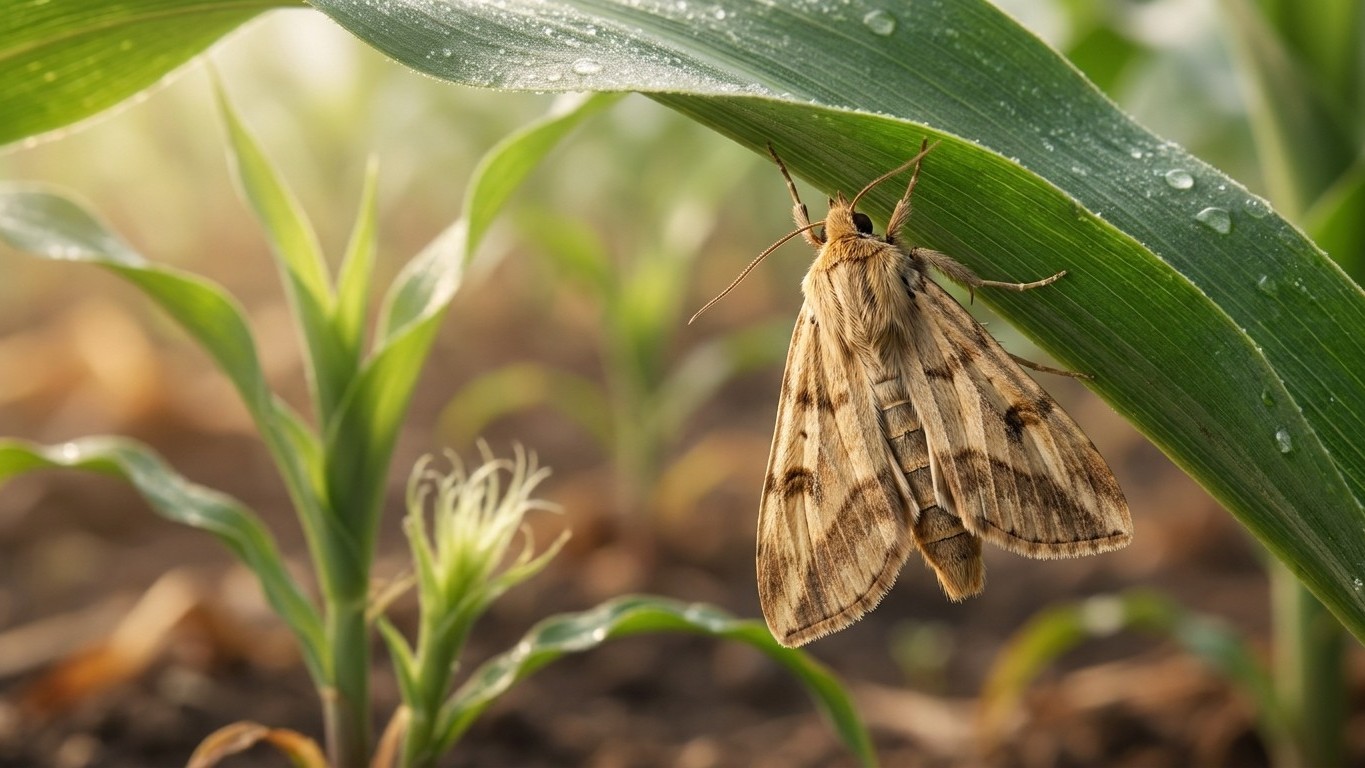

European corn borer larvae become active as soil and air temperatures climb through spring, but Wisconsin gardeners rarely see real feeding damage until the population builds through summer. The short answer: watch April through September, expect the worst pressure by mid-August, and stop it early with crop rotation and fall cleanup rather than waiting to treat the damage once it’s done.
The weeks to watch

Wisconsin’s growing season for this insect runs from April through September, according to University of Wisconsin-Madison Extension guidance on home garden pests. That’s a six-month window, not a single date, and it matters because a borer that survives winter in old stalks can emerge any time conditions warm up enough to let it move.
The extension bulletin covering home vegetable gardens doesn’t publish a corn borer-specific flight calendar. It groups this insect with other corn pests and gives one clear marker instead: most corn pests, as a group, don’t become abundant until mid-August. That’s the number worth writing on a calendar, even though it wasn’t built for this species alone.
Early season activity
April and May bring the first stirring, mostly overwintering larvae finishing development inside old stalk material left in the field or garden bed. This is a quiet stretch. Damage, if any, stays minor and easy to miss.
The mid-August surge
By the time August is half over, corn pests as a category are at their most numerous in Wisconsin gardens. That’s roughly ten to twelve weeks after most home gardeners get corn in the ground, and it’s the stretch where scouting pays off, before stalks and ears take visible damage.
Reading the calendar from your last frost

Wisconsin’s last spring frost falls somewhere between April 16 and April 29, based on NOAA’s 1991-2020 climate normals for the state’s long-record station. That’s a two-week band, not a single day, and it’s the only planting anchor most gardeners actually use each year.
This insect doesn’t answer to a calendar page. It answers to soil warmth and to how far along the corn plants are. An early frost date means an early planting window, which shifts everything downstream by the same margin. A late one pushes the whole sequence back.
- Start from your own last frost date, somewhere in the April 16 to April 29 range for most of Wisconsin.
- Add roughly fifteen to seventeen weeks to reach the point corn pests typically peak in numbers (mid-August, per the extension source), which lands the scouting window in early-to-mid August depending on where your own frost fell.
That arithmetic gives a range, never a guaranteed date. Anyone gardening near Lake Michigan should treat fall timing separately too: the lake delays the first fall freeze at the shoreline, while inland southern Wisconsin typically freezes in early October and the north freezes well before that. Spring planting decisions and fall cleanup timing don’t run on the same clock in every corner of the state.
What it attacks, and what the damage looks like

Most gardeners notice the plant’s condition before they ever spot an insect. Corn tassels snap or wilt for no obvious reason. Leaves show small round holes chewed in a row, a pattern left when the larva fed inside the tightly rolled whorl before it unfurled. Sawdust-like frass collects at leaf joints or where a stalk has been bored into. Ears can show tunneling near the shank, sometimes with mold following behind the entry hole.
Where the damage starts
The larva is the life stage doing all the damage. Adult moths themselves don’t feed on plant tissue; they lay eggs and move on. Once a larva bores into a stalk or ear, it’s protected from most surface treatments, which is exactly why this insect is easier to manage before that point than after.
Crops at risk in Wisconsin gardens include:
- Sweet corn (the primary host, especially the whorl, stalk, and ear)
- Peppers (larvae bore into fruit and stems)
- Snap beans and lima beans (pod and stem feeding)
- Potatoes (stem tunneling, less common than corn damage)
A single garden bed with more than one of these crops planted close together can carry a larger population between hosts, which is part of why rotation matters more here than with a single-crop pest.
How Wisconsin sits in this pest’s range

The extension source used for this page doesn’t rank Wisconsin against other states or offer a count of how many states report this insect. What it does confirm is that Wisconsin’s corn-growing regions, statewide, fall inside the active season for corn pests generally, April through September.
That points to a pattern common with widespread insect species: presence isn’t really the variable that changes from one part of the state to another. Timing is. A garden near the Lake Michigan shoreline, where the lake keeps fall temperatures milder later into the season, may see slightly different end-of-season activity than a garden well inland or up north, where frost and freeze arrive earlier and cut the season short sooner.
Nothing in the available data supports a claim that any one Wisconsin region carries heavier pressure than another. The safer statement is the plainer one: if you grow corn, peppers, beans, or potatoes anywhere in Wisconsin, this insect is a normal part of the season, and the calendar matters more than the map.
What actually works against it

- Clear stalks and plant debris after harvest. Larvae overwinter inside old corn stalks left standing or piled nearby. Removing and destroying that material each fall cuts down the population that would otherwise emerge the following spring. This is free, and it’s the single most effective long-term step home gardeners can take.
- Rotate host crops. Moving corn, peppers, and beans to a different part of the garden each year means emerging adults have to travel farther to find a host, which reduces how many successfully lay eggs on your plants.
- Time planting to dodge peak activity. Since populations build toward mid-August, an early planting that reaches maturity before that peak sees less pressure than a late-season planting still tasseling in mid-August.
- Scout leaves and destroy egg masses by hand. Eggs are laid in clusters on the underside of leaves. Checking plants regularly and removing what you find is labor, not cost, and it works only before eggs hatch.
- Use row covers on young plants, then remove them before tasseling. Covers keep egg-laying adults off small plants, but corn needs open pollination by wind once it tassels, so the cover has to come off at that point regardless of pest pressure.
None of these measures do anything once a larva has already bored into a stalk or ear. At that point the insect is physically shielded from anything applied to the plant’s surface. The only real recourse left is accepting that plant’s damage and doubling down on fall cleanup and rotation so next year’s population starts smaller.
Common questions
Does planting corn away from last year’s corn patch really make a difference?
Yes, in principle. Adults that overwintered near last year’s planting site have to search farther to find this year’s crop if it’s moved, and not every one of them succeeds. It’s a numbers game, not a guarantee.
Can I tell corn borer damage from corn earworm damage?
Corn borer damage tends to show up as shot holes in whorl leaves and frass at stalk joints, while earworm damage concentrates at the ear tip where the worm feeds down into the kernels from the silk end. Both can occur on the same plant in the same season.
Is it worth treating peppers and beans for this insect, or just corn?
If corn is nearby, peppers and beans in the same garden are worth watching too, since the insect moves between these hosts. A garden growing only beans or only peppers, with no corn nearby, generally sees far less pressure from this particular species.