
Will Sweet Corn Ripen in Yukon? It can, but only at the earliest end of the maturity scale, and only if the soil cooperates. The territory’s frost-free window runs about 81 days on average, and that average hides a soil that warms slowly enough to eat into those days before a single seed goes in the ground. A 90-day variety does not fit here. A 60-day one might, with no room for delay.
The short answer
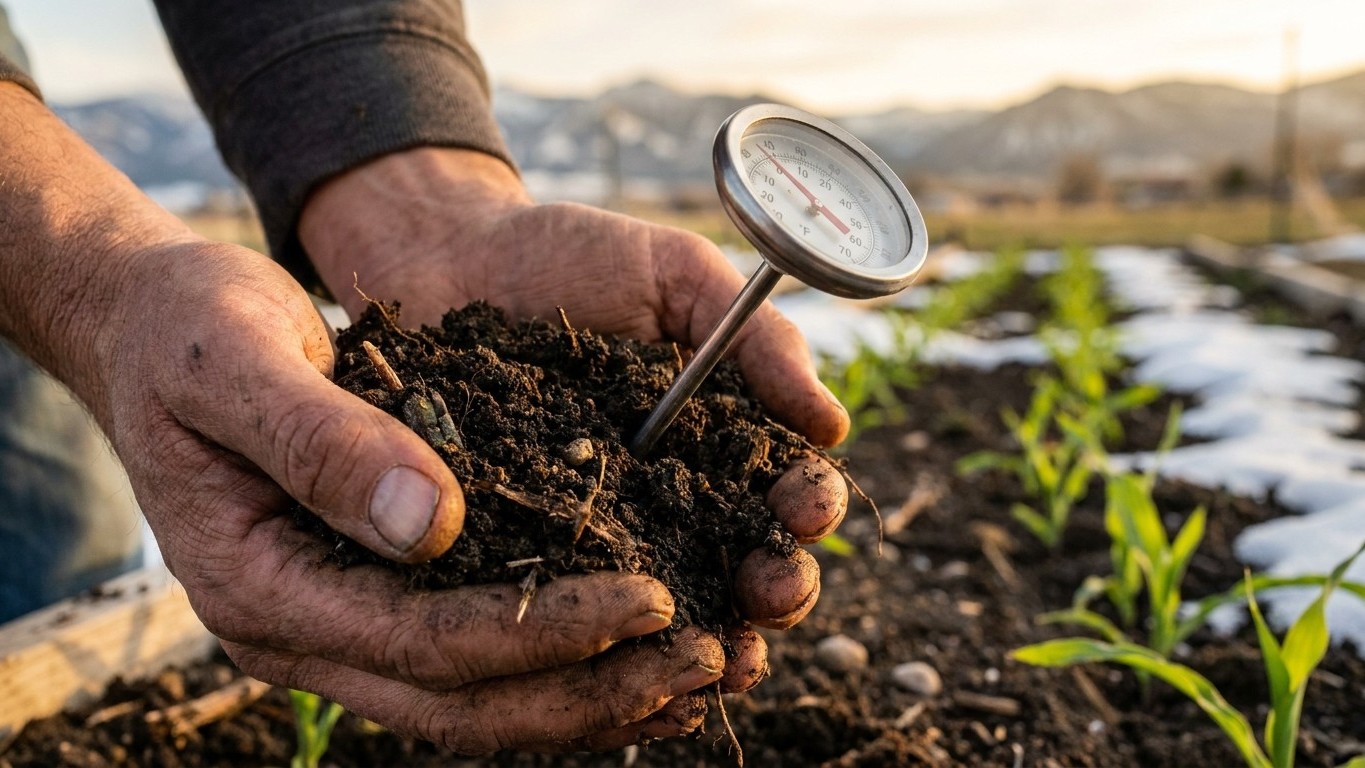
Here is the detail that changes everything: soil reaching 60 F, the threshold sweet corn needs before germination even starts, comes later than the last spring frost, not on the same day. Whitehorse A, the reference station for this territory, records a mean last spring frost of June 5. That date marks when the air stops freezing overnight. It says nothing about when the ground itself has warmed enough to sprout a kernel. Soil lags behind air temperature by design, holding winter’s cold longer and releasing it slower, so the real planting date for sweet corn sits some distance after June 5, not on it.
That gap matters because the other end of the season is fixed and close. The mean first fall frost at the same station lands on August 25. Between a mean last spring frost of June 5 and a mean first fall frost of August 25 sits roughly 81 days, frost to frost. That is the outside edge of what this territory offers in an average year, before any allowance for the soil’s slow start.
Sweet corn needs 60 to 90 days from planting to harvest, according to Utah State University Extension. Line that against an 81-day frost-free window and the arithmetic already looks tight for anything past the 60-day mark. Push the true planting date back by however long the soil takes to cross 60 F after the air has cleared, and the usable growing period shrinks further still, likely closer to 60 or 65 days than to the full 81. Knowing exactly When to Sow Sweet Corn in Yukon is what makes the difference between a harvest and a frost-killed stand.
There is a second complication, and it is the one gardeners tend to skip past. Both frost dates from Environment and Climate Change Canada are means drawn from the 1981-2010 normals, not guarantees. A mean date splits the record roughly in half: in one year out of two, the frost arrives later than June 5 in spring, or earlier than August 25 in fall. Treat both dates as the midpoint of a range, not a line you can plant or harvest against with confidence. A gardener working from the June 5 figure as if it were a safe cutoff, or from August 25 as if frost could never come sooner, is planning around a coin flip and calling it a schedule.
Add to that a climate with a mean of 0.0 days a year reaching 90 F. Sweet corn does not need extreme heat, but it does need steady warmth to push through its growth stages without stalling. A season with essentially no hot days keeps growth slower than it would run in a warmer district, which is one more reason the 60-day end of the scale is the only realistic target here.
Does a late variety fit here?
A 60-day variety
A 60-day sweet corn asks for 60 days between planting and harvest. Set against a frost-free window of roughly 81 days, that leaves about three weeks of slack, on paper. In practice, that slack is exactly what the soil’s slow warm-up eats into. If the ground takes two or three weeks after the June 5 mean frost date to cross 60 F, the actual planting date moves well into June, and the 60-day count then has to land before the August 25 mean frost, or before whatever earlier date frost actually arrives in a given year. The margin is real but thin. A 60-day variety is the only one with a plausible path to ripening here, and even that path depends on the season running close to average rather than early frost or a slow spring.
A 90-day variety
A 90-day variety needs 90 days from planting to harvest. The territory’s entire frost-free window averages 81 days, frost to frost, before any deduction for late soil warming. Ninety days will not fit inside 81 under any reading of these figures. This is not a marginal case worth pushing with an early start indoors or a warm microclimate against a south-facing wall. The math does not close. A 90-day sweet corn variety does not fit this territory’s growing season, and gardeners here should treat that as settled rather than something to test.
| Variety type | Days needed | Fits an 81-day mean window? |
|---|---|---|
| 60-day | 60 days | Tight, but plausible in an average year |
| 90-day | 90 days | No, exceeds the window before soil delay is even counted |
What goes wrong here
- Sowing into cold soil. Planting on or soon after the June 5 mean frost date, before the ground itself has reached 60 F, leaves seed sitting in soil too cold to germinate well. Kernels rot or sprout weakly instead of pushing up fast. The remedy is patience: wait for the soil, not the calendar, and accept that the safe planting date sits later than the frost date suggests.
- Choosing a variety too late for the season. A 90-day sweet corn simply runs out of season here, as the numbers above show. The remedy is choosing from the earliest end of the maturity range available and accepting that a longer-season variety, however tempting for its flavor or yield reputation, is not a fit for this climate.
- Losing sweetness to a neighboring planting. This one has nothing to do with frost or soil. Utah State University Extension notes that sweetness is lost when su (standard sugary), se (sugar enhanced), and sh2 (supersweet) types tassel at the same time, because their pollen crosses and the resulting kernels turn starchy rather than sweet. No isolation distance is published for this. The fix is timing and layout: stagger plantings so the different types do not shed pollen in the same window, and grow sweet corn in blocks of three or more rows rather than a single thin line, which improves pollination for the crop overall and helps keep unwanted crossing to a minimum.
Checking this against your own county
Whitehorse A is one station, and its normals describe conditions at that site, not every valley, hillside, or river-bottom garden across the territory. Frost behaves differently at elevation, near open water, or in a sheltered yard, and the mean dates here can run weeks off from what a specific property actually experiences. Before committing a season’s seed budget to sweet corn, check current planting guidance and frost information through Agriculture and Agri-Food Canada. Local knowledge from other gardeners in the same district is worth just as much as any published normal, since they are working the same soil and the same microclimate every season.
Common questions
Can I start sweet corn indoors to get around the short season?
Corn does not transplant well because its roots resent disturbance, so starting indoors is rarely the workaround gardeners hope for. The more reliable fix is choosing the earliest-maturing variety available and waiting for the soil, rather than the calendar, before direct-seeding outdoors.
Does covering the soil with plastic help it warm faster?
Warming the soil ahead of planting is a common approach for cold-climate gardening in general, though the specific gain in this territory is not published in the figures behind this article. What is established is the principle: soil must reach 60 F before seed goes in, regardless of the method used to get there.
Is a mean frost date the same as a safe date to plant?
No. A mean date is a midpoint, and in one year out of two the frost arrives later than the mean last spring frost, or earlier than the mean first fall frost. Planting exactly on the mean date carries real risk in either direction.
Can I grow more than one type of sweet corn in the same garden?
Yes, but only if the different types do not tassel at the same time. Sugary, sugar-enhanced, and supersweet types cross-pollinate and lose sweetness when their tasseling overlaps, so stagger planting dates between types rather than growing them side by side on the same schedule.