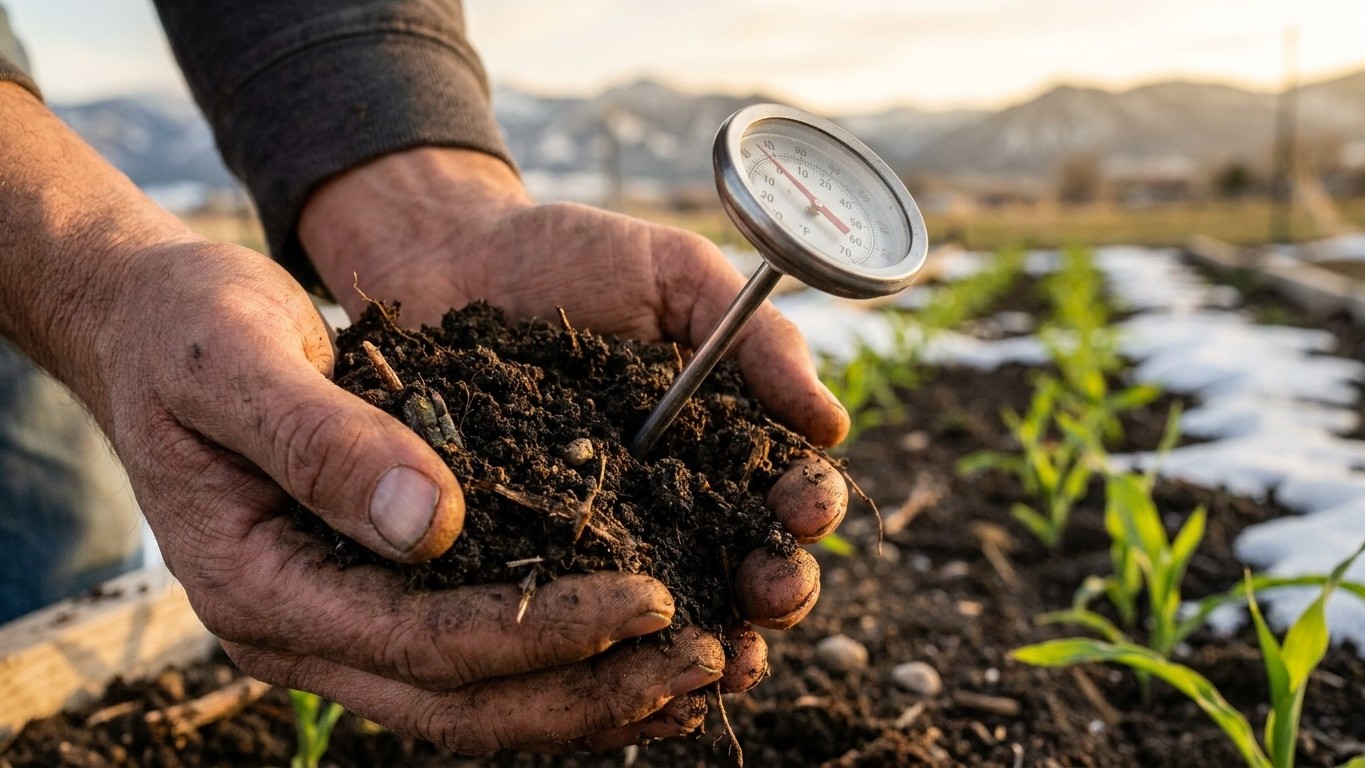

Sweet corn can ripen in Alaska’s mildest coastal pockets, but only if you start with soil already warm enough and pick a variety fast enough to finish before the region’s short season runs out. In the coolest interior valleys and the north, the math simply doesn’t work. What decides the outcome isn’t the last frost date alone. It’s the gap between when the ground actually warms and when the first fall freeze shuts the season down.
The short answer
Soil here reaches sweet corn’s minimum planting temperature of 60°F well after the last spring frost clears, not on the same week. That distinction matters more than most gardeners expect. The last spring frost, based on NOAA NCEI 1991-2020 Climate Normals for station USW00026451, falls somewhere between May 3 and May 12. But frost clearing from the air doesn’t mean the soil a few inches down has caught up. Ground holds cold far longer than air does, and nothing in this climate hurries that process along. With 0.0 days a year reaching 90°F at the reference station, there’s almost no burst of heat to speed soil warming once the frost lifts. The warmth builds slowly, in small increments, over weeks rather than days.
That slow build pushes the real planting date well past the frost-free mark, often deep enough into the calendar that gardeners lose real growing time before the clock even starts. According to Utah State University Extension, sweet corn needs 60 to 90 days from planting to harvest, on top of that 60°F soil threshold, which is why knowing When to Sow Sweet Corn in Alaska matters so much here. The first fall frost here, per the same NOAA NCEI data, arrives between September 22 and October 1. That gives roughly 143 frost-free days total across the season, from the earliest possible last frost to the earliest possible first fall frost. Sounds workable at first glance, and it’s the core question behind Will Sweet Corn Ripen in Alaska?. But subtract the weeks the soil spends warming up before it’s fit for corn seed, and the actual window for growth shrinks considerably.
The remaining stretch, once soil has finally cleared 60°F, is usually enough to carry a fast variety to maturity with some room to spare. A slow one is a different story. The margin for error narrows fast once you account for cloudy stretches, cooler-than-average weeks, and the simple fact that with zero days above 90°F, heat units accumulate at a pace slower than the raw calendar suggests. A packet’s “90 days to maturity” printed under ideal Midwest heat doesn’t translate directly to a season built almost entirely on mild, overcast days. That’s the mechanism driving everything that follows: not whether frost hits, but whether there’s enough real heat between soil warm-up and first freeze to finish the job.
Does a late variety fit here?
A 60-day variety
A fast, 60-day-to-maturity sweet corn variety is the one with a real shot in this territory, particularly in the mildest coastal areas represented by the reference station. Once soil finally crosses 60°F, even a delayed start still leaves a comfortable stretch of the frost-free window intact before the September 22 to October 1 frost arrives. That buffer matters because it absorbs the slow, uneven heat accumulation typical of a summer with zero days above 90°F. A cool week here or a stretch of overcast skies there won’t necessarily push a 60-day type past the finish line. There’s slack built into the schedule. This is the maturity length that makes sweet corn a realistic home-garden project here rather than a gamble.
A 90-day variety
A 90-day variety is a much tighter bet, and in most of this territory, it does not reliably fit. Once you factor in how late the soil actually reaches 60°F relative to the last frost, and how slowly heat builds afterward with no days crossing 90°F all year, a 90-day maturity length eats up nearly the entire remaining window with no cushion left for a slow patch of weather. A single cool, wet stretch in July or August, common enough in this climate, can push a 90-day crop past the first fall frost before it’s finished. Outside the very mildest coastal conditions, planting a 90-day variety here is planting toward failure. If you want to try one anyway, expect an unripe crop most seasons rather than an occasional one.
What Goes Wrong here
- Soil sown too cold: Seed goes into ground that hasn’t yet reached the 60°F threshold sweet corn needs, and it either rots before germinating or comes up weak and stunted. The remedy is patience, not calendar guesswork: check actual soil temperature with a simple probe thermometer before planting, rather than planting on the last-frost date out of habit.
- A variety too late for the season: A 90-day type is planted where only a 60-day one has a realistic path to ripening, and the ears are still milky or immature when the first fall frost, September 22 to October 1, ends the season. The remedy is choosing maturity length deliberately, favoring the shortest reliable option rather than the one promising the biggest ears.
- Sweetness lost to tasseling overlap: This one has nothing to do with climate. Utah State University Extension notes that su, se and sh2 sweet corn types lose their characteristic sweetness if they tassel at the same time nearby. The fix is timing, not distance: stagger planting dates so different types don’t shed pollen in the same window, or grow only one type in a given season. Blocks of three or more rows are still the right shape for reliable pollination within a single type.
Checking this against your own county
Alaska’s growing conditions swing widely from one region to the next. The coastal, comparatively mild conditions behind the numbers above don’t hold in the Interior or the north, where the frost-free season runs far shorter and the margin for a sweet corn crop, even a fast one, tightens considerably. Before committing garden space to sweet corn, check local soil-warming timing and frost records against your own location through the University of Alaska Fairbanks Cooperative Extension Service. Their local offices track conditions county by county and can confirm whether the numbers here are optimistic or conservative for your specific spot.
Common questions
Can sweet corn ripen in Anchorage but not in the Interior?
Yes, that’s the general pattern. The mildest coastal pockets, closer to the conditions behind the reference station’s frost dates, have the best shot. Interior locations face a shorter frost-free season, which narrows the window for any variety, even a fast one.
Does a 60-day variety guarantee a harvest?
No. It fits the season’s window with more margin than a 90-day type, but cool, cloudy stretches and slow soil warming still affect the outcome. A 60-day rating is measured under warmer, sunnier conditions than this region typically provides.
How do I know when the soil is actually warm enough?
Use a soil thermometer rather than the calendar. The last frost date doesn’t tell you when the ground has reached 60°F. Those two events happen weeks apart, not on the same day.
Why did my corn taste starchy instead of sweet?
Most likely a different sweet corn type tasseled nearby at the same time. According to Utah State University Extension, su, se and sh2 types cross and lose sweetness when their tasseling overlaps. Stagger planting dates or stick to one type per season to avoid it.