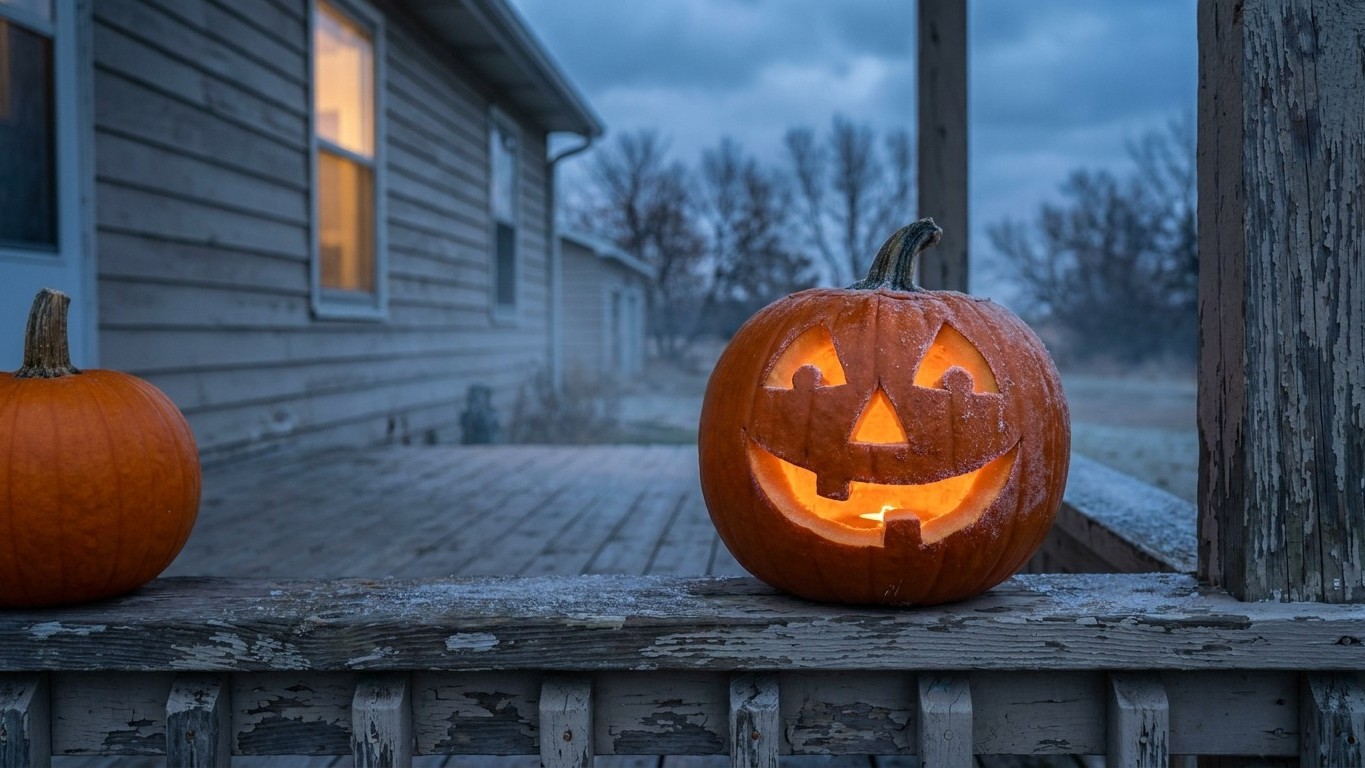

Around Fargo, the mean first fall frost lands between September 25 and October 5, weeks ahead of Halloween. That timing changes everything about when a porch pumpkin should meet a knife. Carve too early in North Dakota and the flesh has already survived a freeze or two before trick-or-treaters ever show up. The safe window sits close to October 31 itself, not weeks before it.
The short answer

North Dakota’s mean first fall frost, again around September 25 to October 5 near Fargo, arrives roughly 26 to 36 days before Halloween. That’s a wide gap, and it means anyone who buys a pumpkin at the start of October and leaves it sitting outside uncarved is exposing it to freezing temperatures for a month before the holiday even arrives. A mean date is an average pulled from three decades of records, not a promise for this particular year. Some years the first freeze slips later into October; other years it shows up even earlier than the average, especially away from town.
What this means practically: the pumpkin itself, while still whole and uncut, tolerates a light frost reasonably well. The rind is thick and the interior is protected. But once you cut into it, the exposed flesh has none of that protection, and North Dakota’s late-October nights routinely dip well below the temperature range that keeps a pumpkin in good shape. That’s the core tension for anyone decorating for Halloween here: the calendar says carve now, the climate says wait.
The practical window, given how early frost tends to show up, is to carve within roughly the last week before Halloween rather than at the start of October. Buying early is fine, even smart, since good pumpkins can be picked over before the best ones disappear. Carving early is the mistake. Keep the pumpkin whole and in a protected spot until you’re within a few days of October 31, then cut it. That approach respects two separate facts: the pumpkin needs weeks of stable, cool storage to make it to Halloween in good shape, and the cut flesh underneath the carving has almost no buffer against the kind of cold snap that’s common in North Dakota by late October.
No extension service publishes a specific countdown for how many days a carved pumpkin holds up once it’s cut, and that’s worth saying plainly rather than guessing. What is published, and what actually matters here, is storage temperature for the whole pumpkin and the timing of the region’s frost. Combine those two facts and the answer becomes clear: buy whole, store cool and dark, carve as close to the day as your schedule allows.
Frost or heat: which one gets it here
The cold end
North Dakota’s problem is cold, not heat, and the numbers make that obvious. The coldest month at the Fargo reference station averages a daily minimum of just 0.2 degrees Fahrenheit. That’s not a record low, it’s the ordinary nightly temperature for that month, and it signals how hard and how early the state’s cold season sets in. By the time late October rolls around, following that September 25 to October 5 frost window, nighttime temperatures are already trending well below the 45 to 50 degree band that a whole pumpkin prefers for storage. A pumpkin left outside uncovered on a North Dakota porch through late October is going to see temperatures under that ideal range more nights than not, and eventually a freeze rather than just a frost.
A frost and a hard freeze aren’t the same event. Frost is surface ice on a cold, calm night, often survivable for a tough-skinned squash. A hard freeze drives cold deep enough to damage cell structure, and that’s what turns a solid pumpkin soft and eventually collapses it. Given how early the season turns in North Dakota, both are realistic by the back half of October, which is exactly why an unprotected pumpkin left out for the whole month is a gamble.
The warm end
Heat simply isn’t the issue here. There’s no meaningful stretch of North Dakota autumn where daytime warmth threatens to soften or rot a pumpkin the way it might in a warmer climate further south. The entire pattern in this state runs cold, and it runs cold early. That simplifies the decision: the only environmental threat to manage between purchase and carving is freezing, not warmth, so the storage question is about finding somewhere that keeps the pumpkin from dropping too far below that 45 to 50 degree mark, not about keeping it out of the sun.
Where to keep it until you carve
Given how quickly North Dakota nights turn cold, the goal is a spot that mimics that 45 to 50 degree range as closely and as consistently as possible, kept dark, and away from anything that speeds ripening.
- An unheated but insulated garage or mudroom. These spaces often sit closer to the target range than an open porch, especially once nightly lows start dropping toward freezing in early October.
- A cool basement corner, away from the furnace. Basements tend to hold a steadier temperature than anywhere above ground, which matters once outdoor swings widen later in the month.
- A three-season porch, but only if it stays above freezing overnight. Check it with an ordinary thermometer rather than guessing; a porch that reads fine at 6 p.m. can read very differently by 4 a.m. in North Dakota.
- Never near apples, potatoes, or tomatoes. Ripening fruit and certain vegetables give off a gas that speeds up a pumpkin’s aging, so keep it clear of the produce bowl or the root cellar shelf where apples are stored.
- Never carried or set down by the stem. The stem isn’t a handle, it’s a seal. Look for one to two inches of stem still attached, and lift the pumpkin by its base instead. Once that stem breaks off, the exposed spot becomes an entry point for rot.
Checking this against your own county
The frost dates above come from a single reference station near Fargo, and suburban yards and rural properties across North Dakota routinely see their first fall frost earlier than that, sometimes by one to two weeks, more at higher elevation. Before locking in a carving date, check conditions closer to home through the North Dakota State University Extension, which maintains county-level offices and local growing information across the state. A quick call or visit to their site will tell you whether your area tends to run earlier or later than the airport-based averages used here, which matters more the further you are from Fargo itself.
Common questions
Does a pumpkin need to be carved right when it’s bought?
No. A whole, uncarved pumpkin holds up far longer than a carved one, generally three to six months when kept cool, dark, and around 45 to 50 degrees. Buying early and carving close to Halloween is the better strategy in North Dakota specifically, given how early frost tends to arrive.
How long does a carved pumpkin actually last once it’s cut?
No university extension publishes a specific figure for this, and claims like “three to five days” or bleach-dip preservation tricks don’t come from research sources. What’s actually documented is how to choose and store a whole pumpkin well and carve it close to the day you plan to display it.
Can a pumpkin survive a frost while it’s still whole?
A light frost is generally tolerable for an intact, thick-skinned pumpkin. A hard freeze is a different matter and can damage the interior even without a visible cut, which is why leaving one outside unprotected through a full North Dakota October is risky.
What should I look for when picking a pumpkin at the patch?
Choose one that’s heavy for its size, free of soft spots or blemishes, with one to two inches of stem still intact. Shape doesn’t matter for storage or carving quality. The stem is the detail worth checking closely, since it functions as the pumpkin’s natural seal against early decay.