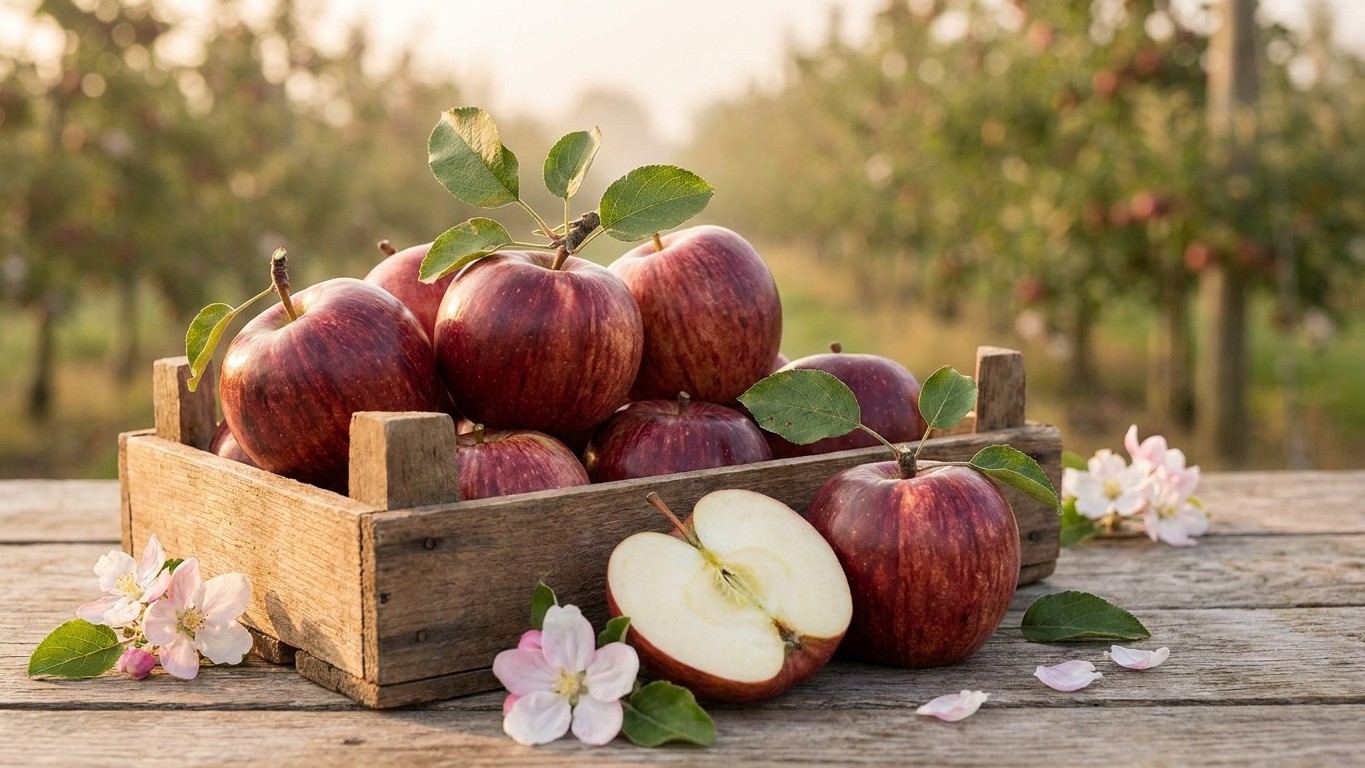

Akane is a September apple bred for the home orchard: early, sharp-flavored, and better eaten fresh than baked or stored. According to Utah State University Extension, it ripens in September, carries moderate resistance to fire blight, and grows in USDA zones 4 through 8. You may also find it sold as Tokyo Rose. Here’s what that means for your yard.
What Akane actually is

Before anything else, four things decide whether this variety belongs in your yard:
- Ripens: September
- Tastes like: Sharp and aromatic, crisp white flesh, a strawberry note
- Best for: Eating fresh, out of hand
- Keeps: A few weeks, not months
According to USU Extension’s Apple Production for the Utah Home Garden, Akane is also marketed as Tokyo Rose, so if you bought a tree under that name at a garden center, you already own this variety. That kind of dual naming trips up a lot of home growers, especially years later when they’re trying to identify a tree that came with no tag.
The flavor profile is the reason people plant it. A sharp, aromatic bite with a strawberry undertone isn’t the sweet, mild character you get from a grocery-store staple like a Red Delicious. It’s closer to a snacking apple for people who like their fruit to bite back a little. The flesh is described as crisp and white, which holds up fine at the table but doesn’t translate to long storage.
That last point matters more than it sounds. USU Extension notes it’s an early apple for eating out of hand, and that it softens fast and does not keep past a few weeks. That’s a physical trait, not a marketing detail: the flesh structure and acid balance that make an apple a good keeper or a good pie apple are different from what makes it a good fresh-eating apple. Akane wasn’t bred for either of those jobs. It was bred to be picked and eaten within a short window, which changes how you plan around it if you’re used to varieties that sit in a root cellar until spring.
Will it grow where you are
Hardiness zone
USU Extension lists Akane as hardy in zones 4 through 8, a wide band that runs from the cold winters of northern New England and the upper Midwest down through much of the mid-South and into milder coastal regions. That’s a genuinely broad range for an apple variety, and it means the zone filter alone won’t rule this tree out for most of the continental United States. But zone hardiness only tells you the tree can survive winter cold. It doesn’t tell you whether the tree will actually flower and fruit where you live.
Winter chill
That second filter is winter chill hours, the accumulated cold time below a certain temperature threshold that many apple varieties need before they’ll break dormancy and bloom properly in spring. Apples in general lean toward the colder end of the fruit-tree spectrum compared to, say, peaches or figs, which is why apple orchards cluster in northern and mountain states rather than the Deep South or low-desert Southwest. USU Extension does not publish a specific chill-hour figure for Akane, so rather than guess at a number, the honest answer is that it isn’t documented in the source used for this page.
What that means practically: if you garden in zones 4 through 8 with a recognizable winter, cold isn’t your obstacle. If you’re at the warm edge of that range, in a mild coastal pocket or a low-elevation Southern garden where frost is rare, check with a local extension office before committing, since chill accumulation (not the hardiness zone number) is usually what fails first for apples planted too far south.
What to Plant Beside It
This is usually the question that brought you here, and it deserves a straight answer: our source material does not publish a list of confirmed pollination partners for Akane. Rather than guess at a compatible variety and risk sending you to the nursery with bad information, it’s worth saying plainly that the partner list isn’t documented in the data used for this page.
That doesn’t mean pollination doesn’t matter here. Nearly all apple varieties crop better with a compatible partner nearby, since most rely on cross-pollination from a different variety blooming at the same time to set a full, reliable harvest. A tree can sometimes produce a partial crop on its own, especially if there’s a crabapple or a neighbor’s apple tree within bee range, but you’ll generally see heavier, more consistent fruiting with a known, compatible partner planted close by.
Two things worth keeping in mind while you shop for one. First, bloom timing has to overlap: USU Extension lists Akane’s bloom season as early to mid, so any partner you choose needs to flower in that same window, not weeks earlier or later. Second, a parent variety generally can’t pollinate its own seedling, so if you already know Akane’s parentage, don’t assume that relationship solves your pollination question. When in doubt, ask a local nursery or extension office which early-to-mid blooming varieties are already growing well in your area, since regional bloom timing can shift the calculation more than a national chart ever will.
For a deeper breakdown of how apple pollination actually works, including which pairings tend to succeed and why bloom overlap matters more than variety names alone, see our apple pollination guide.
Growing it well
Fire blight
USU Extension rates Akane as moderately resistant to fire blight, a bacterial disease that can blacken and wilt blossoms and young shoots almost overnight in warm, wet spring weather. Moderate resistance doesn’t mean immune. It means the tree is less likely to suffer a severe, orchard-wide outbreak than a highly susceptible variety, but you should still watch for the telltale signs: blackened shoot tips that curl into a shepherd’s-crook shape, and oozing cankers on branches. Catching it early and pruning out infected wood well below the visible damage, on a dry day with disinfected tools, is the standard response regardless of a variety’s resistance rating.
Habit and bearing
USU Extension’s entry for this variety doesn’t include details on tree habit or biennial bearing tendency, so rather than invent a description, it’s fairer to say that data isn’t published in the source used here. What generally applies to early-ripening apples, Akane included, is that thinning young fruit in late spring reduces limb stress and tends to produce larger, better-flavored apples at harvest. If you notice a tree that fruits heavily one year and lightly the next, thinning in the heavy year is one of the more effective ways to even that pattern out over time, even without a documented biennial rating to point to.
Picking it and keeping it
USU Extension puts the harvest window for Akane in September, but a calendar date is only a starting point. The tree, not the calendar, tells you when the fruit is actually ready. Three checks, done in order, are the standard way growers confirm ripeness on any apple tree:
- Lift and twist a fruit gently in your palm. If it separates from the spur easily, with little resistance, it’s likely ready. If it clings and you have to pull hard, give it more time.
- Cut one apple open and check the seeds. Ripe apples generally show brown to dark brown seeds; pale or greenish seeds mean the fruit needs more days on the tree.
- Check the ground color, the background skin tone beneath any red blush. A shift from green toward yellow or cream usually signals the fruit is close to or at peak ripeness.
Storage
Don’t plan on stashing this one away for winter. USU Extension notes that Akane softens fast and does not keep past a few weeks, so treat it as a fresh-eating apple to work through soon after picking, not a long-term storage variety. A cool spot in the refrigerator will stretch that window slightly, but this isn’t the apple to fill a root cellar with. If you want something to eat through the holidays, that job belongs to a later-season, longer-keeping variety planted alongside it.
Common questions
Is Akane the same apple as Tokyo Rose?
Yes. USU Extension lists Tokyo Rose as another name the variety is sold under, so a tree or fruit labeled either name is the same apple.
What zone is best for growing Akane apples?
USU Extension lists hardiness across zones 4 through 8, a wide range covering much of the continental United States. Within that range, local winter chill accumulation matters as much as the zone number itself.
Do I need two apple trees to get fruit from Akane?
Nearly all apple varieties, Akane included, crop more heavily with a compatible pollination partner blooming nearby. A confirmed partner list isn’t published for this variety in the sources used here, so check with a local nursery for an early-to-mid blooming variety already thriving in your area.
Can I store Akane apples through the winter?
No. USU Extension notes this variety softens quickly and doesn’t keep past a few weeks, so it’s best treated as a fresh-eating apple rather than a storage variety.
Is Akane resistant to disease?
USU Extension rates it moderately resistant to fire blight, meaning it’s less prone to severe outbreaks than highly susceptible varieties, though it can still show symptoms in warm, wet spring conditions and should be monitored like any apple tree.