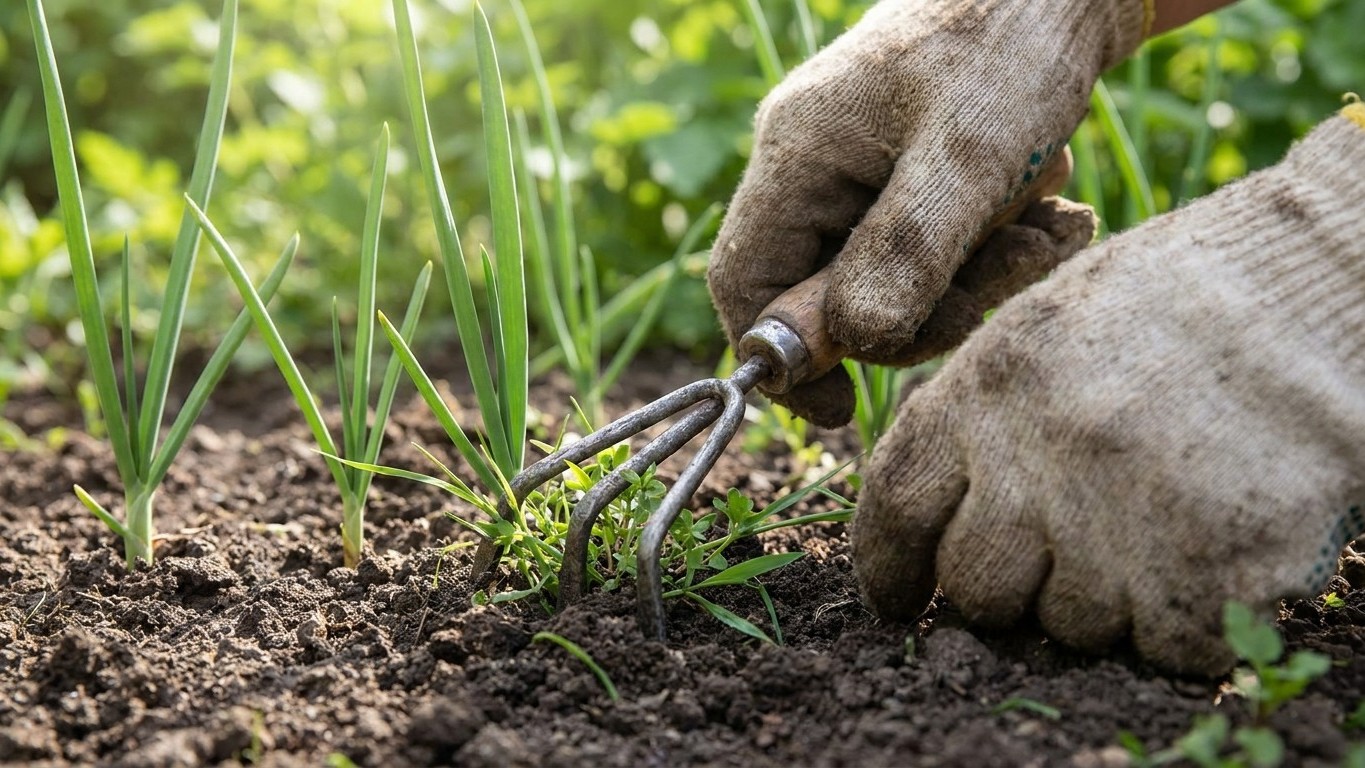

The fix is shallow, frequent weeding that starts the day seedlings emerge and doesn’t let up for the first six to eight weeks. Onions can’t out-compete weeds on their own, so the gardener has to do the job the plant can’t do for itself. Skip that early window and the crop is already compromised before the bulbs even start to form.
Keeping Weeds Out of an Onion Bed

Onions lose to weeds more easily than almost any other vegetable in the garden, and the reason isn’t bad luck. It’s physical. The leaves grow upright, like thin green straws, so they cast almost no shade on the soil beneath them. A lamb’s-quarter seedling or a patch of crabgrass gets full sun right at the base of the onion row, same as if the onion weren’t there at all. Compare that to a squash plant or a pepper, whose broad leaves eventually shade out anything trying to sprout underneath, and the disadvantage becomes obvious.
The root system makes the problem worse. Onion roots are shallow and sparse, not the dense, wide-ranging mat you’d find on a tomato or a bean plant. That thin root network can’t pull in the water and nutrients fast enough to choke out a weed growing right next to it. A weed with a deeper or more aggressive root system will simply take what it needs first, and the onion bulb pays the price in size at harvest.
Why the Bed Never Really Closes
With most crops, there’s a point in the season where the canopy fills in and weed pressure drops off because there’s no bare soil left for seeds to germinate in. Onions never reach that point. The bed stays open all season, row after row of narrow leaves with plenty of exposed dirt between them. That means weed seeds keep germinating from spring planting right through to harvest, not just in the first few weeks. Gardeners who stop checking the bed in July are often surprised by a fresh flush of weeds in August.
Why the Early Weeks Matter Most
The first six to eight weeks after planting are when the plant is building its leaves, and the leaf count at that stage determines how many rings the bulb will eventually have. Fewer leaves mean a smaller bulb, period. Weeds competing for light, water, and nutrients during that early window don’t just slow the onion down temporarily. They permanently limit how large that bulb can get, because the leaf-building phase doesn’t repeat later in the season. This is the single biggest reason extension programs across the country tell home gardeners to weed onions harder and earlier than almost anything else in the vegetable patch.
How to do it
- Start weeding before you can see the weeds. The day onion seedlings poke through the soil, run a hand cultivator or hoe lightly across the bed. Weed seeds germinate on the same schedule the onions do, and getting ahead of them means fewer to pull later.
- Switch to hand-pulling within the row. Onion seedlings are packed close together, and a hoe can’t get between them without risking the bulbs. Pull small weeds by hand as soon as they’re visible, while their roots are still tiny and come out clean.
- Hoe the paths between rows, but keep it shallow. Onion roots sit just under the surface, and a hoe run deep will slice right through them. Skim the top half-inch of soil instead of chopping down, and you’ll get the weeds without wounding the crop.
- Mulch once seedlings are established. A thin layer of straw or shredded leaves between rows blocks light to weed seeds without smothering the shallow onion roots. Wait until plants have a few true leaves before laying it down, so you’re not burying the onions themselves.
- Recheck the bed every four to five days through the first two months. This is the window where leaf growth sets the size of the bulb, so any weed left in place for a week is doing real damage. A quick pass every few days beats one big cleanup every three weeks.
- Ease off, but don’t stop, once bulbs start to swell. The bed still won’t close over, so weeds keep sprouting. Later weeding matters less for bulb size but still matters for harvest, since a weedy bed makes it harder to see when the tops are falling over and the onions are ready to pull.
What goes wrong
- The hoe cuts into onion roots. This shows up as wilted or stunted plants in a line right where the hoe passed, even though the leaves looked fine the day before. Once it’s happened, stop hoeing that section and switch to hand-weeding only, and water the row to help the remaining roots recover.
- Weeds get ahead during a busy week. A single week of neglect during the early leaf-building stage can let weeds triple in size and start shading the onions instead of the other way around. If this happens, pull the worst offenders by hand immediately rather than waiting for a scheduled weeding day, since every extra day of competition during this window shows up later as smaller bulbs.
- A second flush of weeds appears mid-summer. Gardeners who assume the job is done after the first two months are often caught off guard when new weeds germinate in the bare soil between rows in July or August. Since the bed never closes over, this is normal, not a sign anything was done wrong. Keep light mulch topped up and do a shallow pass every couple of weeks rather than treating it as a one-time task.
- Mulch gets piled too close to the stems. Straw or leaf mulch pushed right up against onion necks can trap moisture and invite rot, especially in humid climates. If you notice soft or discolored stem tissue, pull the mulch back an inch or two from each plant and let the area dry out before reapplying.
- Bulbs come out undersized despite a weed-free bed. This usually traces back to weeds that were present during the first six to eight weeks, even if the bed looked clean by harvest. There’s no fixing that crop once the leaves have finished forming, but it’s a clear signal to weed harder and earlier the following season, particularly in the first two months after planting.