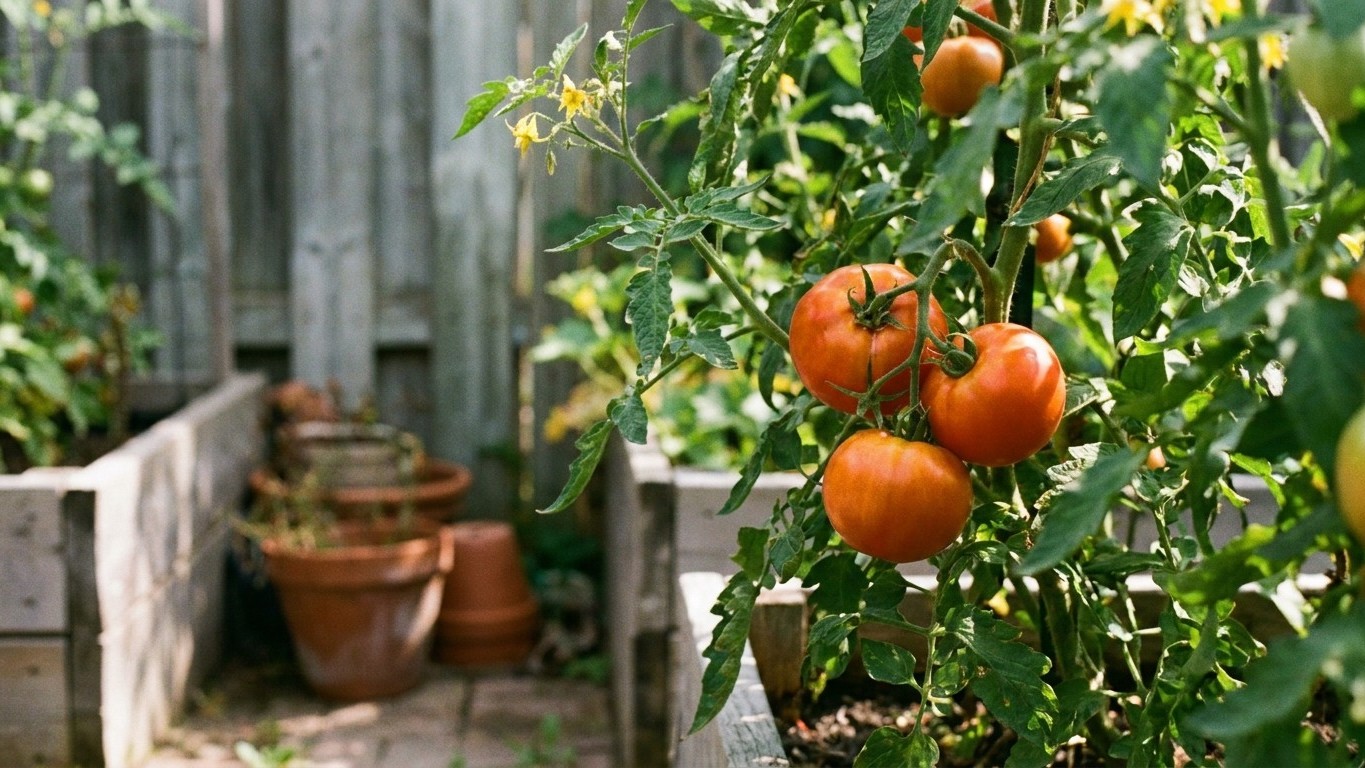

Environment and Climate Change Canada’s 1981-2010 climate normals for Toronto Pearson International Airport put the average last spring frost at April 30 and the average first fall frost at October 16, leaving about 168 frost-free days in a typical year. That last frost date is a midpoint, not a promise: frost falls after April 30 in roughly half of the years in that record, and northern and higher-elevation parts of Ontario run weeks behind Toronto. Set transplants out in mid-May, once nights have warmed, rather than by the calendar date alone.
When to plant Tomatoes in Ontario

The frost record from Toronto Pearson, kept by Environment and Climate Change Canada across the 1981-2010 normal period, is the closest thing Ontario has to a shared reference point, but it describes one station in the Golden Horseshoe, not the whole province. Growers around Ottawa, along the Bruce Peninsula, or in Muskoka and points further north should expect their own last frost to fall later than the April 30 mean at Pearson, sometimes by two or three weeks. Check how your district compares before locking in a date, and see our broader Ontario guides for regional detail beyond the Toronto figures used here.
Starting seed indoors
Tomato transplants need six to eight weeks under lights or on a bright windowsill before they’re ready to go outside. With the target transplant date landing in mid-May across most of southern Ontario, count backward: eight weeks before mid-May lands in late March, six weeks before lands in early to mid April. For the full breakdown of this backward-counting method and how it applies across the province, see Tomato Planting Dates in Ontario: Counting Back From Your Frost Window. Sow indoors from late March through mid April, depending on how large a transplant you want and how much growing space you have under lights. Sowing much earlier rarely pays off. A tomato seedling held too long indoors gets leggy and root-bound, and a stunted ten-week-old transplant usually loses ground to a stocky six-week-old one within a few weeks of being planted out. Choosing the right cultivar matters too, so check our list of Tomato Varieties That Ripen in Time in Ontario before deciding what to start indoors.
Hardening off and transplanting out
Seedlings need seven to ten days outside in gradually lengthening stretches, out of harsh wind, before they go into the bed for good. Start that process in the first half of May so plants are ready by mid-May. Once transplants are in the ground, keep an eye out early for trouble; our guide to Tomato Pests in Ontario covers what to watch for in the weeks after planting out. Don’t treat April 30 as a safe planting date. It’s a thirty-year mean, and Environment and Climate Change Canada’s own record shows frost lands after it in about half of those years. The extra two weeks into mid-May cost almost nothing against a 168-day average season, and skipping that wait is the single most common way a home garden loses a flat of seedlings to a late cold snap.
Soil temperature matters as much as air temperature. Tomato roots stall in cold soil even on a mild afternoon, so check that the bed is warm a few inches down before planting, whatever the forecast says. A raised bed or a sheet of black plastic laid over the soil a week or two ahead warms the ground faster than bare soil and can buy a few extra days on the front end of the season.
Soil and site preparation
Tomatoes want at least six to eight hours of direct sun and a site that doesn’t collect standing water after a heavy rain. Cold air also pools in low corners of a yard on still, clear spring nights, which is exactly the kind of pocket that catches a late frost the rest of the yard escapes. A slope, or even a spot raised a foot above its surroundings, gives real protection against that.
Working the bed before planting
Start soil prep a few weeks before transplant day, not the weekend of. Work compost or well-rotted manure into the top six to eight inches as soon as the ground is dry enough to dig without clumping into hard clods. Tomatoes do best in soil that drains freely but still holds moisture, somewhere between sandy loam and heavy clay. If your soil runs to heavy clay, a raised bed or a mounded row solves most of the drainage problem faster than waiting years for amendments to change the underlying texture. A soil test through your local extension office tells you where pH and nutrients actually stand, rather than guessing at lime and fertilizer rates and wasting both money and a season’s growth.
Spacing at planting
Give indeterminate varieties, the ones that keep growing and setting fruit all season, 24 to 36 inches between plants when staked or caged, since a few overcrowded main stems shade each other and slow ripening. Determinate varieties, which grow to a set size and ripen over a shorter window, can sit a little closer, around 18 to 24 inches. Space rows three to four feet apart for room to weed and pick without trampling the bed. Crowding is one of the most common mistakes in a first tomato garden, and it shows up later as slow-drying foliage and a longer run of disease pressure than an airier layout would have had.
Varieties that suit Ontario
The trait that matters most in this climate is days to maturity, counted from the date of transplant, not from seed. With transplants going in mid-May across most of southern Ontario and the average first fall frost landing October 16 at Toronto Pearson, a variety needing 55 to 60 days to first ripe fruit finishes with a wide safety margin, while one needing 75 to 78 days finishes tighter and rewards every week of head start given indoors. Resistance to fusarium and verticillium wilt matters too, especially in soil that’s grown tomatoes in the same spot for several years running.
Fast to mid-season varieties
Sakura, Edox, Valentine and Glacier all list 55 days to maturity from transplant. Set out mid-May, that puts first ripe fruit in early July with about 100 days of margin before the average fall frost date, comfortable enough that a cool, wet spring won’t put the crop at risk. Sun Gold (57 days), Juliet (60 days) and Supersweet 100 (60 days) follow close behind, ripening by mid-July with roughly 95 to 98 days of margin.
Slower varieties for flavor and size
Cherokee Purple and Big Beef Plus (72 days), Amalfi (68 days), Tiren and Granadero (75 days), and San Marzano II and Celebrity Plus (78 days) are the beefsteaks, paste tomatoes and heirlooms that reward the wait with size, flavor or sauce quality. Set out mid-May, these ripen from late July onward and still carry 77 to 87 days of margin before the mean fall frost, which is comfortable in a normal year but worth pushing toward the earlier edge of the transplant window if the spring runs cold.
| Variety | Days to maturity | Habit | Notable resistance |
|---|---|---|---|
| Sakura / Edox | 55 | Indeterminate | Fusarium races 1,2; Tomato Mosaic Virus |
| Glacier | 55 | Determinate | None listed |
| Valentine | 55 | Indeterminate | Early Blight (intermediate) |
| Sun Gold | 57 | Indeterminate | Tobacco Mosaic Virus; Fusarium race 1 |
| Juliet | 60 | Indeterminate | Late & Early Blight (intermediate) |
| Supersweet 100 | 60 | Indeterminate | Verticillium Wilt; Fusarium race 1 |
| Amalfi | 68 | Determinate | Nematodes; Late & Early Blight (intermediate) |
| Cherokee Purple | 72 | Indeterminate | None listed |
| Big Beef Plus | 72 | Indeterminate | Nematodes; Gray Leaf Spot; Tomato Mosaic Virus |
| Tiren | 75 | Indeterminate | Verticillium Wilt; Tomato Mosaic Virus; Fusarium race 1 |
| Granadero | 75 | Indeterminate | Nematodes; Verticillium Wilt; Tomato Mosaic Virus |
| San Marzano II | 78 | Indeterminate | None listed |
| Celebrity Plus | 78 | Determinate | Nematodes; Gray Leaf Spot; Tomato Mosaic Virus |
Gardeners in milder, longer-season regions, like the coastal valleys covered in our British Columbia tomato guide, can lean toward the 78-day varieties without much thought. Ontario’s season allows the same choices, just with less slack for a late, cold spring, which is the real argument for starting seed on schedule rather than a few weeks behind it.
What to plant alongside
Basil is the classic tomato companion, and it earns the spot for a practical reason rather than folklore: it stays low, doesn’t compete hard for light, and ends up in the kitchen with the same tomatoes it grew beside. Borage and other flowering herbs at the bed edge draw in pollinators and the predatory wasps that help keep hornworm and aphid numbers down. Marigolds get planted next to tomatoes constantly, and while gardeners often credit them with repelling nematodes and whitefly, the evidence behind that claim is thin. Plant them for the pollinator draw and the look of the bed, not as pest control you can count on.
Good neighbors and genuine reasons
- Carrots and onions: shallow, narrow root systems that don’t compete with tomato roots for the same soil depth.
- Lettuce and spinach: low growers that use the shade cast by taller tomato foliage in summer heat, and are usually finished and cleared before the tomatoes fill out.
- Nasturtium: a genuine trap crop for aphids, which settle on nasturtium in preference to tomato foliage when both are present.
What to keep away
Keep tomatoes away from potatoes, eggplant and peppers in your rotation plan, not just at planting time. All four are nightshades that share the same soil-borne diseases, including the wilts and blights covered later in this guide, and growing them in the same bed year after year builds up disease pressure no amount of companion planting will offset. Fennel is also worth avoiding nearby. It’s one of the few plants that reliably stunts tomato growth close by, most likely through root exudates rather than the specific chemical mechanism some older gardening books describe.
Watering, feeding and support
Water deeply and less often rather than a light daily sprinkle. A mature plant wants roughly one to one and a half inches of water a week, delivered in one or two soakings that reach six inches down, not a surface splash that keeps the top inch damp and the roots shallow. Uneven watering, not a lack of water, is the direct cause of blossom end rot and fruit cracking, so consistency matters more than total volume.
Mulch and feeding
Mulch with straw, shredded leaves or grass clippings once the soil has warmed through in late May or early June. Mulching too early keeps the soil cold and slows early growth, which is why it pays to wait until plants are established rather than mulching at transplant. Feed at planting with a balanced starter fertilizer worked into the hole, then switch to something lower in nitrogen and higher in potassium once the first flower clusters open. Heavy nitrogen late in the season pushes leafy growth at the expense of fruit set, a common reason a lush, dark green plant produces disappointingly little fruit.
Staking, caging and pruning
Indeterminate varieties, including Sakura, Edox, Sun Gold, Cherokee Purple and most of the others in the table above, keep growing taller all season and need a stake, cage or trellis strong enough to hold six feet or more of vine by August. Determinate varieties like Glacier, Amalfi and Celebrity Plus grow to a fixed size and manage fine with a shorter cage. Prune the suckers, the shoots growing in the joint between the main stem and a branch, on indeterminate types to keep the plant to one or two main stems and improve airflow. Skip pruning on determinate varieties. Removing their growing points cuts into the fixed amount of fruit they’re built to produce.
Common problems

Most tomato failures in a home garden trace back to a handful of repeat offenders. Learning to read the symptom quickly saves the rest of the crop, since several of these spread from the first affected plant to its neighbors within days.
Blossom end rot

A flat, sunken, leathery patch forms on the blossom end of the fruit, the end opposite the stem, turning dark brown to black while the fruit is still green or just starting to color. It’s caused by calcium failing to reach the fruit, which is almost always a watering problem rather than a soil calcium deficiency. Even, deep watering on a regular schedule prevents it more reliably than adding calcium products to the soil.
Fruit cracking

Concentric rings or radial splits open in the skin near the stem end, typically right after heavy rain follows a dry spell, because the fruit swells faster than the skin can stretch. Mulching to keep soil moisture more even through dry stretches is the main defense.
Early blight

Dark brown spots with visible concentric rings, target-like, appear on the lower and older leaves first, with yellowing spreading around each spot. Remove affected foliage as soon as you spot it and improve airflow around the base of the plant.
Late blight

Greasy, water-soaked, dark green to brown blotches spread across leaves and stems, sometimes with a white fuzzy growth on the underside of leaves in humid weather. It can take down a plant within days in the right conditions. Destroy affected material rather than composting it, and where blight pressure has been a problem before, lean on varieties carrying intermediate resistance, such as Valentine, Juliet or Amalfi.
Wilt diseases

Fusarium and verticillium wilt cause yellowing and wilting that often starts on one side of the plant or on lower leaves, progressing upward even when the soil is adequately moist. There’s no cure once a plant is infected. Pull and discard it, and in beds with a known history of either disease, favor resistant varieties like Sun Gold, Supersweet 100, Tiren or Granadero.
Poor fruit set
Flowers form and drop without ever becoming fruit. Temperature extremes are the usual cause. Tomato pollen doesn’t set well when nights run too warm or when a cold snap catches blossoms during a cool stretch, and there’s little to do beyond waiting out the weather, though gently tapping flower clusters at midday can help release pollen during a still, humid spell with few pollinators about.
Tomato hornworm

A large green caterpillar, several inches long by the time it’s noticed, with pale diagonal stripes down its sides and a curved horn-like spike at the tail end, can strip a plant of leaves in a couple of days. Hand-picking remains the most effective control in a home garden. Check the undersides of leaves in the morning, when the caterpillars show up clearly against the foliage.
Ripening before the frost comes back
This is the calculation that decides whether a variety is worth planting in a short-season garden. Environment and Climate Change Canada’s 1981-2010 normals put the average frost-free stretch at Toronto Pearson at 168 days, running from the April 30 mean last spring frost to the October 16 mean first fall frost. But transplants don’t go in on April 30. Waiting the extra two weeks into mid-May, for the reasons covered above, means the useful growing window from transplant to fall frost runs closer to 150 to 155 days, not the full 168.
Doing the arithmetic for each variety
Subtract a variety’s days-to-maturity, counted from transplant, from that 150-to-155-day window to see how much margin is left before the fall frost. A 55-day variety like Sakura or Glacier uses up roughly a third of that window and leaves close to 100 days spare, plenty of room even for a late, cold spring. A 78-day variety like San Marzano II or Celebrity Plus leaves closer to 77 days of margin, still comfortable in a normal year but with less room for error if the season starts late or runs cool.
Every variety named in this guide clears the Toronto Pearson frost window with real margin to spare, which says more about how forgiving a 168-day season is than about any particular trick. Growers on a genuinely tight coastal season, like the timing covered in our Prince Edward Island tomato guide, work with far less slack and lean harder on the fastest varieties as a result. In Ontario, the bigger risk is a late, cold spring pushing transplant day back, not the days-to-maturity figure itself. Starting seed on the early edge of the late-March-to-April window, warming beds with black plastic, and covering young plants on cold nights protect that margin more effectively than switching to a shorter-season variety would.
Harvest and end of season
Pick tomatoes once they’ve reached full color for the variety, whether that’s the deep red of Big Beef Plus, the golden-orange of Sun Gold, or the dusky purple-pink of Cherokee Purple, and give the fruit a gentle twist rather than pulling straight off the stem. Fruit left on the vine past full ripeness softens fast and draws pests, so check plants every couple of days once the main flush starts.
Ripening fruit that didn’t make it
As the average October 16 first fall frost approaches, watch the extended forecast rather than the calendar date itself, since that figure is a mean from Environment and Climate Change Canada’s Toronto Pearson record and frost has arrived earlier than that in plenty of years. Once a hard freeze is forecast, strip the plant of any fruit showing color, along with full-sized green fruit that’s stopped growing. Green fruit that never sized up won’t ripen well regardless of frost, but mature green fruit ripens indoors reliably over one to three weeks laid out of direct sun at room temperature, not on a sunny windowsill, which cooks fruit faster than it ripens it.
Storage
Ripe tomatoes keep best on the counter, stem side down, out of the refrigerator. Cold storage below about 55°F dulls both texture and flavor within a day or two, which is the main reason a homegrown tomato tastes worse the moment it goes into the fridge. Green tomatoes destined for indoor ripening store best wrapped individually in newspaper in a single layer, checked every few days and pulled as they color up.
Local help
Frost dates, soil types and disease pressure all shift as you move across Ontario, and the Toronto Pearson figures used throughout this guide are a starting point, not a local forecast. For county-level planting guidance and soil testing, check Ontario’s agriculture ministry through the provincial agriculture and food portal, which can point you to resources closer to your own growing conditions.
Common questions
Can I plant tomatoes in early May instead of waiting for mid-May?
You can, but you’re taking on more frost risk. The April 30 mean last frost at Toronto Pearson means frost arrives after that date in about half of all years on record, and early May still sits close enough to that mean to catch a cold snap in a below-average year. Waiting into mid-May costs little against a season that already runs 168 frost-free days on average.
My tomato leaves are curling but I don’t see any pests. What’s wrong?
Leaf curl without visible pests is usually physiological leaf roll, triggered by heat, drought stress or heavy pruning, and it shows up most on indeterminate varieties carrying a heavy fruit load. The lower and older leaves curl upward and feel leathery, but the plant keeps growing and fruiting normally. It’s not a disease and doesn’t need treatment beyond keeping watering even.
Can I save seed from these varieties to plant next year?
It depends on whether the variety is a hybrid or open-pollinated, and that’s printed on the seed packet as an F1 designation if it applies. Saved seed from a hybrid reverts toward one of its parent lines and loses the specific disease resistance and yield traits the packet describes. Check the packet before you plan on seed-saving any particular variety.
Is a greenhouse or hoop tunnel worth it for tomatoes in Ontario?
It can extend the season meaningfully, especially at transplant time, when a tunnel raises soil and air temperature enough to set plants out earlier than the mid-May window most gardens use. It also helps at the tail end, letting plants keep ripening past a light early frost. Since the varieties in this guide already carry 77 to 100 days of margin against the Toronto Pearson average fall frost, the benefit shows up more in earlier ripening than in preventing crop failure, and it matters most in northern or upland districts running behind the Toronto figures.
Do I really need to rotate where I plant tomatoes every year?
Ideally yes, with a three to four year gap between tomatoes and other nightshades in the same spot, because the wilt diseases and blight spores covered above persist in soil for years. In a small garden without room for true rotation, growing resistant varieties and refreshing the bed with compost each year reduces the buildup, though it doesn’t eliminate it the way a real rotation does.
Related guides
- Growing Tomatoes in Manitoba: Planting Dates, Varieties and Ripening Before Frost
- Growing Tomatoes in Quebec: Planting Dates, Varieties and Ripening Before Frost
- Growing Tomatoes in Prince Edward Island: Planting Dates, Varieties and Ripening Before Frost
- When to Plant Onions in Ontario
- Will Ontario Soil Hold an Asparagus Bed for Fifteen Years
- When to Sow Pumpkins in Ontario