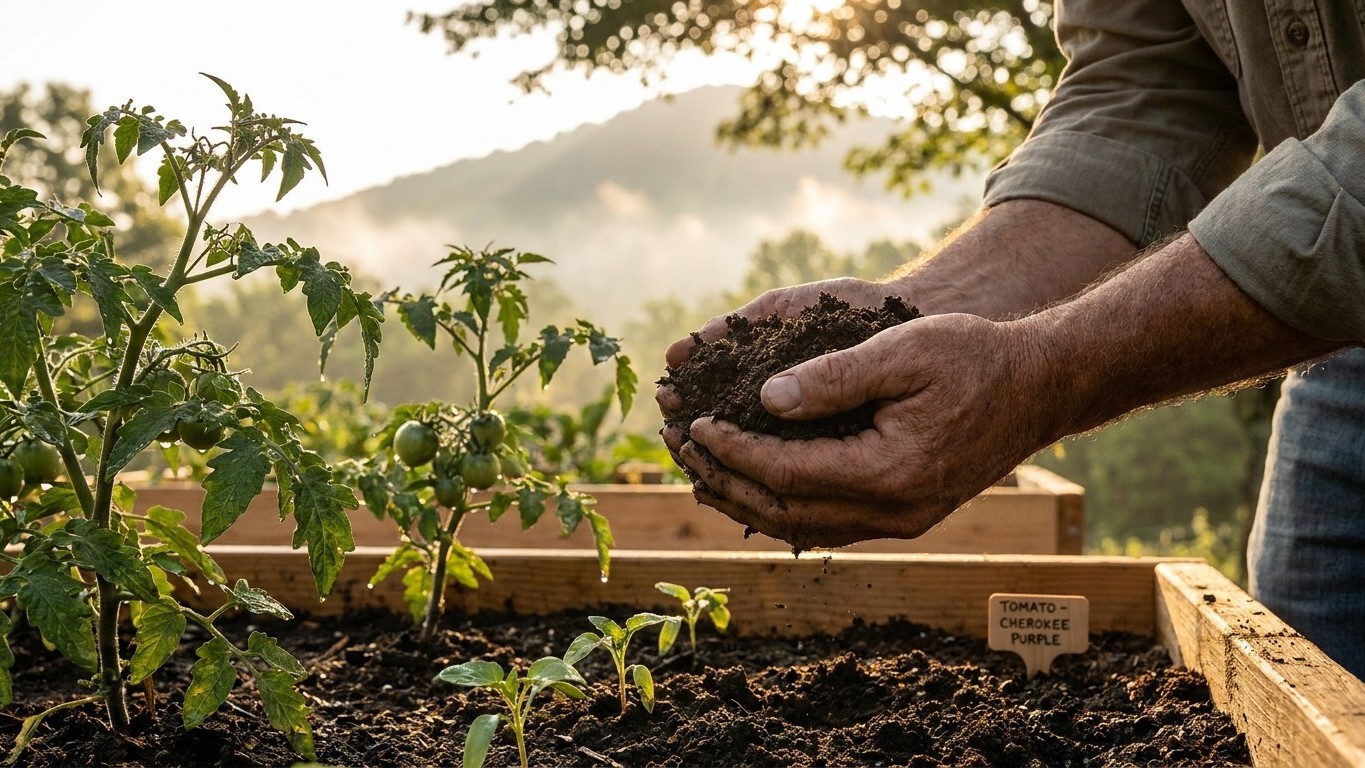

West Virginia gardens live on a mix of mountain shade, river-valley heat, and rain that never arrives on a predictable schedule. The short answer: water deeply once or twice a week rather than a little every day, check the soil before you check the calendar, and call your local water utility or the WVU Extension Service before you assume there are no rules.
What the climate asks of you

Start with the number that decides whether a garden coasts through August or wilts by noon: 16.0 days a year reach 90F or hotter, based on NOAA’s 1991-2020 Climate Normals at the Charleston reference station. That is not a brutal number compared to states further south or west, but it is enough heat stress, stacked into the back half of summer, to pull moisture out of a garden bed faster than most gardeners expect. Sixteen days sounds small until they cluster into a two-week stretch in July, and that stretch is exactly when a shallow-rooted tomato plant or a newly seeded lawn patch shows the first signs of trouble.
West Virginia’s growing conditions vary more by elevation than by latitude. The USDA Plant Hardiness Zone Map places the state across a wide 5a-7a band, with Charleston’s river valley running warmer than the ridges and high plateaus just a few miles away. That same valley effect shows up in frost timing: the last spring frost around Charleston falls between April 9 and April 23, and the first fall frost lands between October 18 and November 1, according to NOAA’s 32F freeze-probability normals. Gardeners up in the highlands should expect frost to arrive noticeably earlier in fall and linger later in spring, which shortens the window when watering even matters.
None of this replaces knowing your own soil. A garden bed generally wants about an inch of water a week, whether that inch comes from the sky or from a hose. In a state where rain during a normal week can fall short of that inch, or come all at once in a thunderstorm and run off before it soaks in, the gap gets filled by the gardener, not the forecast. Sandy soil found in river bottoms drains that inch through in a day; heavy clay common on hillside cuts holds onto it for a week, then drowns roots if more water shows up before it has a chance to dry. Knowing which one you’re standing on matters more than any statewide average, and it’s exactly what makes Watering Through a Dry Spell in West Virginia such a different challenge from bed to bed, and it’s the same reasoning that shapes Watering Pots and Containers in West Virginia, where the same soil sits in a pot with nowhere for excess water to go.
| Metric | Value | Source |
|---|---|---|
| Days above 90F per year | 16.0 | NOAA NCEI Climate Normals, Charleston |
| USDA Hardiness Zones | 5a-7a | USDA Plant Hardiness Zone Map 2023 |
| Last spring frost | April 9-23 | NOAA NCEI 1991-2020 Normals |
| First fall frost | Oct 18-Nov 1 | NOAA NCEI 1991-2020 Normals |
How much, how often
Deep and infrequent beats shallow and daily, every time. A quick daily sprinkle wets the top inch of soil and trains roots to stay near the surface, right where they bake during those 16-plus days a year that hit 90F. A deep soak, given less often, pushes moisture down where roots can follow it and where it survives longer between visits from the hose.
The soil tells you when it’s time, not the clock. Push a finger two inches into the bed, or slide a trowel in near the root zone. If it comes out dry and crumbly, water. If it’s still cool and slightly damp, wait another day. This single habit prevents more plant loss than any watering schedule pinned to the wall.
A watering sequence that works on West Virginia ground
- Check soil moisture two inches down with a finger or trowel before touching the hose, every time, not just on hot days.
- Water in the early morning, ideally before 9 a.m., so moisture soaks in before the heat of the day pulls it back out through evaporation.
- Apply water at the base of the plant, never overhead, since wet foliage in West Virginia’s humid summers invites fungal problems fast.
- On sandy river-bottom soil, water more often but in smaller amounts, roughly every three to four days, since the ground can’t hold much at once.
- On heavy clay hillside soil, water less often but more heavily, about once a week, and never dig, till, or add compost to clay that’s still wet from the last watering or a recent rain.
- During stretches that touch or approach 90F, shorten the interval between waterings by a day or two rather than increasing the amount per session.
Tie the calendar to the season rather than the month. Late summer, when the days-above-90F count runs highest, is when West Virginia gardens shift from mostly rain-fed to mostly gardener-fed. A bed that survived June on rainfall alone can need a supplemental soak twice a week by August, especially on lighter soils or in full-sun exposures near a driveway or south-facing wall.
Restrictions and rules
Watering restrictions in West Virginia are set locally, by municipal water systems and public service districts, not by a single statewide rule. That means a restriction active in one county or one water district may not exist a few miles away, and the details, whether it’s an odd-even address schedule, a time-of-day ban, or a full outdoor watering restriction, change from one summer to the next depending on reservoir levels and rainfall.
Because rules shift with local conditions and aren’t fixed in any single public database, the only reliable move is to check directly. Call or check the website of the water utility that bills your address, and separately check with your county or municipal government, since some restrictions are issued through public health or emergency management channels rather than the water company itself. The WVU Extension Service also tracks drought conditions and can point gardeners toward current advisories for their county.
Given that West Virginia summers include real heat stress, sixteen days a year at 90F or above, and rainfall that doesn’t arrive evenly across the season, dry spells serious enough to trigger local restrictions aren’t rare. Checking before you set an automatic timer or install a new irrigation system saves you from finding out mid-July that your schedule violates a rule nobody warned you about.
Using less
Cutting water use in a West Virginia garden doesn’t mean watering less carefully. It means making every gallon you do apply last longer, and a handful of specific changes do most of the work.
- Mulch, two to three inches deep, over garden beds slows evaporation dramatically and keeps soil temperature more stable during those 90F stretches, which means less water lost to the air before roots ever reach it.
- Drip irrigation or soaker hoses deliver water at the base of the plant instead of broadcasting it over the whole bed, cutting evaporation loss and keeping foliage dry, which matters in a humid state where wet leaves invite disease.
- Grouping plants by water need means a bed of drought-tolerant natives isn’t getting soaked on the same schedule as thirsty vegetables nearby, so no water gets wasted on plants that didn’t need it.
- Organic matter worked into the soil, especially on the lighter, sandier ground found in river valleys, increases how much water the soil holds between waterings, which stretches the interval between hose sessions.
- Rain barrels, where local rules allow them, capture runoff that would otherwise disappear down a storm drain. A roughly thousand-square-foot roof catches about 600 gallons for every inch of rain that falls. In a state where summer rain often arrives in scattered thunderstorm bursts rather than steady soaking rain, a barrel can fill fast after one storm and then sit empty through the following dry week, so it works best as a supplement to, not a replacement for, a hose during the driest stretches of July and August.
None of these fixes require a full garden overhaul. Mulch and a soaker hose alone, applied to an existing bed, typically cut supplemental watering needs by a noticeable margin without changing anything else about how the garden is planted.
Common questions
How often should I water a vegetable garden in West Virginia during summer?
Most vegetable beds do well with a deep soak once or twice a week, adjusted by soil type: more often on sandy ground, less often but heavier on clay. Check soil moisture two inches down before watering rather than sticking to a fixed schedule, since rainfall in a given week can cover part or all of that need.
Are there statewide watering restrictions in West Virginia?
No single statewide rule governs outdoor watering. Restrictions are set by individual water utilities, public service districts, or county governments, and they change with local drought conditions. Check with the utility that bills your address for current rules.
Does elevation change how much I need to water?
Yes. Higher elevations across the state run cooler and see frost earlier in fall and later in spring than the Charleston river valley, which shortens the growing season and can reduce heat stress compared to lower valleys, where the 16 days a year above 90F are concentrated.
Is a rain barrel worth installing in West Virginia?
It helps, especially right after a storm, since about 600 gallons fall from every inch of rain on a thousand-square-foot roof. But because summer rain often comes in scattered bursts rather than steady totals, a barrel alone won’t carry a garden through a multi-week dry stretch in July or August. Treat it as a supplement, and check local rules before installing one.