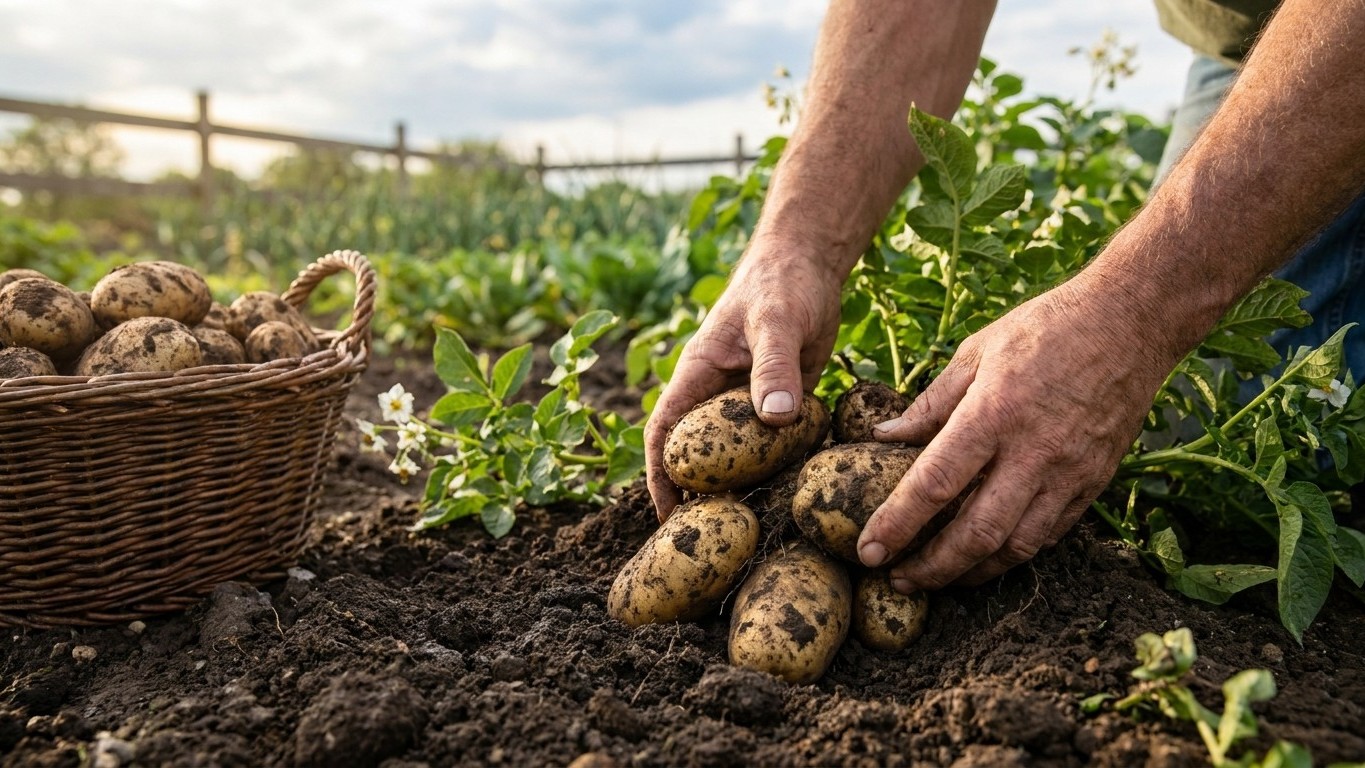

If you’re gardening in Indiana, the short version is this: summer heat is not what will beat you here. The Indianapolis reference station logs an average of only 14.6 days a year at 90 F or hotter, according to NOAA NCEI Climate Normals for 1991-2020, and the last spring frost typically falls between April 9 and April 21. That combination means most Indiana gardeners can run a full-season potato crop rather than racing to dig before summer arrives, though a handful of July scorchers still call for some soil management.
The short answer

Two numbers set the terms of this crop in Indiana. The first is heat load: 14.6 days a year above 90 F at the Indianapolis station, per NOAA NCEI Climate Normals 1991-2020. Compare that to a genuinely hot growing region and it looks mild, which is exactly why potatoes have such a long track record as a home garden staple across the state. The second number is the frost window: the last spring freeze at Indianapolis lands somewhere between April 9 and April 21, based on the same NOAA dataset’s 32 F freeze probability tables.
What ties these two figures together is a mechanism, not a guess. Utah State University Extension’s fact sheet on potatoes states plainly that tuber set and fill are inhibited once soil temperatures climb past 90 F. That threshold is the real ceiling for this crop, and it has nothing to do with air temperature comfort or how the plant looks above ground. A potato plant can be green and thriving while the tubers underground have simply stopped growing. This is why knowing When to Plant Potatoes in Indiana matters so much for timing your crop around that heat ceiling.
Here’s where Indiana’s numbers matter. With only 14.6 days a year reaching 90 F in the air, and soil temperature lagging behind air temperature by design (soil warms and cools more slowly), most Indiana gardens spend relatively few days anywhere near that 90 F soil ceiling. That’s very different from a state where 90-plus days stack up for weeks on end and force growers to dig a spring crop and quit. In Indiana, a full-season crop, planted early and left in the ground through summer, is a realistic plan for most home gardeners, which makes knowing the right approach to Harvesting and Storing Potatoes in Indiana just as important as timing the planting.
Variety choice still matters, even without a heat crisis to plan around. Neither Utah State University Extension nor the University of Maine Cooperative Extension publishes a days-to-maturity figure for named potato varieties, so the honest way to plan is by season class, and reviewing Potato Varieties That Suit Indiana can help narrow the choice: early, mid-season, or late. Early-season types are commonly grown for boiling and use in salads, since they’re often harvested at a smaller, waxier stage. Mid- and late-season types tend to be the ones grown for baking and longer storage, because they spend more time in the ground building starch and building size. In Indiana’s moderate heat load, all three classes have room to finish, which is more flexibility than a lot of states get.
When to plant here
Planting date isn’t a single day marked on a calendar. It’s a countdown you run backward from your local last frost date, and the arithmetic is the same no matter where in Indiana you garden.
- Start from your local last spring frost date. For the Indianapolis area, NOAA NCEI’s 1991-2020 data puts that window between April 9 and April 21. Purdue Extension adds a useful caution here: there’s still roughly a 10 percent chance of a 32 F freeze event even after that published date, so if you’re planting on the early edge of the window, keep row cover or straw mulch ready to throw over the rows.
- Check soil temperature, not air temperature. Potatoes go in the ground once soil reaches 50 F, according to both Utah State University Extension and University of Maine Cooperative Extension. A simple soil thermometer pushed 4 inches down, checked in the morning before the sun warms the surface, is the only reliable way to know this.
- Count back 14 to 21 days from your last frost date. That’s the gap between when soil typically hits 50 F and when the calendar says frost risk has passed. For an Indianapolis-area frost date of April 15 (the midpoint of the published window), that puts planting somewhere in the last days of March through the first week of April, depending on how quickly your particular soil warms that year.
- Adjust for your own soil and site, not the calendar alone. Raised beds, sandy soil, and south-facing slopes all warm faster than heavy clay in a low spot. If your soil thermometer reads below 50 F on the date the countdown suggests, wait. Cold, wet soil does more damage to seed potatoes than a slightly later planting date ever will.
What the heat does to the crop
The mechanism is simple enough to say in one sentence: above 90 F, soil stops the tuber-forming process, and no amount of watering brings it back. Utah State University Extension is explicit about this in its potato fact sheet, and University of Maine Cooperative Extension’s Bulletin #2077 backs the same point. The plant doesn’t die when this happens. It just stops putting size onto the tubers underground while the heat lasts, and that lost growing time doesn’t get made up later.
For Indiana, with only 14.6 days a year crossing 90 F at the Indianapolis reference station, this isn’t the crop-ending event it would be somewhere with weeks of triple-digit-adjacent heat. It’s an occasional interruption. A hot stretch in mid-July might pause tuber sizing for a few days, then growth resumes once temperatures drop back. That’s manageable with basic practices: a heavy layer of mulch over the hilled rows keeps soil several degrees cooler than bare dirt in direct sun, and consistent watering keeps the plant itself from added stress even though it won’t fix the tuber-set problem directly.
What this means practically is that Indiana gardeners don’t need to choose between a spring-only crop and a full-season crop the way growers in hotter regions do. The state’s heat load is low enough that early planting followed by a full summer in the ground works for most varieties and most years. The exception is a garden in an unusually exposed, heat-trapping site, dark soil against a south wall, for instance, where local conditions can push soil temperature well above what the regional average suggests.
What goes wrong here
- Uncertified seed potatoes. Grocery-store potatoes and seed saved from an unknown source often carry viruses that stunt the whole plant and spread through your garden soil for seasons afterward. Buy certified seed potatoes from a garden center or seed company that labels them as certified disease-free.
- Planting into cold, wet soil. Seed pieces set into soil below 50 F, especially soil that’s still soggy from spring rain, rot before they ever sprout. Check with a soil thermometer rather than trusting the calendar, and wait for a drier stretch if your ground is still saturated.
- Skipping the hilling and getting green tubers. Tubers that push up near the soil surface and catch sunlight turn green and develop solanine, a compound that makes them bitter and unsafe to eat in quantity. Hill soil up around the base of the plants every few weeks as they grow, keeping developing tubers covered.
- Digging too early. Pulling potatoes before the vines have died back on their own, or before the season’s growth window has closed, cuts the crop short and leaves tubers smaller and thinner-skinned than they’d otherwise be. Let the plants signal readiness with yellowing, dying foliage before you dig.
Checking this against your own county
Everything above uses Indianapolis as the reference point, because that’s where the published NOAA data comes from. But Indiana runs a few hundred miles north to south, and that distance moves both frost dates and heat load by real margins, not rounding errors. Southern Indiana counties typically see their last spring frost earlier than Indianapolis, while northern counties run later. Elevation and proximity to Lake Michigan shift things further still.
Treat the dates and figures here as a starting point, then confirm them against local conditions before you plant. Purdue Extension (extension.purdue.edu) publishes county-level guidance and can point you to frost data specific to your area, which is worth five minutes before you commit seed potatoes to the ground.
Common questions
Can I grow a fall crop of potatoes in Indiana?
The sources used on this page don’t publish guidance on second or fall plantings for Indiana specifically. Given the state’s low count of 90 F days, a spring-planted, full-season crop is the approach backed by the available data.
Does watering help if the soil gets too hot?
No. Utah State University Extension’s fact sheet is clear that tuber set and fill stop above 90 F in the soil regardless of moisture. Watering keeps the plant healthy but doesn’t restart tuber growth during a heat spike.
What’s the difference between early, mid-season, and late varieties?
Neither Utah State University Extension nor University of Maine Cooperative Extension publishes days-to-maturity numbers, but both describe season class and use: early types are commonly grown for boiling, mid- and late-season types for baking and storage.
Why does certified seed matter so much?
Uncertified seed potatoes can carry viruses invisible to the eye that stunt plants and persist in garden soil. Certified seed is inspected and sold specifically to avoid that risk.