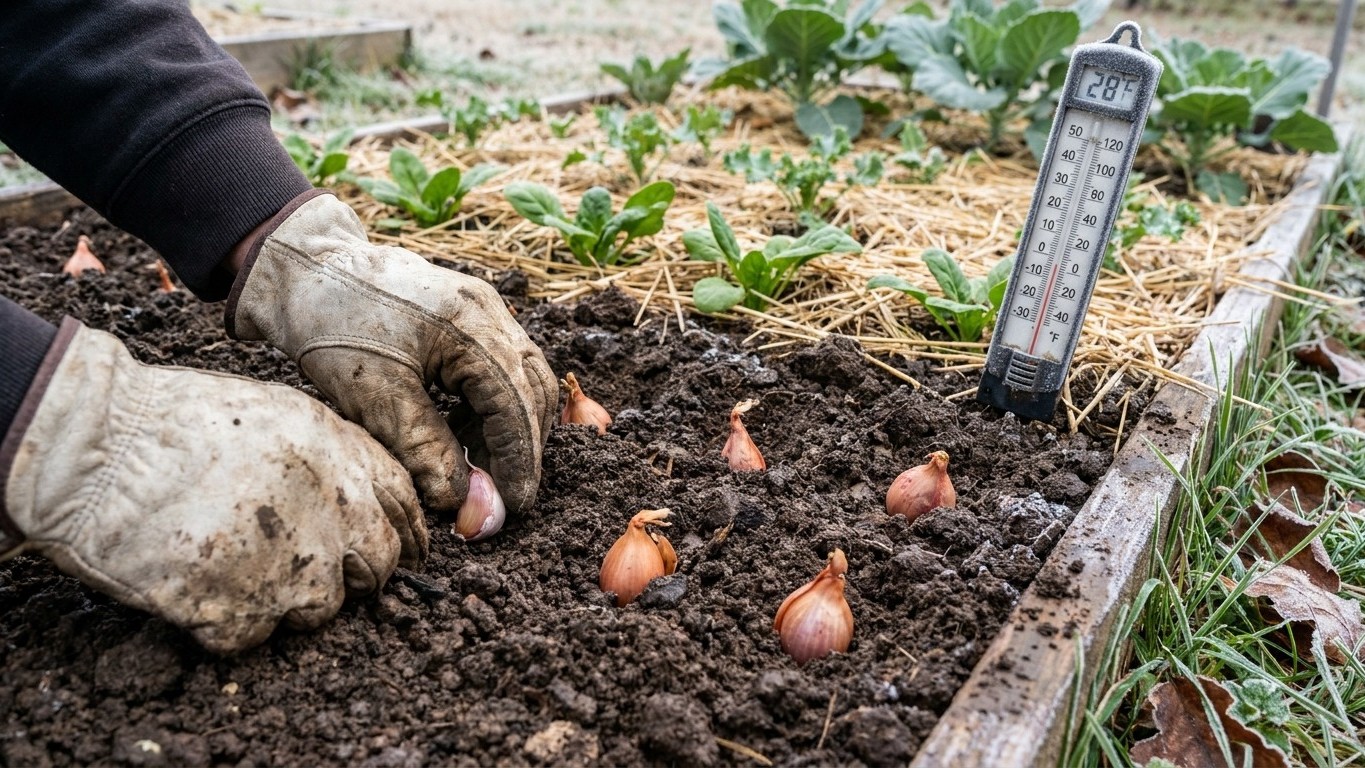

Alabama’s frost window runs from March 19 to April 3 for the last spring freeze, so February sits three to seven weeks ahead of that date across most of the state. That means cold-hardy vegetables and alliums can go in the ground now, but anything tender is still a gamble. The safer February moves are garlic and shallots, hardy greens, English peas, dormant fruit tree pruning, and starting warm-season seedlings indoors for a spring transplant.
What goes in the ground in February

The decision isn’t the calendar, it’s the soil. Alabama sits in USDA hardiness zones 7a to 9a, according to the USDA Plant Hardiness Zone Map built on 1991-2020 average extreme minimum temperatures, and that range matters more than the date on the seed packet. A zone 8b garden along the Gulf Coast can work soil in February that a zone 7a garden in the northern hill country still has crusted with frost most mornings. Before you plant anything, squeeze a handful of soil: if it forms a tight, muddy ball, it’s too wet to work and you’ll compact it. If it crumbles, you’re clear.
With the last frost not arriving until somewhere between March 19 and April 3, February direct-sowing outdoors should stick to crops that shrug off a hard frost rather than crops that merely tolerate a light one. Spinach, kale, collards, mustard greens, and turnips handle nights in the 20s without much drama. English peas go in now too; they germinate in cool soil and actually sulk in heat, so this is close to their ideal window. Onion sets and shallots can still go in where the ground is workable, and seed potatoes can be planted toward the back half of the month in the warmer, southern part of the state.
What doesn’t belong outside yet: tomatoes, peppers, eggplant, squash, beans, and anything else that dies at 32 degrees. Those crops need soil consistently above 60 degrees, and February soil in Alabama, even in the mild counties, rarely holds there. If you’re gardening farther north, toward the Tennessee Valley, push your outdoor dates later and lean harder on cold frames.
Cold frames and bare-root planting
A cold frame or low tunnel buys two to three weeks of season on either end, which in February is often the difference between a crop that germinates and one that rots. It’s also the month for bare-root roses, fruit trees, and cane berries, since they’re still dormant and transplant with far less shock than they would once buds break. If you keep rhubarb or Belgian endive, February is when forcing them indoors in the dark produces the tender, pale stalks that never show up from an outdoor bed.
What to start under cover
Work backward from that March 19 to April 3 frost window rather than from the date on the calendar. Tomatoes need roughly six to eight weeks indoors before they’re ready to go into the garden, which puts a February start right on target for an early-to-mid April transplant. Peppers and eggplant run slower, closer to eight to ten weeks, and they’re fussier about warmth while germinating, so they’re a defensible seed-tray project for early February in most of the state.
Broccoli, cabbage, and other brassica transplants need less lead time, usually five to six weeks, and they can go outside earlier than tomatoes since they tolerate a stray frost after transplanting. That makes them a good second wave to start a couple of weeks behind the tomatoes and peppers.
The two ways this goes wrong both come from ignoring that frost window. Start too early, say in early January instead of February, and by the time the ground is finally warm enough in April, the plants are leggy, rootbound, and stressed before they ever see the garden. Start too late, closer to March, and tomatoes especially won’t have the root mass to handle transplant shock and a full season of fruiting. If your county typically runs colder than the reference frost dates here, which is common inland and at elevation, shift your indoor start a week or two later rather than pushing plants outside before they’re ready. A cheap grow light and a heat mat solve most of the germination problems that come with starting seeds indoors this early, since a sunny windowsill alone often isn’t warm or bright enough.
What is ready to pick
February’s harvest in Alabama comes mostly from what survived winter in the ground rather than anything freshly planted. Overwintered kale, collards, and Brussels sprouts actually taste better after a hard frost, since the cold triggers the plant to convert starches to sugar. Leeks and parsnips left in the ground all winter come out sweeter for the same reason, and they’re worth digging now before warm weather pushes them to bolt.
Cabbage and hardy lettuce planted in fall under row cover or in a cold frame should be sizing up and ready to cut. Check heads for firmness; a cabbage head that gives easily under light pressure isn’t done yet. Radishes sown in late January will be ready in three to four weeks and are one of the fastest crops in an Alabama February garden.
Indoors, this is a good stretch for sprouts and microgreens, which need no outdoor conditions at all and are ready in seven to fourteen days depending on the variety. It’s also the month to go through stored winter squash, potatoes, and onions and pull out anything showing soft spots or sprouting eyes before it spreads to the rest of the bin. A single rotting squash in storage can take down its neighbors within a week or two if it’s not caught early.
The jobs that matter this month
February carries more weight than its short harvest list suggests, because most of what happens now decides how the rest of the year goes. Dormant pruning of fruit trees, blueberries, and cane berries should happen before buds swell; prune too late and you cut off the season’s fruiting wood along with the excess growth. Peaches, apples, and pears in particular need this window, since pruning after leaf-out stresses the tree and invites disease into fresh cuts.
Soil testing pays off now too, since results typically take a couple of weeks to come back and any lime or amendments need time to work into the soil before spring planting. Alabama’s Cooperative Extension System runs soil testing labs specifically for this purpose, and February results leave enough runway to adjust pH before March planting begins in earnest.
A few other jobs earn their place on the February list:
- Order seed for spring and summer crops before popular varieties sell out, which happens earlier every season for heirloom tomatoes and specialty peppers
- Turn the compost pile; cold slows decomposition, and a turn now speeds it up before spring demand for finished compost arrives
- Sharpen and oil pruning shears, hoes, and shovels while there’s time before the rush of spring bed prep
- Repair raised beds, trellises, and fencing while beds are still empty and easy to access
- Map out crop rotation for the coming season, moving nightshades and brassicas to beds they haven’t occupied the past two years
None of this shows up as a harvest, but skip it in February and the cost shows up in June as disease pressure, weak fruit set, or a scramble for seed that’s already sold out.
What not to do in February
The classic February mistake in Alabama is trusting a warm afternoon over the calendar. A run of 70-degree days in the middle of the month feels like spring, but the soil hasn’t caught up, and the frost window doesn’t close until somewhere between March 19 and April 3. Tomatoes, peppers, and squash set out during a warm spell almost always meet a frost within days and die back to the ground, forcing a full restart.
The same warm spell tempts gardeners to pull row covers and mulch off overwintered crops early. Leave the mulch on cool-season crops until you’re past the risk window; uncovering kale or spinach during a mild week only for a hard freeze to hit the following week undoes weeks of protection for no benefit.
Fertilizer timing trips people up too. Heavy nitrogen applications in February push soft, fast growth on plants that then get hit by the next frost, and that tender new growth is what dies first. Hold off on nitrogen-heavy feeding until you’re closer to the actual frost-free date for your county, and stick to phosphorus and potassium if soil test results call for amendments now.
Finally, don’t prune spring-flowering shrubs like azaleas or forsythia this month. They set their flower buds the previous season, and a February pruning cuts off the flowers before they ever open. Save that pruning for right after they finish blooming.
Checking this against your own county
Everything above is a state-wide starting point, not an instruction for your specific yard. Alabama’s frost dates and hardiness zones shift by weeks depending on elevation, proximity to the Gulf, and whether you’re in the Tennessee Valley or the Wiregrass region. A garden at higher elevation or farther inland typically sees its last frost later, and its first fall frost earlier, than the reference station figures cited here suggest.
The Alabama Cooperative Extension System publishes county-specific guidance and a state planting calendar that accounts for these regional differences. Check it before you commit seed to soil.
Common questions
Can I plant tomatoes outside in Alabama in February?
No. The last spring frost across the state’s reference station runs from March 19 to April 3, and tomatoes die at 32 degrees. Start seed indoors in February instead, targeting transplant once your county is safely past frost.
What vegetables can handle a February frost in Alabama?
Spinach, kale, collards, mustard greens, turnips, and English peas all tolerate temperatures well below freezing. These are the safest direct-sown crops for February across most of the state.
Is it too late to prune fruit trees in February?
No, February is generally within the dormant window for most of Alabama, which is the right time to prune peaches, apples, and pears. Prune before buds swell; once new growth starts, you risk cutting off fruiting wood and stressing the tree.
Why does my county’s frost date differ from the state average?
Elevation, distance from the Gulf, and regional climate patterns all shift frost timing by a week or more in either direction. The Alabama Cooperative Extension System offers county-level planting guidance that accounts for these local differences.