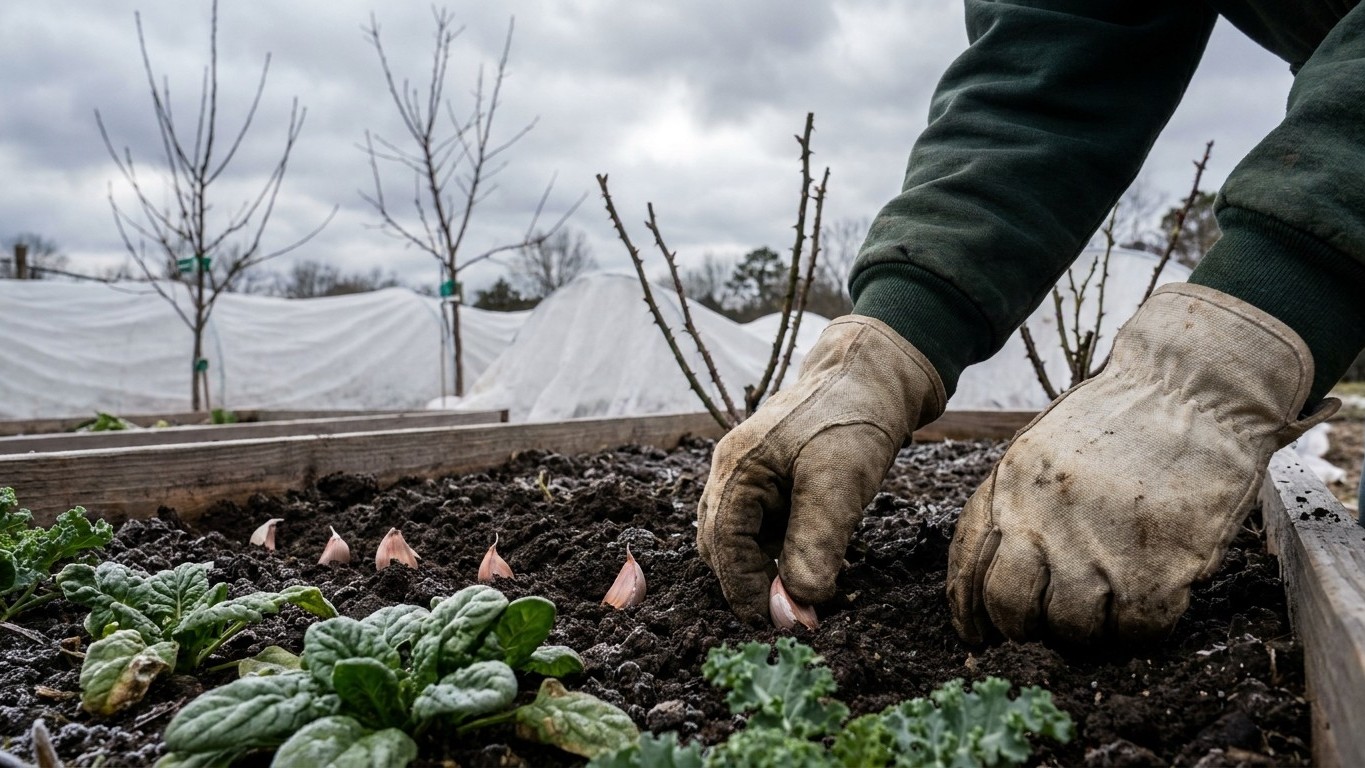

Garlic and shallots can still go into workable soil, hardy greens like spinach and kale can be direct-sown under row cover in the southern half of the state, and bare-root fruit trees, roses, and cane fruit go in while they’re dormant. Everything else this month happens indoors: seed starting for the cool-season crops that will transplant out once the ground warms.
What goes in the ground in January

Alabama’s last spring frost falls between March 19 and April 3 at the reference station, so January sits roughly ten to twelve weeks ahead of that window. That gap is the whole story. Soil temperature, not the date on the calendar, decides what survives outdoors, and in most of the state the ground is still too cold and too wet for anything tender.
But Alabama isn’t a single climate. The USDA Plant Hardiness Zone Map puts the state anywhere from 7a in the north to 9a along the Gulf Coast, a spread wide enough that a crop dying in Huntsville can be thriving in Mobile the same week. Garlic and shallots are the safest bet statewide: press cloves into workable soil now and they’ll bulb up by early summer. Hardy greens (spinach, kale, collards, mustard) can be direct-sown under a low tunnel or row cover, especially in the zone 8b-9a counties near the coast where the ground rarely freezes hard. English peas can go in toward the end of the month in the southern tier if the soil crumbles rather than clumps in your hand.
What to skip outdoors
Anything warm-season (tomatoes, peppers, squash, beans) stays indoors. Ten to twelve weeks before the frost window is too early even for a mild Gulf Coast winter, and a single hard freeze will wipe out a stand overnight.
- Garlic and shallots, cloves in workable soil
- Spinach, kale, collards, mustard greens under row cover or in a cold frame
- Bare-root fruit trees, blueberries, and cane fruit while dormant
- English peas in the southern counties, late in the month, soil permitting
- Forced rhubarb or chicory indoors, dug or potted from the garden
What to start under cover
Work backward from the frost window instead of forward from January. Broccoli, cabbage, and other brassicas need about six to eight weeks indoors before they’re ready to transplant, and they can go into the ground under cover roughly three to four weeks before the last frost date because they tolerate a light freeze. Counting back from a March 19 to April 3 window puts the indoor start right around now for the earlier end of that range, a little later for growers further north where frost typically lingers longer than the reference station shows.
Tomatoes and peppers run on a different clock. They need six to eight weeks of indoor growth for tomatoes, eight to ten for peppers, and neither goes outside until well after the last frost has passed and the soil has actually warmed, not just the air. Starting them now is too early for transplanting but not too early to begin seed if you want husky, well-rooted transplants rather than leggy ones stretching for light on a windowsill.
The two ways this goes wrong are mirror images of each other. Start too early and you end up babysitting rootbound, leggy seedlings for weeks past their prime, fighting to keep them alive until the soil finally cooperates. Start too late and you run out of growing season before the first fall frost arrives, which lands between November 2 and November 16 at the reference station, a narrower window than gardeners think once you subtract the weeks a slow-maturing pepper or eggplant actually needs.
What is ready to pick
Little comes out of an open Alabama garden this month, but the pantry and the cold frame keep the kitchen supplied. Overwintered collards and kale sweeten after a frost, and both can be picked leaf by leaf right through the coldest stretch, especially in the north Alabama counties where a hard freeze actually improves their flavor. Leeks left in the ground hold well and can be pulled as needed rather than harvested all at once.
Cold frames and low tunnels are doing real work now. Lettuce, spinach, and Asian greens tucked under cover in the fall are usually still producing, just slower, and a sunny January afternoon can push the temperature inside a frame well above what’s happening outside it. Indoors, sprouts and microgreens fill the gap in as little as a week from seed, which makes them the fastest fresh crop available this time of year.
Storage crops need a check-in. Go through squash, potatoes, and onions kept in the cellar or pantry and pull anything showing a soft spot, a sprout, or a sour smell before it spreads to the rest of the bin. One rotting potato in a sack will take down its neighbors faster than most gardeners expect, and a five-minute sort now saves a much bigger loss later in the month.
The jobs that matter this month
Dormant pruning tops the list, and January is close to the ideal window for it across most of Alabama. Apple, pear, peach, and blueberry plants are leafless and their structure is easy to read, and cuts made now heal before the spring flush of growth rather than bleeding sap or inviting disease into fresh wounds. Cane fruit like blackberries and raspberries benefit from the same treatment, thinning out old canes to make room for what will fruit next.
Seed ordering has a real deadline even if it doesn’t feel like one. Popular varieties, especially heirloom tomatoes and disease-resistant squash, sell out of the smaller seed houses well before the spring rush, and waiting until March to order often means settling for whatever’s left.
Soil work pays off precisely because nothing is competing for the bed. Pull a soil test now, while there’s time to get results back and amend before spring planting, rather than guessing at lime or fertilizer needs once the season is already underway. Turning the compost pile, even a token turn, keeps decomposition moving through the colder months instead of stalling out.
- Prune dormant fruit trees, blueberries, and cane fruit
- Order seed before popular varieties sell out
- Test soil and amend beds ahead of spring planting
- Clean, sharpen, and oil tools before the season’s first rush
- Repair raised beds, fencing, and trellis hardware
- Sort stored crops and pull anything starting to turn
None of this is filler work. A bed skipped now, a tool left dull, or a fence panel left sagging becomes a bottleneck the moment the ground warms and everything needs doing at once.
What not to do in January
A run of warm days in the Deep South convinces a lot of gardeners the season has turned. It hasn’t. Alabama’s frost window for the reference station runs through early April, and soil at root depth stays cold for weeks after the air feels like spring. Setting out tomato or pepper transplants during a warm spell almost always ends with them dead or badly set back within days.
The same warm spell tempts gardeners to pull row covers off overwintered greens and cold frames early. Resist it. A mild stretch in January is routinely followed by a hard freeze in February, and uncovered plants that were fine under protection can be killed outright once that cover comes off too soon.
Nitrogen timing trips people up too. Feeding a high-nitrogen fertilizer to dormant fruit trees, or to greens that are supposed to be hardening off for winter, pushes soft new growth right when a freeze is most likely. That tender growth is the first thing to die, and it can set the whole plant back further than doing nothing at all. Hold nitrogen until growth actually resumes in spring, and stick to phosphorus and potassium if a soil test calls for amendment now.
Checking this against your own county
A state-wide calendar is a starting point, not an instruction, and Alabama proves that better than most states. The gap between zone 7a in the north and zone 9a along the coast means a planting date that works in Mobile can be six weeks premature in Huntsville, and elevation on places like Sand Mountain pushes frost risk higher still. The frost dates cited here come from a single reference station, and gardens even a short drive away, especially at elevation or in a low-lying frost pocket, can run a week or two colder on both ends of the season.
The Alabama Cooperative Extension System, at aces.edu, publishes county-level guidance and a planting calendar built for the state’s actual range of climates. That’s the place to confirm a date before committing seed or transplants to the ground.
Common questions
Can I plant tomatoes outdoors in Alabama in January?
No. The last spring frost at the reference station runs March 19 to April 3, and January sits roughly two and a half to three months ahead of that window. Tomatoes set out now will be killed by the first freeze. Start seed indoors instead, six to eight weeks before your expected transplant date.
What vegetables can survive frost in Alabama gardens?
Spinach, kale, collards, mustard greens, and garlic all tolerate freezing temperatures, and many gardeners find collards and kale actually taste better after a frost. These are the crops that make sense for direct sowing or overwintering under cover this month.
Is it too late to plant garlic in January?
It’s later than ideal but not too late in most of Alabama, particularly in the southern counties where the ground rarely freezes solid. Garlic planted now will still bulb by early summer, though yields are usually smaller than fall-planted crops.
Why did my seedlings get leggy this month?
Starting seed too early relative to your transplant date is the most common cause. Without enough natural light, indoor seedlings stretch toward whatever light source they can find, producing thin, weak stems. Counting backward from your local frost window, rather than a fixed calendar date, keeps the timing on target.