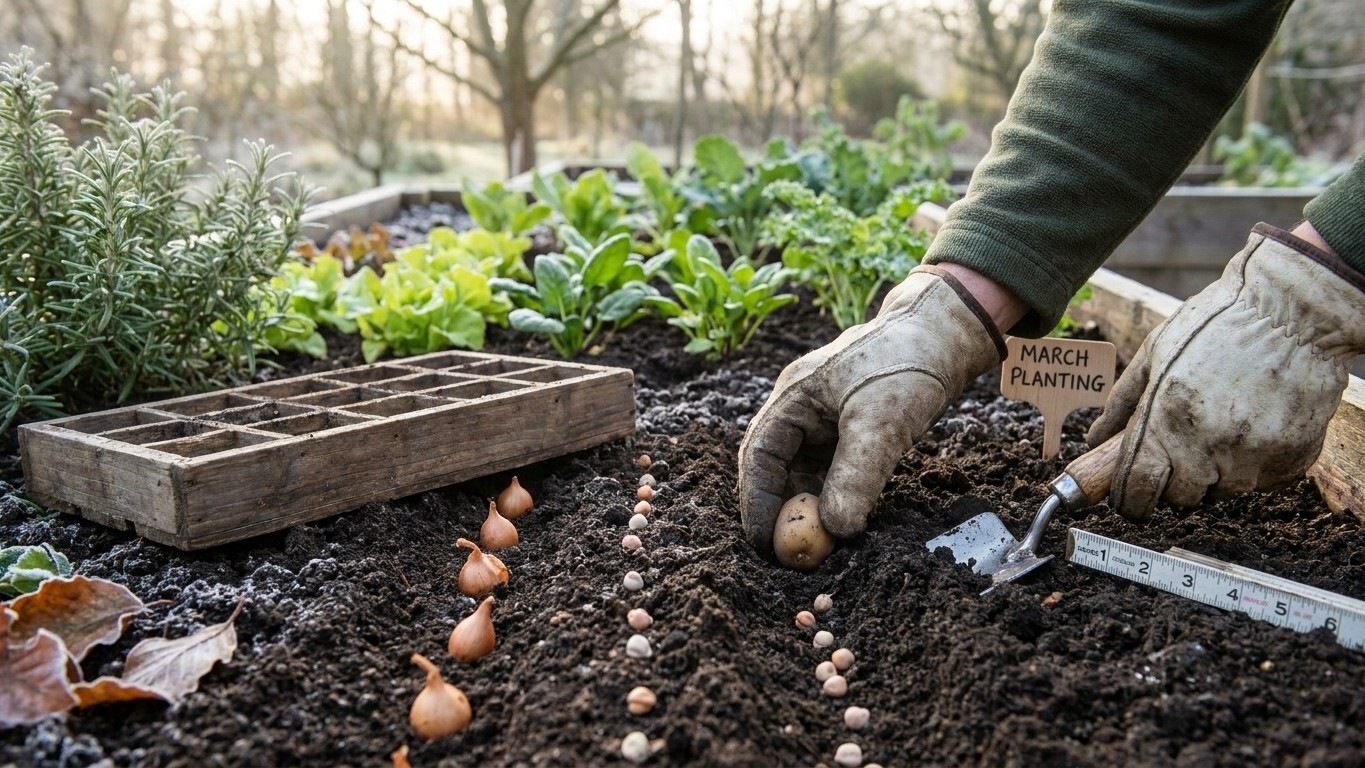

March in Alabama is a two-speed month. Peas, onions, potatoes, and leafy greens can go into the ground right now across most of the state, tolerant of the frost that still lingers into early April. Tomatoes, peppers, and other warm-season crops stay indoors or under cover until that frost risk clears, somewhere between March 19 and April 3 depending on the county. Zone 7a in the north and zone 9a along the coast means southern gardeners often get a two- to three-week jump on everything.
What goes in the ground in March

Soil temperature decides what survives this month, not the date circled on a calendar. Peas germinate in soil as cool as 40°F. Onion sets and seed potatoes tolerate soil in the low 50s. Tomatoes and peppers, by contrast, stall or rot below 55-60°F at the root zone, and Alabama’s frost window of March 19 to April 3 means most counties are still sitting inside the stretch where a hard freeze can show up overnight. That’s the line between what’s safe and what’s a gamble.
On the safe side: English peas, snap peas, spinach, lettuce, radishes, carrots, beets, turnips, mustard, collards, and kale all shrug off frost down into the mid-20s once they’ve got a few true leaves. Onion sets, onion transplants, and chitted seed potatoes belong in the ground now too, and garlic planted last fall can be topdressed with compost while it finishes bulking. Hardened-off transplants of cabbage, broccoli, and cauliflower can go outside as well, with a row cover ready for any night the forecast turns.
This is also the planting window for asparagus crowns and bare-root strawberries, both of which need to settle in before the ground warms and top growth takes off. What doesn’t belong outside yet: beans, squash, cucumbers, melons, corn, and anything in the nightshade family. An unseasonably warm afternoon in early March tempts a lot of gardeners into planting these too soon, but a single freeze night inside that frost window undoes weeks of work.
| Crop | Method | Frost tolerance |
|---|---|---|
| English/snap peas | Direct sow | High, down to mid-20s°F |
| Onion sets/transplants | Direct plant | High |
| Seed potatoes | Direct plant | Moderate, mulch tubers deep |
| Kale, collards, mustard | Direct sow or transplant | High |
| Lettuce, spinach, radishes | Direct sow | Moderate to high |
| Cabbage, broccoli transplants | Transplant, hardened off | Moderate, cover on hard freeze nights |
| Asparagus crowns, strawberries | Bare-root planting | High |
What to start under cover
Work backward from your county’s last frost, not forward from today’s date. Tomatoes need six to eight weeks between seeding and a healthy transplant, which means anyone aiming for an early Alabama harvest already had seed in a tray back in January. If those seedlings are just now going into cell packs, that’s a March job in itself: potting up before roots circle and stems get leggy under weak light. Peppers and eggplant run eight to ten weeks, so they’re on the same clock.
What actually makes sense to start fresh under cover in March is anything that only needs three to four weeks before it hits the ground: cucumbers, summer squash, and melons. Time a mid-to-late March seeding and the transplants land in the garden right around the point the frost window closes in early April. Wait much longer than four weeks on these and the vines resent the disturbance of transplanting, since squash and melon roots don’t recover well from being pulled apart.
The two failure modes to watch for run in opposite directions. Start warm-season seedlings too early and they sit indoors under insufficient light, stretching into weak, rootbound plants that sulk for weeks after transplanting. Start them too late and there’s not enough growing season left before summer heat shuts down fruit set on tomatoes and squash. Basil started indoors now, alongside the cucurbits, is ready to move outside the same week the frost risk clears.
What is ready to pick
Kale, collards, turnip greens, mustard, and spinach that overwintered from a fall planting are still producing, and the leaves usually taste sweeter after a few frosty nights converted starches to sugar. Lettuce and radishes seeded back in January or February are hitting maturity now, with radishes ready in as little as 25 to 30 days from sowing.
Established asparagus beds, three years or older, can throw their first spears late in the month, especially in zone 9a along the coast where soil warms earlier than it does up in the Tennessee Valley. Along the Gulf Coast, some satsuma and citrus trees hold fruit in sheltered microclimates into early spring, though most of that harvest wraps up by late winter further north.
Indoors, sprouts and microgreens fill the gap on weeks when the garden itself is thin. It’s also worth a walk through the root cellar or pantry: check stored sweet potatoes, winter squash, and onions for soft spots or sprouting, and use the ones starting to turn before they spread rot to the rest of the batch.
The jobs that matter this month
Blueberries and muscadines need their dormant pruning finished now, before the sap rises and buds swell; wait past this window and every cut costs fruit for the season. Roses benefit from the same timing, pruned back hard before new growth hardens.
Overwintered brassicas and greens are actively growing again, which makes March the right moment to side-dress them with nitrogen, something that would have pushed weak, cold-vulnerable growth if done back in December. Beds destined for April’s tomato and pepper transplants need compost worked in now, but not while the clay is still wet from spring rain. Alabama’s heavy clay compacts fast under a tiller or shovel when it’s soggy, and that compaction sticks around for the whole growing season.
If soil hasn’t been tested since fall, this is the moment, since lime and amendments need several weeks to shift pH before summer crops go in. Start scouting brassicas for aphids and early cabbage worms too; populations build quickly as days warm, and catching them small beats spraying them big. Mulch around alliums and greens to hold soil moisture as daylight lengthens, set up pea trellises before vines need them rather than after, and order any remaining tomato and pepper seed now, before the popular varieties sell out for the season.
What not to do in March
The classic mistake is planting tomatoes, peppers, or squash outside because a warm afternoon felt like summer. Soil temperature lags behind air temperature by days, and a single freeze night inside the March 19 to April 3 window can wipe out an entire flat of transplants that took eight weeks to grow.
A close second: pulling row cover or mulch off overwintered greens for good after a mild stretch. Reapply cover on any night frost is forecast, and don’t consider it safe to leave off permanently until the window has passed for your county.
Heavy nitrogen feeding on young greens before they’ve built several true leaves pushes soft, weak growth that a late cold snap can knock flat. Wait until plants are established. And working clay soil while it’s still wet compacts the structure for months. Squeeze a handful; if it forms a ball that won’t crumble apart, it’s too wet to till or dig.
Skipping the hardening-off period for indoor-started transplants is another shortcut that backfires. A week of graduated outdoor exposure, starting in shade and working up to full sun, prevents both transplant shock and sunscald on leaves that have only ever known a windowsill or grow light.
Checking this against your own county
A statewide frost window and hardiness range are a starting point, not an instruction. North Alabama, in zone 7a around Huntsville, runs weeks behind the Gulf Coast in zone 9a near Mobile. Elevation in the foothills near Fort Payne pushes frost dates later still, and low-lying gardens tend to trap cold air on clear nights regardless of the regional average.
For county-level planting calendars and frost guidance specific to your area, the Alabama Cooperative Extension System is the reference to check before finalizing a planting date.
Common questions
Can I plant tomatoes in Alabama in March?
Not outdoors, for most counties. The frost window runs March 19 to April 3 at the reference station used for this page, and it’s often later in cooler pockets. Start seed indoors if it isn’t already growing, or hold transplants under cover until the frost risk passes locally.
What vegetables can I direct sow in Alabama in March?
Peas, spinach, lettuce, radishes, carrots, beets, turnips, mustard, collards, and kale all tolerate the frost still possible this month. Onion sets and seed potatoes can also go directly into the ground.
When is the last frost date in Alabama?
At the reference weather station used for this page, the last spring frost falls between March 19 and April 3. That’s a range, not a single date, and it shifts earlier or later depending on elevation and how far north or south a garden sits.
Is it too late to start pepper seeds indoors in March?
For the earliest possible harvest, yes, since peppers need eight to ten weeks before transplanting and that window usually opens in January. Seed started in March still produces a workable harvest later in summer, or a gardener can buy started transplants instead.