
By August, Alberta’s growing season is in full swing but the clock is already running. With the average first fall frost landing around September 16, most of the province has somewhere between two and six weeks of reliably warm ground left, depending on where in the month you’re reading this and how far north or how high up you garden. The short answer: keep sowing fast crops, keep harvesting hard, and start planning for frost protection now rather than when it arrives.
What goes in the ground in August

The math that matters this month isn’t the calendar, it’s the countdown to that September 16 average first frost from Calgary Int’l A. That date is a mean, not a guarantee: in roughly half of all years, frost holds off later than that, and in the other half it shows up sooner. Treat it as the middle of a window, not a deadline you can bank on.
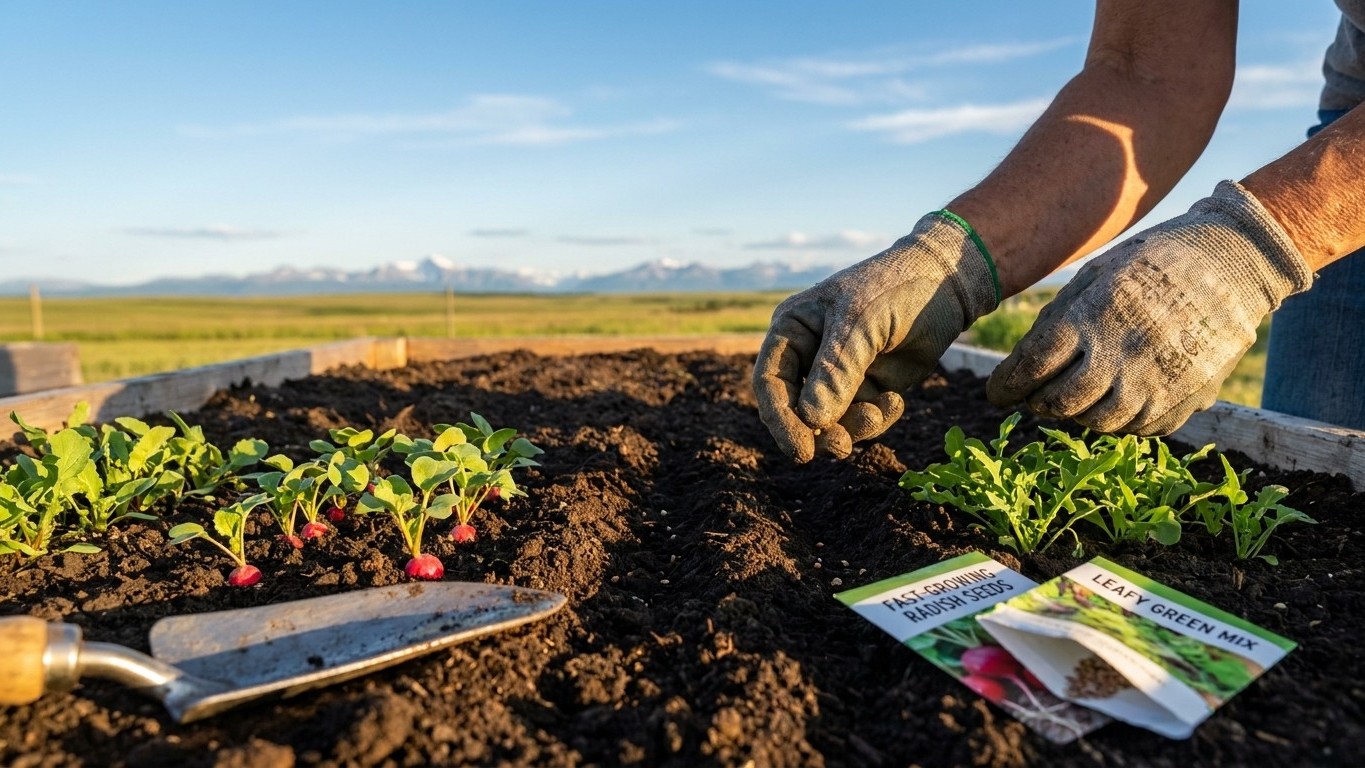
Given that window, early August still leaves close to six weeks of unfrozen ground, which is enough time for a real second flush of quick crops. Radishes, arugula, mustard greens, baby spinach and loose-leaf lettuce can all go from seed to plate inside that stretch, and they tolerate the cooler nights that creep in as the month goes on. Turnips and beets sown for greens (rather than full roots) also fit the timeline. Bush beans are a gamble past the first week or two of the month; they need warmth all the way through and a late-August sowing is racing a frost that could arrive early.
What doesn’t belong in the ground now: anything that needs a long, uninterrupted warm run, like corn, squash, or heat-loving transplants such as tomatoes and peppers. Garlic and shallots, which many gardeners assume are an August job, actually want cooler soil and are better held for the fall planting window, typically several weeks after the season’s first real cold snap settles in. Planting them in August into still-warm ground risks premature top growth that won’t survive winter.
What to start under cover
Working backward from that mid-September average frost is the safest way to decide what still fits. If a crop needs 30 days to reach a pickable stage, an early-August sowing under a cold frame or row cover gives it room even if frost arrives on the early side of the range. A crop needing 50 or 60 days is a much tighter call by mid-month, and by the last week of August it’s effectively off the table for anything except leaves you plan to pick small.
Cold frames and low tunnels earn their keep here. They don’t just protect against a light frost, they also buy extra weeks of growth by keeping soil and air a few degrees warmer overnight, which matters once nights start dropping into the 40s. Starting fall lettuce, spinach, and mustard mixes under cover in August sets them up to keep producing well past the point open-ground plantings would quit.
The two ways this goes wrong are familiar to anyone who’s gardened through a Prairie summer. Start too early relative to the heat still in the ground and cover, and seedlings can bolt or the cover itself cooks them on a hot afternoon. Start too late, misjudging how close September 16 really is, and the planting simply runs out of daylight and warmth before it matures. Splitting sowings across early and mid-August, rather than betting everything on one date, hedges against both mistakes.
What is ready to pick
August is the heart of the Alberta harvest, and the list is long. Peas are usually finishing up or already done. Bush beans, zucchini, cucumbers and summer squash are producing steadily and need picking every couple of days to keep plants going. Broccoli and cabbage started earlier in the season are heading up, and carrots and beets sown in spring are big enough for full-size roots rather than just thinnings.
Onions and garlic planted the previous fall or in early spring are often ready to lift in August, once the tops start to yellow and flop over. That’s the signal to stop watering and let the necks dry down before curing them somewhere warm and airy for storage. Berries are a highlight this month too: saskatoons, raspberries and currants are typically at or past peak, and any that have gone soft or dull should come off the plant to keep pests and disease from spreading to the fruit still ripening.
Checking storage crops isn’t just a fall job. Early potatoes lifted for immediate eating (rather than winter storage) are often ready now, and pulling a test hill to check tuber size is worth doing before the whole patch is dug. Anything showing soft spots, mold, or an off smell in the root cellar or a cool pantry from earlier harvests should be used or composted immediately rather than left to spread.
The jobs that matter this month
Keep the season moving
Succession sowing doesn’t stop just because summer feels like it’s peaking. Every week without a new short-season planting is a week of fall harvest given up. Pair that with a steady watering rhythm: August heat plus wind pulls moisture out of soil fast, and inconsistent watering is what causes split tomatoes, bitter cucumbers, and bolted greens. Deep, infrequent watering beats a daily light sprinkle every time.
Staking, scouting, and getting ahead of frost
Anything still growing tall (peas on their last legs, sprawling squash vines, top-heavy dahlias) benefits from staking now, before a wind storm does the damage for you. Pest scouting matters just as much in August as in June; aphids and cabbage worms often build up quietly through summer and a five-minute check under leaves catches an infestation before it becomes a real problem.
Because the average first frost sits in mid-September, August is also when row cover, old sheets, or cloches should come out of storage and get checked over, not bought in a panic the night frost is forecast. Curing and storing onions and garlic properly this month, rather than letting them sit in the sun too long, is what determines whether they last into winter or rot in storage by November.
What not to do in August
The most common mistake this month is treating warm August air as proof the season has more room than it does. A hot afternoon doesn’t change the fact that the average first frost is only a few weeks away; planting something that needs 70 days to mature in the last week of August is planting for failure, not for harvest.
Feeding nitrogen late in the season is another trap. A dose of high-nitrogen fertilizer in August pushes soft new growth on perennials, shrubs, and fruit trees right when they should be starting to harden off for winter. That tender growth is exactly what gets killed first by an early frost, and the plant wastes energy on it instead of storing reserves for the cold months ahead.
Pulling row cover or cold frame lids off too early after a stretch of warm days is its own version of the same mistake. A few mild nights don’t mean the frost risk has passed, especially once the calendar edges toward mid-September. Leaving protection in place a little longer costs nothing; removing it too soon can cost the whole planting in a single cold night.
Checking this against your own county
Every figure here is anchored to one weather station, Calgary Int’l A, and Alberta is far too big and varied a province for one station to speak for all of it. Elevation, latitude, and local terrain shift frost timing by weeks in either direction.
| Region | General pattern relative to Calgary |
|---|---|
| Peace River region (north) | Frost typically arrives earlier; shorter frost-free window overall |
| Southern Alberta (Lethbridge, Medicine Hat) | Often milder due to chinook winds; frost can arrive later |
| Foothills and higher elevation areas | Colder overall, frost tends to arrive earlier and season is shorter |
Alberta’s reference hardiness zone (based on the Calgary area) is 4a on the Canadian system, which is built on seven climate variables and does not convert to a USDA zone; a Canadian 4a spans anywhere from USDA 3a to 7a depending on which of those variables dominates locally. For a planting window built around your own county, check Alberta’s agriculture and irrigation resources before locking in August sowing dates.
Common questions
Can I still plant tomatoes or peppers in Alberta in August?
No. Both need a long warm stretch to fruit, and with the average first frost around September 16, transplanting them in August leaves too little time before cold weather arrives.
Is it too late to plant garlic in August?
Yes, for most of Alberta. Garlic prefers cooler soil and is usually planted in fall, well after the season’s first real cold snap, not while ground is still warm from summer.
What’s the fastest-maturing crop I can still sow in August?
Radishes and loose-leaf greens like arugula and baby spinach are among the quickest, often ready well within the remaining frost-free window even for sowings made mid-month.
Should I stop watering my garden once nights get cooler in August?
No. Plants still actively growing and producing need consistent deep watering through August; cutting back too early can cause splitting fruit and stressed, bolt-prone greens.