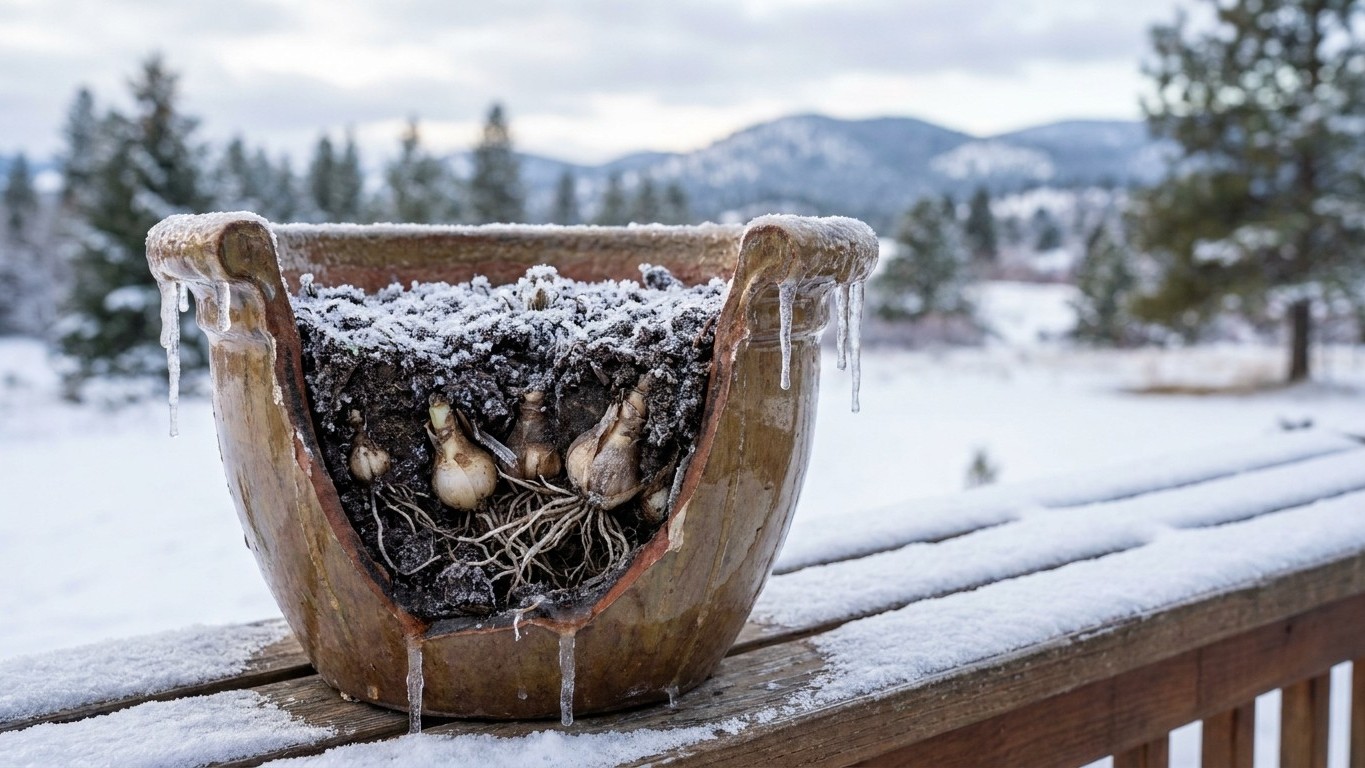

Denver’s coldest month averages a nightly low of 18.4°F, according to NOAA’s Climate Normals for 1991-2020. That’s far below the 45°F ceiling a spring bulb needs to break dormancy, which means this territory doesn’t lack cold. The real obstacle for container growing here is structural: a pot freezes solid, roots included, in a way garden soil never does.
Why this matters in Colorado

A spring bulb, whether it’s a tulip, a crocus, or a hyacinth, needs somewhere between twelve and fourteen weeks below 45°F before it will flower. That’s the biological switch: no sustained cold, no bloom, no matter how much sun or water follows. Denver’s average nightly low of 18.4°F in the coldest month sits nowhere near that 45°F line. It sits well under it, which tells you the ground here is not short on chilling hours. Gardeners planting bulbs directly in a bed rarely need to manufacture cold artificially, because the season already delivers more than the minimum.
Containers flip the problem. In the ground, a bulb sits below the frost line, insulated by several feet of soil that buffers it from air temperature swings. A pot has none of that mass. Once the soil in a container freezes, it tends to freeze all the way through, exposing the bulb and its roots to whatever the air is doing, with no buffer at all. That’s a different physical situation than the one the USDA hardiness zone map was built to describe.
Colorado spans USDA hardiness zones 3b through 7b on the 2023 map, built from 1991-2020 averages. That range is wide because the territory includes both the Front Range and high mountain valleys, and a rating that works for a container in Denver won’t necessarily hold up in a colder pocket a few hours west. Denver, as the reference city, sits toward the milder end of that range, but even there, a bulb rated for outdoor survival in a garden bed can die in a pot at the same address. The zone number describes what happens to roots buried in the earth; it says nothing about what happens to roots sitting in six inches of container mix exposed on all sides.
So the situation here isn’t “not enough cold to force bloom.” It’s “container roots see more cold than garden roots at the same hardiness rating.” That distinction decides almost everything that follows: which bulbs tolerate a pot left outside, and which ones need to come indoors, into a garage or refrigerator, to get their chilling safely.
How to do it here
The method below assumes a container, either one left outdoors through winter or one used to force bulbs into early bloom indoors. Each step is something you can check yourself, with a thermometer or a calendar, rather than taking on faith.
- Plant in fall, before the coldest weather sets in. Use a container with drainage holes and a fresh, well-draining potting mix, not garden soil, which compacts and holds too much water in a pot.
- Know the chilling target: twelve to fourteen weeks below 45°F. Mark a start date when you plant, and count forward from there rather than guessing later.
- Decide where the cold will come from. An unheated garage that stays above freezing works well for most bulbs, since it delivers steady cold without the risk of a hard freeze cracking the pot. A refrigerator drawer works too, as long as it’s kept away from ripening fruit, because the ethylene gas fruit releases will kill the flower bud developing inside the bulb, even though the leaves may still grow.
- If the pot stays outdoors instead, size the hardiness up. Choose bulbs rated at least two zones hardier than a straightforward zone reading would suggest, or plan to move the pot into an unheated garage or shed once night temperatures drop hard. A container left exposed on a patio in Denver needs that extra margin precisely because it lacks the insulation of surrounding soil.
- Mulch heavily if the pot must stay put. Piling several inches of straw, shredded leaves, or bagged mulch around and over the pot slows how fast it freezes through, buying the roots time even without moving the container.
- After the chilling period is complete, bring the pot into a bright, cool room. Sudden heat right after cold storage tends to produce weak, floppy growth; a gradual move to warmth gives sturdier stems.
Which bulbs are worth it
Not every bulb rewards the effort of a pot. Some have short chilling requirements and compact stems that hold up in a container; others need a long cold period and grow tall enough to topple the moment they’re indoors, out of the wind that would normally brace them outside. Where a bulb is a one-season purchase anyway, since it wasn’t going to survive Colorado’s dry summer soil regardless of how it was grown, forcing costs nothing in the long run, because there was no future bloom being sacrificed.
Bulbs that force reliably here
- Paperwhite narcissus, which needs no cold period at all and blooms a few weeks after potting
- Crocus, with a short chilling requirement and a stem low enough to never topple
- Grape hyacinth (muscari), compact and forgiving of an uneven chill
- Hyacinth, sturdy-stemmed and reliable once its chill is complete
- Species and botanical tulips, shorter and stockier than standard hybrids
Bulbs that sulk in a pot
- Tall Darwin hybrid tulips, which need a longer chill and grow tall enough to flop without outdoor wind resistance
- Large trumpet daffodils, whose stems often bend under the weight of the bloom indoors
- Fritillaria, finicky about chilling length and prone to rot in container conditions
What goes wrong, and when you can still fix it
Leaves but no flower
This means the cold period ran short, whether it was cut off early or the storage location never got cold enough. There’s no rescue for this season’s bloom; once the bud fails to form, warming the pot won’t bring it back. The bulb itself may survive if it’s a species that would naturally persist here, so planting it out after the last hard freeze and letting the leaves feed it for next year is worth trying, though it isn’t guaranteed.
A flower on a stem too short to see
This happens when the pot is moved into warmth before the chilling period finishes. The stem never gets the signal to elongate, so the flower opens practically at soil level. Nothing fixes it this season. The only correction is timing: track the full twelve to fourteen weeks before bringing the pot into a warm room next time.
Rot at the base of the bulb
This is a drainage failure, almost always traced to a pot without holes, a saucer left full of standing water, or a potting mix that was too dense and stayed soggy through the cold period. Once rot has set in, the bulb is lost; there’s no saving it partway through decay. The fix belongs entirely to next season: drainage holes, a gritty mix, and a saucer that gets emptied rather than left to sit.