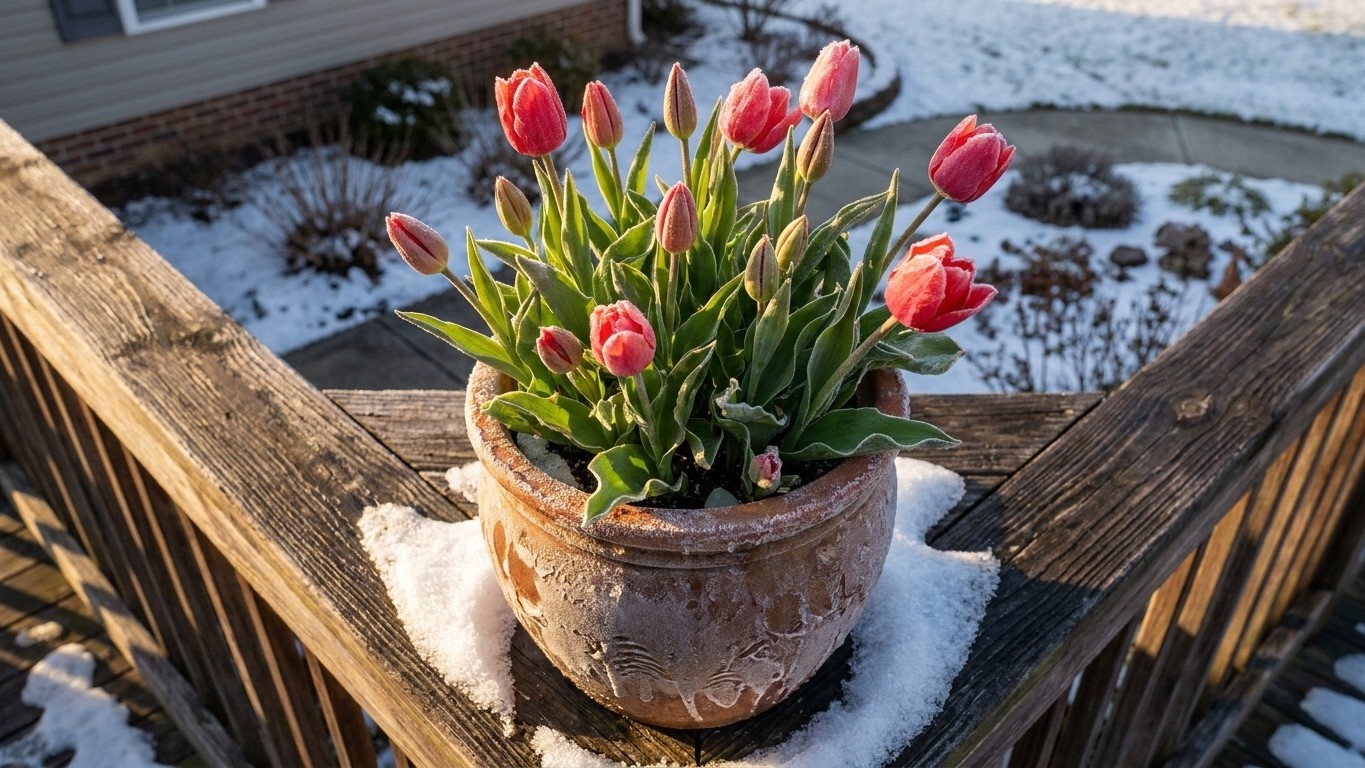

A pot of tulips left on a Delaware porch through January doesn’t follow the same rules as tulips planted in a garden bed thirty feet away. The ground insulates itself; a container doesn’t. That single difference decides whether forcing bulbs indoors here is a decorative choice or a rescue operation.
Why this matters in Delaware

Start with the number that settles most of this argument: 25.6°F. That’s the average daily minimum temperature during Delaware’s coldest month, measured at the Wilmington reference station over the 1991-2020 period (NOAA NCEI Climate Normals). Paired with a USDA hardiness zone of 7a-8a across the state, that figure tells you Delaware’s ground gets plenty cold. A spring bulb planted directly in a garden bed here receives its full twelve to fourteen weeks below 45°F without any help from the gardener. That part of the process, timing an outdoor planting to catch that natural chill, belongs to a different conversation than the one on this page.
Forcing indoors in Delaware exists for two other reasons, and they’re not the same problem. The first is intentional: gardeners who want hyacinths or crocus blooming on a windowsill in February, weeks before anything outside has stirred, manufacture the cold artificially in a refrigerator or unheated garage because an indoor bulb never gets a winter of its own. The second is accidental: a bulb planted in a container and left outdoors doesn’t get the ground’s protection. Soil in a bed is buffered by the earth beneath it and by sheer mass; soil in a pot is exposed on every side and follows the air temperature almost in real time.
That’s where the 7a-8a zone number can mislead a container gardener. The zone rating is built on the average annual extreme minimum, a very different measurement from the 25.6°F average minimum above. A hard cold snap in Delaware can drop well below both figures for a night or two, and a container will track that dip far faster than garden soil ever would. A bulb rated hardy for zone 7a or 8a in the ground can freeze solid, roots included, in a pot during the same cold snap. That’s the situation this page addresses: Delaware’s ground doesn’t need forcing help, but anything grown in a container, or forced deliberately indoors, plays by a different set of rules.
How to do it here
The method itself doesn’t change from state to state, but where you find the cold, and how you protect a container, depends on what Delaware’s winter actually offers. Here’s the sequence, in order:
- Pot the bulbs first, in a container with drainage holes, using a standard well-draining potting mix. Water once after planting, then don’t water again until the chilling period is nearly over.
- Choose a chilling location that stays reliably between 35°F and 45°F. An unheated attached garage often works in Delaware, but check it with a thermometer on the coldest nights of January; some detached or poorly insulated garages will dip below freezing when outdoor lows follow that 25.6°F coldest-month average down further.
- If the garage isn’t reliable, use a refrigerator crisper drawer instead. Keep the pots away from apples, pears, or bananas stored in the same fridge. Ripening fruit releases ethylene gas, and ethylene kills the flower bud forming inside a chilling bulb even while the leaves look fine.
- Hold that cold for the number of weeks the species requires, typically twelve to fourteen weeks for hyacinths and tulips, less for crocus and muscari. Check root growth through the drainage holes rather than guessing by the calendar.
- If a potted bulb is staying outdoors instead of moving to a fridge or garage, size the container correctly. The pot needs to perform as if it were rated at least two USDA zones hardier than the bulb inside it. In Delaware’s 7a-8a range, that means treating an outdoor container as though it sits in zone 5a-6a territory, not 7a-8a.
- When you can’t buy that margin with pot size alone, move the container against the foundation of the house and bury it in mulch up past the rim. The foundation holds ground heat longer than open air, and the mulch slows how fast the pot follows a temperature swing.
- After the chilling period ends, bring the pot into a cool, bright spot around 60-65°F for two to three weeks before flowers open. Skipping straight to a warm, sunny windowsill after twelve weeks in the cold shocks the plant and shortens the bloom.
Which bulbs are worth it
Some bulbs reward the extra weeks in a fridge or garage; others just make leaves and disappoint. The difference usually comes down to how long a chill the species demands and how tall it grows once it starts. A short chill requirement means faster results and less can go wrong along the way; a tall, top-heavy stem is a liability in a container that has no garden soil around it for support.
- Hyacinth, compact and heavy-flowered, holds up well in a small pot after its chill period.
- Crocus, short-stemmed and quick to chill, is one of the easiest forcing candidates.
- Grape hyacinth (muscari) forces reliably with a shorter cold requirement than tulips.
- Dwarf iris (Iris reticulata) stays low enough to never need staking indoors.
- Short or species tulips, rather than tall Darwin or Triumph types, keep their stems in proportion to the pot.
- Paperwhite narcissus need no cold period at all and bloom three to four weeks after potting, making them the fastest option on this list.
On the other side, a few bulbs are better left in the garden bed:
- Large trumpet daffodils demand a long chill and often put their energy into leaves rather than flowers when forced.
- Tall Darwin and Triumph tulips tend to topple once the flower opens, since there’s no surrounding soil mass to anchor a two-foot stem.
- Alliums need an unusually long chill and take up more container space than the payoff justifies.
- Fritillaria is notoriously inconsistent indoors, sulking under conditions that satisfy other bulbs just fine.
Worth noting: paperwhites and amaryllis are essentially one-season purchases regardless of forcing, since they rarely rebloom well after being forced indoors. Forcing them costs nothing in the long run, because they were never headed back into a garden bed to begin with.
What goes wrong, and when you can still fix it
Leaves but no flower
This means the chilling period ran short. The bulb had enough cold to push foliage but not enough to finish forming the flower bud inside. There’s no fix this season; let the leaves die back naturally, and if the bulb is a hardy type, plant it in the garden bed rather than repeating the container attempt. Next winter’s full chill, delivered by Delaware’s own ground temperature, will likely do what the shortened indoor version couldn’t.
Flower on a stem too short to see
This happens when the pot moved from cold storage into a bright, warm spot too early, before the flower stalk had elongated. The bloom forms, but it opens buried in the foliage instead of rising above it. This can’t be corrected once it’s happened. For the next attempt, extend the cool, dim transition period after chilling before moving the pot to full light and room temperature.
Rot in the pot
Soft, discolored bulb tissue after weeks of chilling almost always means water pooled at the bottom of the container instead of draining away. Once rot has set in, the bulb is lost for that cycle; there’s no rescue for tissue that’s already broken down. The fix applies to the next planting: use a pot with functioning drainage holes, set it on a small rack or feet rather than flush against a tray, and skip watering again until the chilling weeks are nearly finished.
Related guides
- Growing Spring Bulbs in Containers in Delaware
- Forcing Spring Bulbs Indoors in Florida