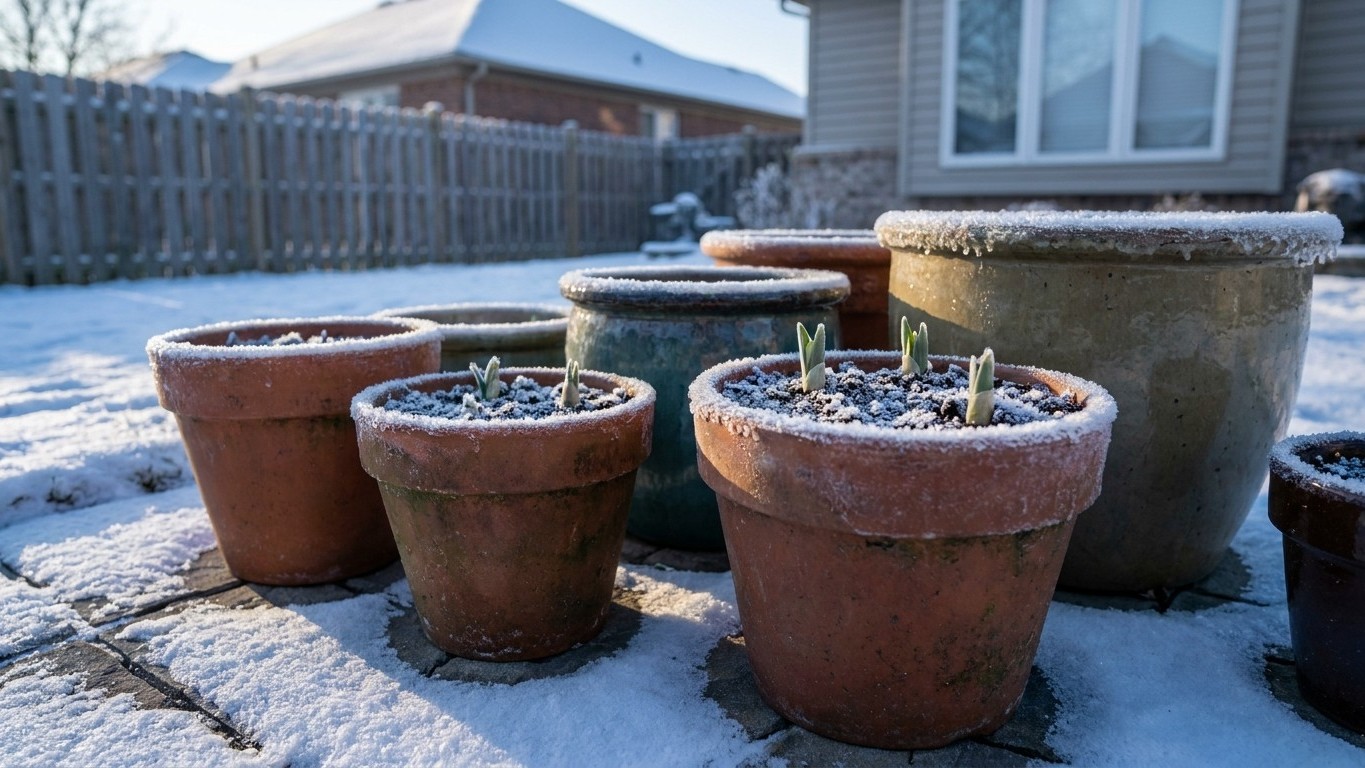

Michigan’s winters already deliver more cold than a spring bulb needs to bloom outdoors, so forcing indoors is a choice for winter color, not a requirement. The real hurdle for container gardeners here is different: a pot freezes solid, roots and all, in weather that only crusts the top inch of a garden bed. That single fact changes which bulbs work in a container and how you protect them.
Why this matters in Michigan

The reference station in Detroit averages a minimum of 19.2°F in its coldest month, according to NOAA NCEI’s 1991-2020 Climate Normals. Spring bulbs need roughly twelve to fourteen weeks with temperatures below 45°F to complete the internal process that builds a flower bud. A month that averages a minimum of 19.2°F clears that threshold with room to spare, and it does so for several months running, not just a few cold snaps. Gardeners in territories where winter falls short of that window have to fake it, chilling bulbs in a refrigerator or an unheated garage before planting. Michigan does not have that problem. Left in the ground, a tulip or daffodil bulb here gets all the cold it needs without any help.
Containers change the math entirely. Soil in the open ground is insulated by the earth around and beneath it, so even in a hard winter the deeper layers where roots sit rarely freeze solid. A pot has no such buffer. Air can reach it from every side, so the root ball inside a container freezes through in the same cold snap that leaves the ground beneath it merely chilled. That is why the USDA Plant Hardiness Zone Map, built on the average annual extreme minimum temperature, places this territory across a wide band from zone 4a to zone 6b, yet a bulb rated hardy for that zone in the ground can still die in a pot on a porch. The zone number describes soil conditions. It does not describe what happens to a container standing exposed above that soil.
This matters more in some parts of the state than others. The 4a-6b range spans the entire territory, and a gardener near the reference station in Detroit is working with milder conditions than someone farther north or at higher elevation, where the coldest stretches run longer and deeper. Anyone using the 19.2°F figure as a planning number should treat it as a Detroit-area benchmark, not a statewide constant, and expect colder pockets to demand more protection, not less.
How to do it here
Whether the goal is a pot of tulips blooming on the porch in April or a bowl of paperwhites blooming on a windowsill in January, the sequence starts the same way: match the bulb to the container’s real exposure, not to the ground’s hardiness zone.
- Pick bulbs rated at least two USDA zones hardier than the reference zone for the area. If the local ground zone is 6a, choose bulbs listed as hardy to zone 4. That margin covers the extra cold a pot experiences compared to soil.
- Plant in fall, before the ground freezes, using a well-draining potting mix rather than garden soil, which compacts in a container and holds too much water around the bulb.
- Give the bulbs their twelve to fourteen weeks below 45°F. Outdoors, Michigan’s winter supplies this on its own. For indoor forcing instead, use an unheated garage that stays above freezing, or a refrigerator crisper drawer, kept away from apples, pears, or any ripening fruit, since the ethylene gas they release can kill the flower bud inside the bulb before it ever opens.
- Protect the pot itself from freezing solid if it’s staying outdoors. Group several pots together against a wall, bury them to the rim in a mound of leaves or mulch, or move them into an unheated garage or shed for the coldest months.
- Check the soil every few weeks. A dormant bulb in a container can still dry out completely in a cold, dry winter, and a pot with poor drainage can also sit waterlogged after a thaw. Either extreme damages the bulb.
- Move the pot to a bright, cool spot once shoots appear, and only then gradually introduce warmth. Rushing this last step is one of the most common mistakes, and it shows up later as a flower with almost no stem.
Which bulbs are worth it
Not every bulb rewards the extra work a container demands. Some finish their cold requirement quickly and stay short enough to survive being top-heavy in a pot outdoors; others need a longer chill, grow tall, and tip over the first time wind catches them. A few, like most tulip varieties, are effectively a one-season purchase in most home gardens anyway, so using them for forcing costs nothing in the long run since they were unlikely to return with the same vigor the next spring regardless.
- Crocus (short cold requirement, low profile, rarely topples)
- Grape hyacinth, Muscari (short cold requirement, compact and sturdy)
- Iris reticulata, the miniature reticulated iris (short cold requirement, low growth habit suits shallow pots)
- Species and botanical tulips, smaller than hybrid Darwin types (shorter stems, less prone to falling over)
- Miniature or species daffodils (short stems, reliable bloom, tolerant of the freeze-thaw cycle a pot goes through)
Bulbs that tend to disappoint in containers share the opposite traits: a longer cold requirement, taller stems, or heavier flower heads that a lightweight pot can’t anchor.
- Standard trumpet and large-cup daffodils (tall stems catch wind, prone to leaning)
- Darwin hybrid and tall single-late tulips (top-heavy, need staking in a pot far more than in a bed)
- Alliums (longer cold requirement, tall stems, flower heads too heavy for most containers)
- Hyacinths (sensitive to inconsistent cold, more prone to bud blast if the chilling period is interrupted)
What goes wrong, and when you can still fix it
Leaves come up but no flower ever forms
This is a blind bulb, and it almost always means the cold period was too short or too warm on average. Once the leaves have emerged without a bud, there is no way to reverse it for this season. Let the foliage grow and die back naturally to feed the bulb, then give it a full, uninterrupted chilling period before the next bloom cycle.
The flower opens on a stem too short to see over the pot’s rim
This points to warmth introduced too early, before the shoot had a chance to elongate in cool, low light. It cannot be corrected once the bud has opened. The fix belongs to the next round: after the cold period ends, move the pot to a cool, bright spot first, and only add real warmth once growth is well underway.
The bulb turns soft or shows rot when you check it
Rot in a container almost always traces back to drainage, either a mix that holds too much water or a pot without enough holes to let it escape. A bulb that has already gone soft is not salvageable this season. Repot with fresh, well-draining mix and confirm the container drains freely before planting again.