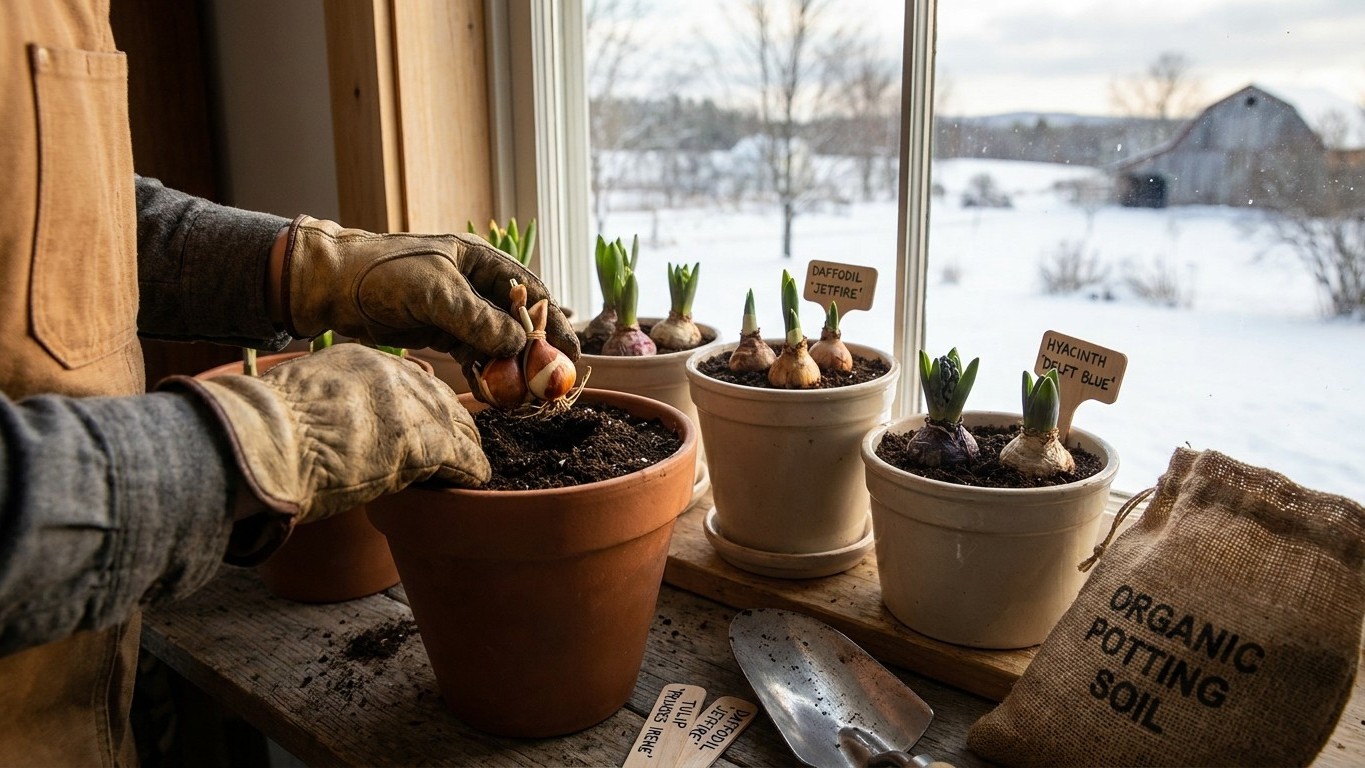

Forcing spring bulbs indoors works reliably in Nebraska because winter here already supplies more cold than any bulb needs. The real task isn’t finding enough chill, it’s controlling it on a schedule, and keeping potted bulbs from freezing solid outdoors before that schedule starts. What follows is the method, the bulbs worth the effort, and the failures gardeners actually run into.
Why this matters in Nebraska

The average daily minimum in the coldest month here runs 15.2°F, based on NOAA NCEI Climate Normals for 1991-2020 at the Omaha reference station. That number matters because it settles a question before it’s even asked: does Nebraska’s winter deliver the twelve to fourteen weeks below 45°F that a tulip or hyacinth bulb needs to bloom? At 15.2°F for a coldest-month average minimum, the answer is yes, several times over. A bulb planted in open ground here gets more chilling than it requires, not less.
That rules out the scenario where forcing exists to compensate for a mild winter, the situation gardeners face in places like coastal Georgia or southern Florida, where the ground never gets cold enough on its own. Nebraska’s problem runs the other direction. The USDA Plant Hardiness Zone Map (2023 edition, built on 1991-2020 averages) places the state across zones 4a to 5b, a range wide enough that a bulb hardy in an Omaha backyard bed can still die in a container on an Omaha porch. That’s the real reason to force bulbs indoors here: not a shortage of cold, but too much of it delivered in the wrong place.
A pot freezes differently than a garden bed. Soil in the ground insulates itself, the surface freezes while a few inches down stays workable, and bulb roots sit below that frozen layer all winter. A container has no insulating mass around it. Cold reaches every side at once, so a pot can freeze straight through, roots and all, at a temperature the same bulb would shrug off in a bed. Practically, that means a hardiness rating that looks safe on a garden tag doesn’t transfer to a pot sitting against a Nebraska house through January. The bulb needs either an artificially controlled cold period indoors, or a container two zones hardier than the plant itself, or serious insulation if it stays outside. That’s the fork this territory sits on, and it’s why forcing indoors, done deliberately, solves a real problem here rather than an imagined one.
How to do it here
The process is straightforward once you accept that you’re substituting a refrigerator or garage for a season the calendar would otherwise handle on its own. Each step below is something you can check yourself, with a thermometer or a ruler, rather than take on faith.
- Choose bulbs in early-to-mid fall, before the ground freezes, and pick types known to force well (see the next section). Buy firm, unblemished bulbs; soft spots mean rot has already started.
- Pot them in a container with drainage holes, using fresh, well-draining potting mix. Set bulbs with noses just at or above the soil surface, close together but not touching, and water once thoroughly.
- Move the pot to a stable cold space for twelve to fourteen weeks, holding a temperature between roughly 35°F and 45°F. In Nebraska, an unheated attached garage often works, but check it with a thermometer rather than assume; some unheated garages here drop well below freezing on the coldest nights, especially detached ones, and a pot that freezes solid defeats the purpose. A refrigerator crisper drawer is the other common option, but keep it away from ripening apples, pears, or bananas. Those fruits release ethylene gas, and ethylene can kill the flower bud forming inside the bulb before it ever emerges.
- Check every few weeks for root growth through the drainage holes and for pale shoots pushing up through the soil, usually an inch or two by the end of the cold period. That’s your signal the chilling requirement has been met.
- Bring the pot into a cool room, around 60°F, with indirect light for about a week to let the plant adjust gradually rather than shock it with sudden warmth.
- Move it to a brighter, warmer spot to finish blooming, watering regularly and turning the pot occasionally so growth doesn’t lean toward the window.
For bulbs you’d rather leave in containers outdoors year-round instead of forcing, the container itself needs to be rated at least two hardiness zones tougher than the bulb, or it needs to come inside an unheated structure and get mulched heavily around the sides. Given the 4a-5b range across the state, that’s not a step to skip based on a garden-center label alone.
Which bulbs are worth it
Not every spring bulb rewards this much handling. The ones that force well share a short cold requirement and a compact growth habit, so they don’t need to grow tall to bloom. The ones that sulk tend to need a longer chill period than a typical indoor timeline allows, or they grow a stem too tall and too heavy for a small pot to support once the flower opens.
Bulbs bought purely for forcing are usually a one-season purchase anyway. Most forced bulbs are too exhausted to rebloom well even if planted outside afterward, so there’s no long-term cost to choosing a bulb solely because it forces easily rather than because it’s a good garden performer.
- Paperwhite narcissus (no cold period required at all, the fastest option)
- Hyacinths (short, sturdy stems, reliable and fragrant)
- Crocus (short cold requirement, compact form)
- Muscari (grape hyacinth) (small and stable in a pot)
- Standard daffodils like ‘Tete-a-Tete’ (short-stemmed varieties in particular)
- Large trumpet daffodils (tall stems topple in shallow pots)
- Fritillaria (long, inconsistent chill requirement)
- Alliums (too tall and slow for typical indoor timelines)
- Tall single-late or double tulip varieties (stem height outruns pot stability)
What goes wrong, and when you can still fix it
Leaves but no flower
This means the cold period ran short. The bulb had enough stored energy to push leaves but never finished forming a flower bud, since bud formation is one of the last things to complete during chilling. There’s no fix once the plant is already growing; the flower simply won’t appear this season. Note the timeline and give the next batch the full twelve to fourteen weeks before bringing it into warmth.
A flower on a very short stem
This happens when the pot got warmed up too early, before the stem had time to elongate the way it would with a slower transition. The stem length is already set by the time you see the bud, so there’s nothing to reverse this season. The bloom itself is usually still fine, just compact. Give the next round the full week in a cool, dim room before moving it to bright warmth.
Rot in the pot
Soft, mushy bulbs or a sour smell in the soil point to drainage failure, usually a pot without adequate holes or soil that stayed soaked too long in cold storage. Once rot sets in, the bulb is finished for this season and can’t be revived. Discard it, and for the next attempt, confirm the container drains freely and let the soil surface dry slightly between waterings during the cold period.
Related guides
- Growing Spring Bulbs in Containers in Nebraska
- Forcing Spring Bulbs Indoors in Nevada