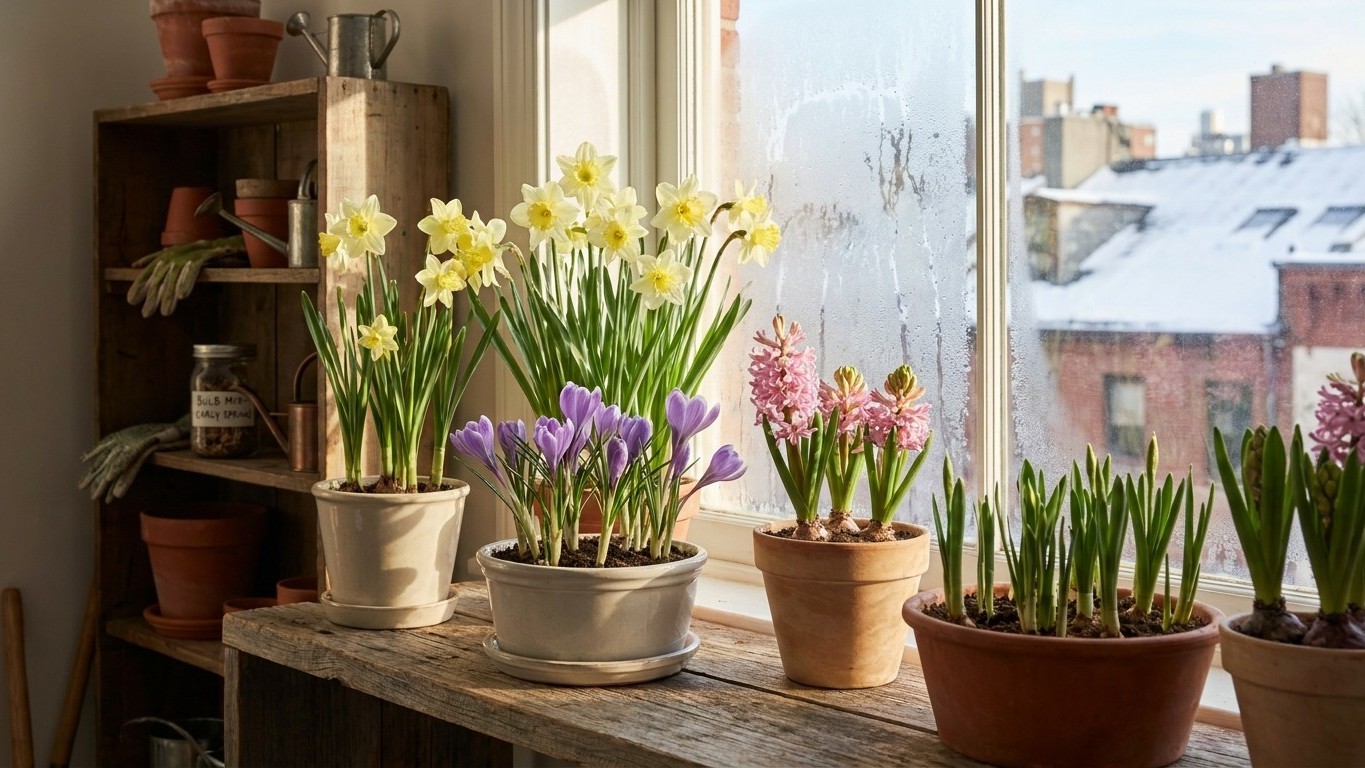

Forcing spring bulbs indoors works in New York the same way it works anywhere: you substitute a refrigerator or an unheated space for the weeks of cold a bulb needs, then bring it into warmth and light so it blooms ahead of the outdoor season. The real question here isn’t whether forcing works, it’s whether your bulbs are in the ground or in a pot, because New York winters treat each one very differently.
Why this matters in New York

Start with the number that decides everything: the coldest month at the New York City reference station averages a daily minimum of 27.9°F, according to NOAA NCEI Climate Normals for 1991-2020. That’s well below the 45°F threshold a spring bulb needs to break dormancy naturally. Ground planted in a New York garden bed gets more than enough winter chill on its own. A tulip or daffodil planted in October and left alone will get its twelve to fourteen weeks of cold from the soil itself, no refrigerator required.
That changes what “forcing” means here. In places where winter never gets cold enough, gardeners force bulbs to supply chill the ground can’t provide. New York isn’t that place. The reason to force bulbs indoors in this territory is almost always about timing, bringing a hyacinth or crocus into bloom in a sunny window while snow is still on the ground, not about rescuing a bulb from an insufficient winter.
Containers are where the real risk sits. A pot has no thermal mass around it the way garden soil does. Where the ground only freezes a few inches down and stays insulated below that, a pot freezes through, roots and all, exposed on every side to the air. That means a bulb rated hardy for outdoor ground in this region can still die if the same bulb sits in an unprotected pot left outside all winter. The USDA Plant Hardiness Zone Map, built on average annual extreme minimum temperatures, places New York across a wide range, zone 3b up through 7b. The New York City area sits toward the warmer end of that range; inland and upstate counties run several zones colder. A recommendation calibrated to the city reference point will not hold for a container left outside near the Adirondacks or the Tug Hill Plateau.
So the situation in New York is the container problem, not the insufficient-cold problem. Ground-planted bulbs don’t need help from a gardener. Potted bulbs left outdoors do, and that’s where forcing technique actually earns its keep.
How to do it here
The steps below assume you’re chilling bulbs specifically to bloom them indoors, in pots, ahead of the outdoor season. Follow them in order.
- Choose bulbs suited to indoor forcing. Hyacinths, crocus, muscari, and paperwhite narcissus are the classic choices because they tolerate pot culture and a compressed bloom cycle.
- Pot them in a container with real drainage holes. Use a soil-based potting mix, set the bulbs with their tips just at or above the surface, and water once to settle the soil.
- Find a cold space that won’t freeze solid. An unheated garage that stays reliably above freezing works, and so does an unheated mudroom or enclosed porch. Check the space with a thermometer over a few days before committing bulbs to it; if it swings below freezing overnight, it’s not reliable for this.
- Or use a refrigerator, kept apart from fruit. A crisper drawer works well, but ripening apples, pears, and other fruit release ethylene gas, and ethylene will kill the flower bud forming inside the bulb before it ever gets to bloom. Store bulbs in a separate drawer or wrap the fruit tightly if the two must share a fridge.
- Hold the chill for the full period the bulb needs. Most spring bulbs used for forcing need twelve to fourteen weeks below 45°F before they’re ready to bloom. Cutting this short is the single most common reason forced bulbs fail to flower.
- If you’re chilling in an outdoor pot instead of a fridge or garage, size the protection to the container problem. A pot needs roughly two hardiness zones of extra protection compared with the same bulb in open ground, since it freezes through rather than staying insulated. Either move the pot into an unheated but frost-buffered space for the winter, or bury the whole pot in a trench and mound mulch over the top so the surrounding earth does the insulating.
- Check for root growth before moving bulbs to warmth. Tip the pot gently, or look for roots at the drainage holes. White roots and a pale shoot tip mean the chill period did its job.
- Move to a cool, bright spot first, around 60°F, for a week or two. This transition step keeps the stem from growing too fast and flopping over.
- Then move to full warmth and light to finish the bloom. A sunny windowsill at normal room temperature will bring flowers on within one to three weeks, depending on the bulb.
Which bulbs are worth it
Not every bulb rewards the effort of forcing. Bulbs with a short cold requirement force faster and more predictably, while tall-stemmed varieties tend to grow leggy and topple once they’re pulled into a warm room. Bulbs that were never going to survive a second year outdoors anyway cost nothing extra to force, since there’s no garden performance being sacrificed.
Bulbs that force reliably here
- Paperwhite narcissus, which needs no cold period at all and blooms within weeks of potting
- Hyacinth, a dependable, fragrant bloomer with a moderate chill requirement
- Crocus, short-stemmed and stable in a shallow pot
- Muscari (grape hyacinth), compact and quick once chilled
- Smaller species tulips, which stay short enough to stand upright indoors
Bulbs that tend to sulk
- Tall Darwin hybrid tulips, which grow leggy in low indoor light and topple
- Fritillaria, awkward in scale and inconsistent when forced
- Ornamental alliums, both too tall for most pots and slow to bloom
- Trumpet daffodil varieties bred for garden height rather than pot culture
Paperwhites are worth singling out. Because they aren’t reliably hardy for New York’s outdoor winters and are typically treated as a one-season purchase regardless, forcing them indoors costs nothing in the long run. They were never going into the garden bed to begin with.
What goes wrong, and when you can still fix it
Leaves but no flower
This usually means the chill period ran short of the twelve to fourteen weeks a bulb needs. The bulb built leaf growth but never finished forming the flower bud inside. There’s no fix for the plant already growing this season; the bulb simply won’t flower this cycle. Note the date it went into the cold and give the next batch the full period.
Short stem, flower buried in the leaves
A stem too short to see the bloom above the foliage usually means the plant was moved into warmth too fast, without the intermediate cool, bright stage. The stem never had time to elongate before the flower opened. This bloom can’t be rescued once it’s underway; the fix is giving the next pot its transition week at cooler temperatures before full warmth.
Rot in the pot
Soft, discolored bulbs sitting in wet soil point to drainage failure, not disease. Water pooled at the base of the bulb during the chill period and it never dried out between waterings. A rotted bulb won’t recover; discard it. For the next attempt, confirm the pot has open drainage holes and let the soil surface dry slightly between waterings during the cold stage.
Related guides
- Growing Spring Bulbs in Containers in New York
- Forcing Spring Bulbs Indoors in North Carolina