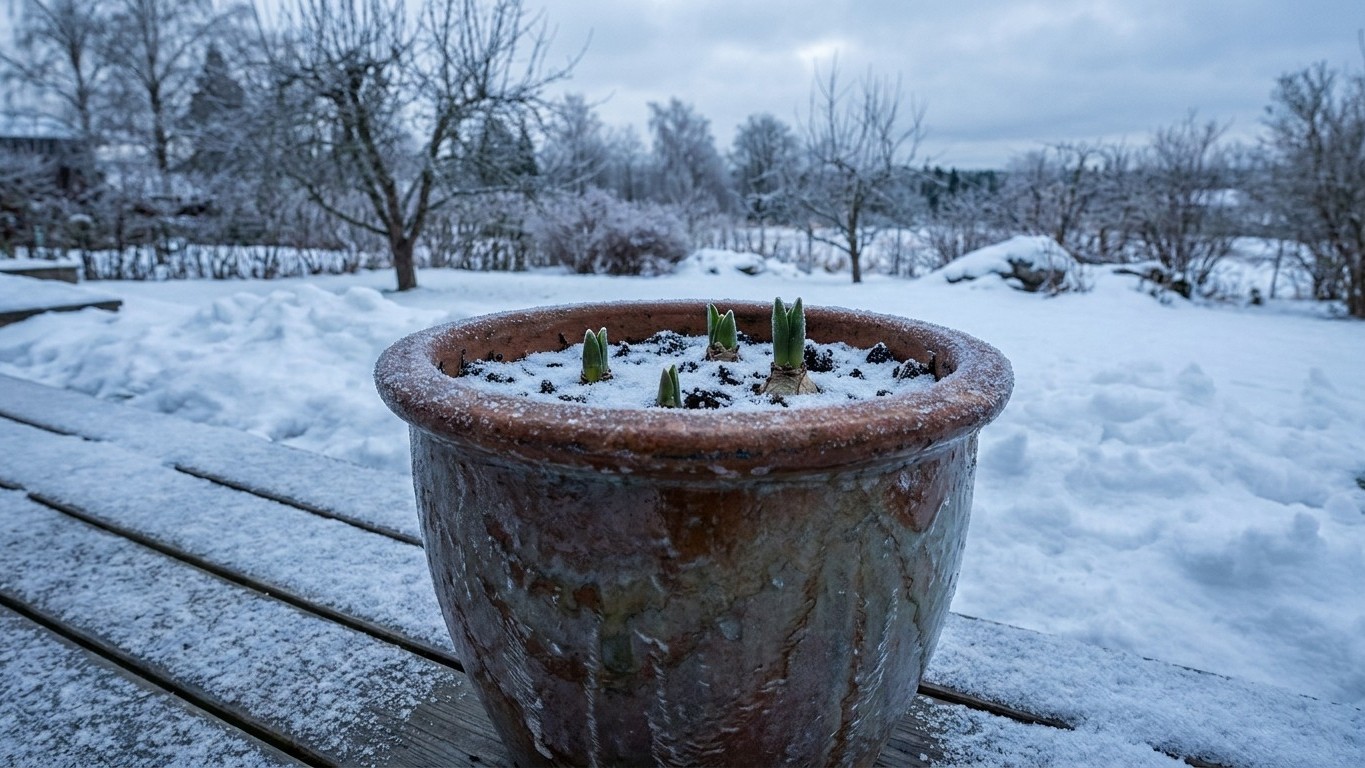

Container-grown spring bulbs in Quebec don’t fail because winter arrives too late or too soft. They fail because a pot freezes solid, roots and all, while the same bulb planted in a garden bed sails through untouched. The fix isn’t a longer chill period. It’s matching the bulb to a colder effective zone, or moving the pot somewhere the freeze can’t reach it.
Why this matters in Quebec

The coldest month here averages a daily minimum of 6.7°F, measured at the Montreal reference station over the 1981-2010 period (Environment and Climate Change Canada). That’s not a record cold snap. That’s the typical low, night after night, for the coldest stretch of the year. A bulb sitting in open ground is insulated by several feet of soil mass around it, so it rarely drops anywhere near air temperature. A bulb sitting in a container has no such buffer. Once the pot’s exterior hits ambient air temperature, so does everything inside it, including the roots.
Natural Resources Canada rates the reference city at hardiness zone 5b under the Canadian system, based on 1991-2020 normals across seven climate variables, not the single-variable US scale. That zone rating is built for plants rooted in the ground. It says nothing about what happens to the same bulb once it’s isolated in a pot on a deck or a balcony, exposed to cold air on every side instead of just the top few inches.
This is the container problem, not the forcing problem. Quebec’s winters deliver far more than the twelve to fourteen weeks below 45°F that a tulip or daffodil needs to bloom the following spring. Nobody here is short on chill. The question that actually decides whether a container bulb survives is whether that pot, sitting above ground with cold air wrapping around it, effectively drops the bulb into a hardiness zone two steps colder than the label on the bag suggests. A daffodil rated hardy to zone 5 in the ground can die in a container rated the same way, simply because the container never gets the insulation the ground provides for free.
That distinction matters for anyone planning containers on a porch, a balcony, or against a house wall this fall. The bulb variety matters less than where that pot spends January.
How to do it here
Two separate goals get lumped together under “growing bulbs in containers,” and they call for different handling. One is forcing bulbs into bloom indoors during winter, on a windowsill, weeks before anything could flower outside. The other is planting a container that stays outdoors through the cold season and is expected to bloom in spring, in place, like a small portable garden bed. Here’s the sequence for each.
- Decide which you’re doing before you buy bulbs. Indoor forcing needs bulbs that haven’t been pre-chilled if you’re doing the chilling yourself; outdoor containers need bulbs rated hardy enough for a pot, not just for open ground.
- For indoor forcing: pot the bulbs in fall in a container with drainage, water once, then move them somewhere cold for twelve to fourteen weeks. An unheated garage that stays above freezing works, as does an unheated but insulated porch. The target is consistently below 45°F without ever dropping to a hard freeze that would damage the roots forming inside the pot.
- A refrigerator crisper drawer is the other reliable option, but only if it’s kept away from ripening fruit. Apples, pears, and bananas release ethylene gas as they ripen, and ethylene damages the flower bud developing inside a chilling bulb before it ever opens.
- For outdoor containers: check the zone math first. Since the reference city here sits at Canadian zone 5b, a container left outdoors all winter needs a bulb rated hardy to at least two zones colder, roughly zone 3, to have a realistic chance of surviving the freeze-through a pot experiences that the ground never does.
- If the bulb isn’t rated that hardy, the pot has to be moved: into an unheated garage, a cold frame, or buried up to its rim in a mulch pile, insulating it the way garden soil would.
- After the cold period ends, bring forced pots into gradually warmer, brighter conditions rather than full sun and heat all at once. Outdoor containers that made it through winter simply wake up on their own once the ground around them thaws.
Nothing here depends on guesswork. The gardener can check a garage thermometer, check a refrigerator drawer for fruit, and check the zone rating printed on the bulb bag against the reference city’s own rating. Every step is verifiable at home.
Which bulbs are worth it
Some spring bulbs reward the trouble of a container; others sulk no matter how carefully the cold period is managed. The difference usually comes down to two things: how short a chill requirement the species has, and how tall and top-heavy the flower stalk gets once it blooms. A short chill requirement means faster, more reliable forcing. A tall, heavy stem means the plant is more likely to topple in a pot that lacks the anchoring depth of garden soil.
Where a bulb is a one-season purchase anyway, forcing costs nothing in the long run. Many modern hybrid tulips grown in Quebec’s heavy clay soils rarely rebloom well after their first spring even in the ground, so treating them as forced, disposable color for one season isn’t really a loss compared to leaving them outdoors.
Bulbs that force reliably here
- Crocus, thanks to a short chill requirement and a low, sturdy flower that doesn’t need staking
- Muscari (grape hyacinth), for the same reasons, plus a compact growth habit suited to small pots
- Hyacinths, which force predictably and fill a small container without needing support
- Standard tulips, which have a moderate chill requirement and are treated as one-season color anyway
Bulbs that tend to sulk
- Giant alliums, whose tall flower heads are heavy enough to tip a container-grown plant over
- Large trumpet daffodils, which grow tall stems that flop without the resistance garden soil provides around the base
- Fritillaria, which has a longer, fussier chill requirement and doesn’t tolerate the temperature swings a container experiences
What goes wrong, and when you can still fix it
Leaves, but no flower
This means the cold period ran short. The bulb had enough stored energy to push up foliage but not enough chill-triggered development to form a flower bud. There’s no fix for the bulb already in growth. The plant that season will stay leaves-only. Note the actual number of weeks the pot spent cold and add to it next time.
A flower on a stem too short to see
This happens when the pot was moved into warmth too early, before the root system had time to establish underground. The bulb rushes the flower before the stem has elongated properly. Once it’s bloomed short, it stays short for that cycle. The fix is for the next round: leave the pot in cold conditions longer before bringing it into warmth and light.
Rot in the pot
Soft, mushy bulbs almost always mean water sat around the roots with nowhere to drain. Once rot has set in, that bulb is finished for the season, and usually for good. There’s no reviving it. The only real fix is prevention: a container with real drainage holes and a mix that doesn’t hold standing water through weeks of cold storage.