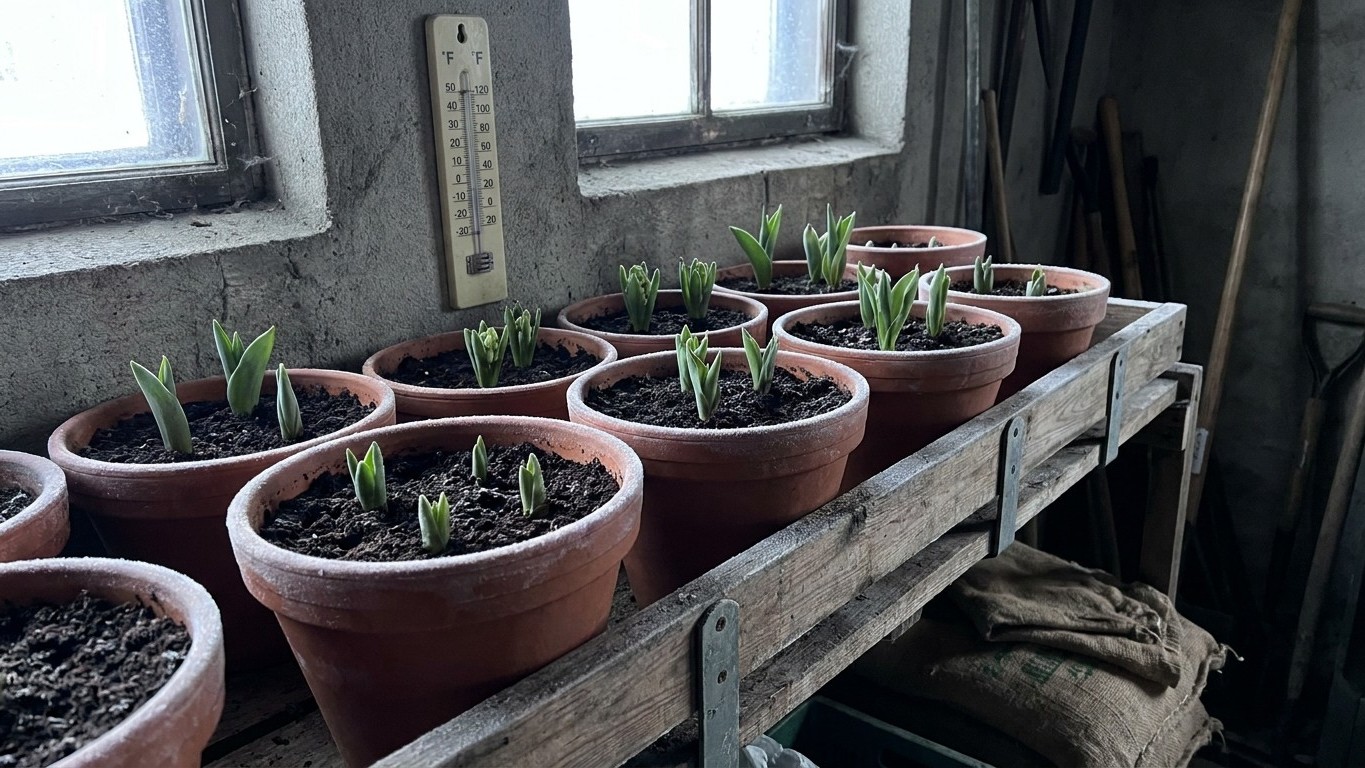

Forcing works in Rhode Island because it lets a gardener control the two things winter normally controls on its own: how many weeks of cold a bulb gets, and when it decides to bloom. The state’s cold season is not short on chill hours, so the real skill here is managing containers, which freeze solid in a way garden beds do not.
Why this matters in Rhode Island

The average daily minimum temperature during the coldest month at the Providence reference station runs 22.1 degrees Fahrenheit, according to NOAA NCEI Climate Normals for 1991-2020. That number matters more than any record low, because it describes the cold a bulb actually sits in, night after night, for weeks at a stretch.
Forcing exists as a technique for two separate reasons, and they call for different responses. In places where winter never gets cold enough for long enough, a gardener has to manufacture the twelve to fourteen weeks below 45 degrees Fahrenheit that a tulip or hyacinth needs to set its flower bud, usually with a refrigerator. In places where winter is plenty cold, the challenge shifts: a container left outside freezes clean through, roots and all, in a way an in-ground bed never does, because soil mass insulates and a pot’s thin walls do not.
Rhode Island falls into the second camp. A coldest-month average minimum of 22.1 degrees Fahrenheit means outdoor cold is not scarce here. An unheated garage, a cold frame, or even a sheltered spot against a north wall will deliver the chilling period a forced bulb needs without any help from a refrigerator. The USDA Plant Hardiness Zone Map (2023 edition, based on 1991-2020 averages) puts the state across a 6a-7b range, which is a wide spread for a small state, and it means a technique tuned to Providence can behave differently in a colder inland town or a milder coastal one. That range is built on a single variable, the average annual extreme minimum temperature, so treat it as a starting point, not a guarantee for every yard.
What actually changes the outcome for a Rhode Island gardener, then, is not whether the bulb gets cold enough. It is whether the pot holding that bulb gets too cold, too fast, with no soil mass around it to soften the swing. That is the problem worth solving here.
How to do it here
The sequence below assumes a typical spring-flowering bulb, the kind that needs a real winter to bloom well. Each step is something a gardener can check for himself, without guessing.
- Pick bulbs suited to forcing. Firm, plump, unblemished bulbs of a species that tolerates a shortened or pot-bound cycle (see the next section) give the most reliable results.
- Pot them in a well-draining mix, in a container with real drainage holes, tips just at or barely below the surface, spaced close enough to touch without crowding.
- Water once, thoroughly, so the mix is evenly moist but not saturated, then start the cold treatment.
- Chill for twelve to fourteen weeks. An unheated garage that stays reliably above freezing works well in this climate. A refrigerator drawer works too, as long as it is kept away from ripening fruit, since the ethylene gas fruit gives off can damage or kill the flower bud forming inside the bulb.
- Check soil moisture every few weeks during the chill. It should stay barely damp, never dry and never soggy.
- If the pot is going anywhere colder than an unheated garage, size it up. A container needs to be rated at least two hardiness zones colder-hardy than the bulb itself before it can sit outside safely through a Rhode Island winter, or it needs to be moved indoors, or mulched heavily, before hard freezes settle in.
- Bring the pot into cool, indirect light once roots show through the drainage holes or shoots reach one to two inches, and let it adjust there for about a week before moving it somewhere brighter and warmer.
- Move to the display spot once buds show color, away from heating vents, and keep watering regularly as the flower opens.
Which bulbs are worth it
Some bulbs pay back the effort of forcing quickly and reliably. Others sulk, drop buds, or grow too tall for a pot to hold upright. The difference usually comes down to how long a cold requirement the species carries and how tall it grows once it does bloom.
Short cold requirements force fast and forgive small mistakes in timing. Tall stems, on the other hand, tend to flop or snap in the confined root space of a container, and long cold requirements leave less room for error if the chill runs short.
- Paperwhite narcissus, which needs no cold period at all and blooms in a few weeks from potting
- Hyacinth, with a shorter eight-to-ten-week chill and a sturdy stem that holds up well in a pot
- Crocus, small enough that a shortened root run barely matters
- Grape hyacinth (muscari), compact and reliably floriferous even in a tight container
- Short and species tulip varieties, which stay low enough not to topple
- Large trumpet daffodils, which want the full fourteen-to-sixteen-week chill and grow tall enough to lean over in a pot
- Giant allium, both too tall for indoor display and too demanding on chill length
- Fritillaria, which forces unevenly and often skips flowering entirely under a shortened cycle
- Large trumpet tulips, top-heavy once they bloom and prone to bud blast if the chill comes up short
Most bulbs used for forcing are not going to rebloom reliably once planted out afterward, since the forced cycle strips reserves the bulb would normally rebuild over a full outdoor season. That is not really a loss for a gardener who bought the bulb for one winter’s display in the first place. Treat forced bulbs as a one-season purchase, and the calculation gets a lot simpler.
What goes wrong, and when you can still fix it
Leaves but no flower
This means the cold period ran short of what the species needed to fully form its flower bud. The leaves grow because they need less cold signal than the bud does, but the bud itself never finished developing. There is no fix this season. The bulb can be planted outside afterward and, given a full natural winter or two, it may eventually rebuild enough reserve to flower on its own timeline, but not indoors this year.
Flower on a stem too short to see
Moving a pot into warmth and light before the shoot has had time to elongate locks the stem at a stubby height, sometimes called bud blast in mild cases. That stem length is set during the cool transition period and does not stretch out later. Nothing corrects it once the bloom has opened. The lesson carries forward to the next attempt: give the cool, low-light stage a full week before moving to brighter warmth.
Rot in a pot
Standing water in a container without adequate drainage lets fungal rot set into the bulb base. Catch it early, while the bulb still feels firm, and it can sometimes be rescued: lift it, rinse it, let it dry, and replant in fresh, well-draining mix with real drainage holes underneath. Once the bulb feels soft or mushy, though, it is done, and no amount of rinsing brings it back.