
South Carolina gardeners can ripen most pepper varieties in a single season, but the window has a hard ceiling and a soft floor. The state’s reference station logs 55.1 days a year at or above 90 F, which stalls pollen and drops blossoms during the hottest stretch of summer. Nothing published here tracks how cold your nights run in July and August, so that side of the equation is yours to watch.
The short answer

Fifty-five days above 90 F sounds like a statistic until you map it onto a garden calendar. That’s roughly eight weeks scattered across June, July, and August, at a station in Charleston, when pepper flowers can abort before they ever set fruit. Heat this consistent doesn’t just slow ripening, it interrupts pollination itself: pollen grains lose viability once daytime highs push past that 90 F mark for several hours, and a plant that looks healthy can simply stop producing new fruit for a stretch. Home gardeners in the Upstate or in shadier Piedmont yards will see fewer of these days than the coastal reference station; gardeners closer to the coast or in urban heat pockets may see more.
The other failure point sits at the opposite end of the thermometer, and it matters just as much even though it gets less attention. Utah State University Extension is blunt about it: pepper fruit set fails at both ends, meaning nights below 55 F stop pollen from developing just as surely as days above 90 F do. This is not a rare edge case in South Carolina. Cool snaps in late spring or early fall, the kind that don’t register as a frost risk anymore, can still dip below that 55 F threshold overnight and quietly cost a gardener a week or two of fruit set without any visible plant damage.
Here’s the part this site can’t do for you. Daily summer low temperatures aren’t part of the climate data carried here, and there’s no reliable way to back into them from latitude, from the state’s coldest winter month, or from any general rule of thumb. A backyard in a low-lying Midlands hollow can run several degrees cooler overnight than one a few miles away on higher ground, and that difference is exactly the kind of thing a seasonal average erases. The only fix is direct observation: keep a cheap min-max thermometer in the pepper bed itself during the shoulder seasons, when nights are most likely to slip under 55 F, and treat any pepper plants that stall out with a suspicious eye toward the overnight low rather than assuming heat is always the culprit.
When to start seed here
Getting the timing right means working backward from two anchor points: when frost typically ends, and when the soil itself has warmed enough to support pepper roots. Neither one is optional, and skipping the soil-temperature check is the most common way South Carolina gardeners lose a head start on the season.
- Locate your last spring frost window. NOAA’s 1991-2020 climate normals put the 32 F freeze probability window at February 28 to March 17 for station USW00013880. That’s a broad band on purpose: it reflects a 30 to 70 percent chance of a freeze, not a guarantee either way. Peninsular Charleston runs milder than this airport station’s number, while Upstate South Carolina runs several weeks tighter at both ends of the growing season, so treat this window as a starting point to adjust against your own county’s history, not a fixed date.
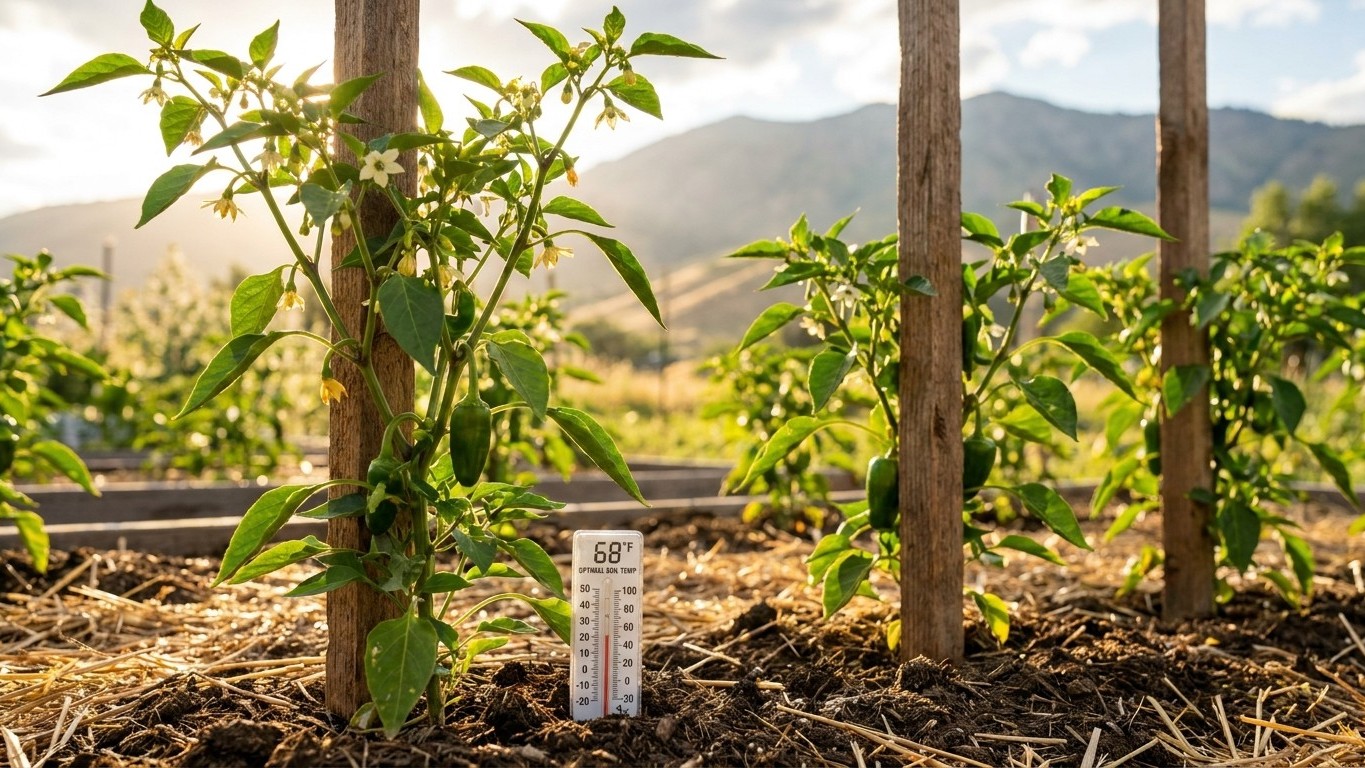
- Wait for 60 F soil, not just frost-free air. Utah State University Extension is specific here: transplant peppers after frost and once the soil reaches 60 F. Air temperature can feel warm on a sunny March afternoon while the soil six inches down is still cold from winter, and pepper roots planted into that cold soil simply sit and sulk rather than growing. A basic soil thermometer, checked in the morning before the sun warms the surface, is the only reliable way to know.
- Count back 8 to 10 weeks from your transplant date. Utah State’s guidance calls for 8 to 10 weeks of indoor growing time before pepper transplants are ready for the garden. If your frost-free date and warm-soil date both land in mid-March, counting back eight weeks puts your seed-starting date in mid-January, and counting back the full ten weeks pushes it to early January. Redo that same subtraction against your own local frost window rather than borrowing someone else’s date.
- Build in a buffer for a late cold snap. Because the freeze-probability window runs into mid-March in some parts of the state, starting seed at the early end of the 8 to 10 week range gives you sturdier transplants that can tolerate a slightly delayed planting date without becoming rootbound in their trays.
Once flowers do appear, patience is still required. From flowering to ripe fruit, Utah State University Extension puts the timeline at 35 to 45 days, a stretch that starts when the first blossom opens, not when you first planted seed or set transplants into the garden. That distinction matters in a state where a hot spell can pause flowering mid-summer and reset that clock partway through.
What goes wrong here
- Blossom drop during a heat spike. With 55.1 days a year averaging 90 F or higher at the Charleston reference station, South Carolina gardeners should expect at least a few multi-day heat runs each summer that stall pollination outright. Flowers may open and fall without setting fruit. There’s no fix for the heat itself, but timing early varieties to flower before peak summer, and providing afternoon shade cloth during the worst stretches, keeps plants productive through the lull rather than shutting down completely.
- Blossom drop during a cool night. Because pepper fruit set also fails when nights drop below 55 F, a surprise cool snap in late spring or early fall can mimic heat damage with the opposite cause. Since summer night minima aren’t tracked on a statewide basis here, the only defense is watching your own thermometer and using row cover or cold frames to buffer transplants during any unseasonable dip.
- Sunscald on exposed fruit. South Carolina’s summer sun is intense enough to blister and whiten pepper skin on fruit that loses its leaf cover, whether from pruning, wind damage, or disease defoliation. Leaving foliage intact around developing fruit, rather than pruning for airflow, is the simplest prevention.
- Blossom-end rot on fast-growing fruit. Irregular watering, heavy rain followed by a dry stretch, is common in a South Carolina summer and disrupts the calcium uptake peppers need as fruit expands, leaving a sunken brown patch on the blossom end. Consistent soil moisture through mulch and a regular watering schedule addresses this far more reliably than any calcium spray applied after the fact.
Common questions
Can I skip a cold frame and direct-seed peppers in South Carolina?
Direct-seeding is possible in theory but rarely practical here. Given the 8 to 10 week indoor head start Utah State University Extension recommends, and the 35 to 45 days needed from flowering to ripe fruit, direct-seeded plants often run out of season before producing much of a harvest, especially in years with an early hot stretch.
Does the 90 F day count mean I should stop watering less?
It means the opposite. On the 55.1 days a year the Charleston reference station hits 90 F or higher, pepper plants lose water faster through their leaves, and consistent soil moisture becomes the main defense against both blossom-end rot and general heat stress, even though it won’t fix blossom drop from the heat itself.
How do I know if my garden’s nights are too cool for fruit set?
There’s no published figure to check this against for South Carolina specifically. The only reliable method is placing a min-max thermometer in the pepper bed and checking it through spring and fall shoulder seasons, watching for any reading below 55 F, since that’s the threshold Utah State University Extension identifies as a fruit-set failure point.
Are some pepper varieties more forgiving of South Carolina’s heat swings?
Utah State University Extension’s guide names six varieties suited to home gardens, but publishes no heat rating, no days-to-maturity figure, and no fruit size for any of them. Without that data, the safest approach is trialing a couple of varieties side by side in your own garden and tracking which ones keep setting fruit through your hottest weeks.