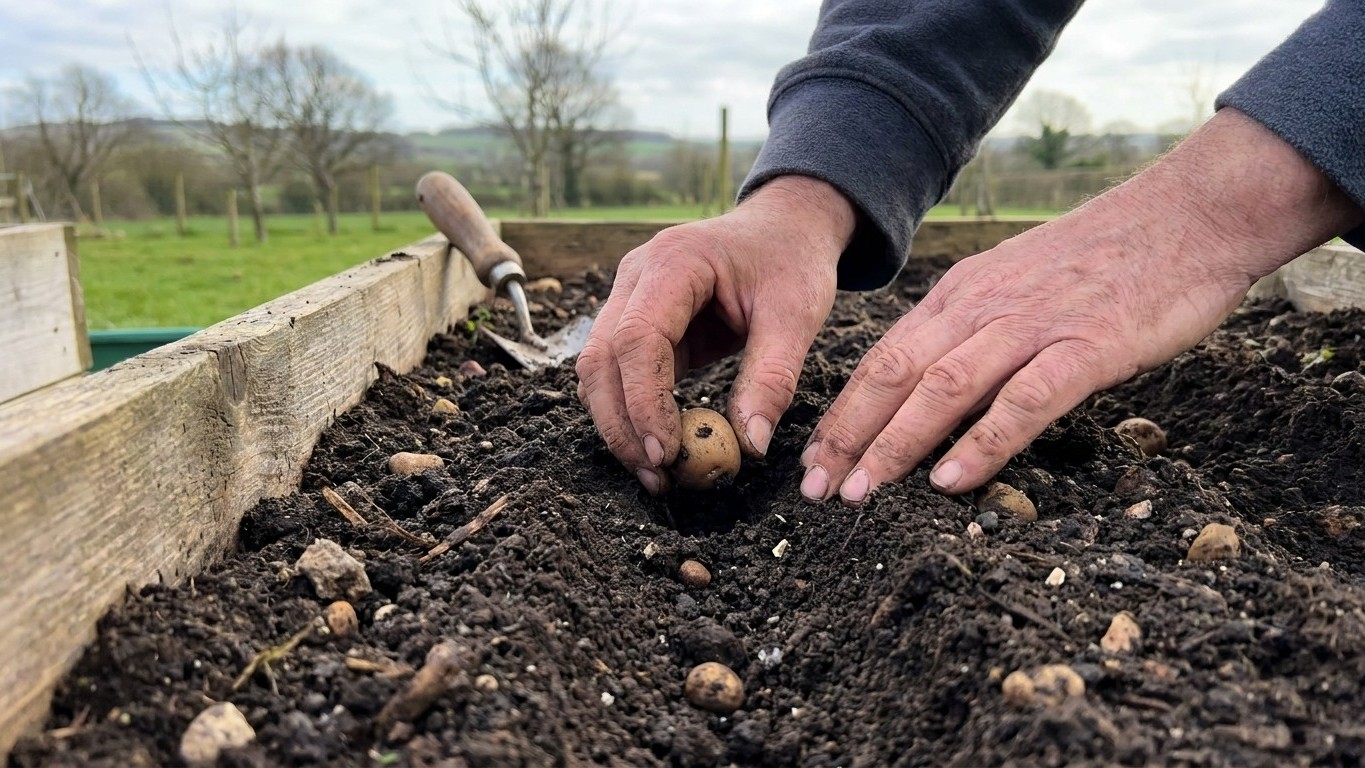

Plant your Oklahoma potatoes as a spring crop, not a summer one. Get seed potatoes in the ground 14 to 21 days before your area’s last frost, then plan to dig well before the state’s long run of 90-degree days arrives. That single scheduling decision, driven by soil temperature rather than the calendar month, decides whether you get full-size tubers or a stunted crop. For a detailed breakdown of dates by region, see When to Plant Potatoes in Oklahoma.
The short answer

Two numbers set the whole calendar for growing potatoes in Oklahoma. The first is 70.7, the average number of days per year the reference station at Oklahoma City reaches 90°F or higher, according to NOAA NCEI Climate Normals covering 1991-2020. The second is the last spring frost window for that same station: between March 28 and April 10, per NOAA NCEI’s 32°F freeze-probability data. Those two figures work against each other, and understanding that tension is the entire game.
Utah State University Extension publishes the mechanism that ties them together: potato tuber set and fill is inhibited once soil temperatures climb above 90°F. That is not an average-air-temperature threshold, it is a soil threshold, and it does not care how much you water. With Oklahoma City logging 70.7 days a year at or above 90°F in the air, soil temperatures at planting depth cross that same line for a large stretch of the growing season, usually from early summer onward. That reality answers the question most gardeners ask first: can you grow a full summer-long potato crop here? Not reliably. The heat ceiling arrives too early and stays too long.
What works instead is a spring crop planted as early as soil conditions allow, so the plant does its tuber-sizing work in the cooler weeks before the 90°F stretch sets in. Dig before the heat load peaks, and Oklahoma’s frost-to-heat window is workable. For guidance on timing that dig and curing your crop properly afterward, see Harvesting and Storing Potatoes in Oklahoma. Try to push a crop through the middle of summer, expecting it to keep bulking under repeated 90-plus days, and you’ll dig small, misshapen potatoes no matter how much irrigation you run.
| Season class | What it’s typically used for | Oklahoma strategy |
|---|---|---|
| Early | Boiling, salads | Best match for the short cool window before soil regularly tops 90°F |
| Mid-season | General use, baking | Workable only if planted at the earliest safe date |
| Late | Baking, storage | Highest risk here; the extended time in the ground runs straight into peak heat |
Utah State University Extension and the University of Maine Cooperative Extension both group varieties by season class rather than publishing a fixed days-to-maturity count, and that class, not a brand name, is what should guide your Potato Varieties That Suit Oklahoma planting decision.
When to plant here
Work backward from your local frost date instead of forward from a generic spring calendar. The math is the same one home gardeners across cool-season vegetable growing use, and it holds up county by county if you plug in your own numbers.
- Start with the last spring frost window for your reference station. At Oklahoma City, NOAA NCEI’s 1991-2020 data puts that window between March 28 and April 10.
- Confirm soil temperature at planting depth reaches 50°F. Seed potatoes go in the ground once that threshold is met, not on a fixed date, since a cold spring can push the safe window later regardless of the calendar.
- Count back 14 to 21 days from your last frost date. That’s the gap Utah State University Extension and the University of Maine Cooperative Extension both point to between soil hitting 50°F and the historical last frost.
- Applied to the Oklahoma City window, that arithmetic lands most home plantings somewhere in the first three weeks of March, adjusted earlier or later depending on how cold or mild the current spring is running.
- Use a simple soil thermometer at a 4-inch depth rather than trusting air temperature alone. Soil warms slower than air, especially after a wet spring, and that lag is exactly what causes gardeners to plant too early.
None of this depends on knowing a variety’s days-to-maturity figure, because neither Utah State nor the University of Maine publishes one. What matters is getting seed potatoes into 50°F soil with enough runway before the heat arrives, not hitting an exact date on a calendar page.
What the heat does to the crop
The mechanism is simple and it’s the reason this whole page exists: once soil temperature climbs above 90°F, tuber set and fill stop. Utah State University Extension states this plainly as a fact sheet finding, not a regional guess. The plant can keep growing foliage, but the below-ground process that turns a potato plant into food, the bulking of tubers, shuts down under that heat load.
Oklahoma City’s climate record puts 70.7 days a year at or above 90°F in the air, and soil at typical planting depth tracks close behind air temperature once summer settles in. That means a large share of a normal Oklahoma summer sits above the threshold where potatoes can size up. A crop planted late, or one left in the ground into July expecting it to keep filling out, is fighting a wall it cannot get past.
This is where irrigation habits mislead people. Watering more during a hot stretch keeps the plant alive and green, but it does not lower soil temperature enough to restart tuber fill once that 90°F line is crossed. Gardeners who respond to a stalled crop by watering harder are treating the wrong problem. The fix is scheduling, not moisture: get the crop planted early enough that the bulk of its tuber development happens before soil temperatures rise, then dig before the season’s heaviest heat sets in.
For most of Oklahoma, that points toward a single spring-planted crop, dug in early to mid-summer, rather than a season-long planting that assumes the ground will stay cool enough to keep filling tubers straight through August.
What goes wrong here
- Uncertified seed potatoes. Grocery-store or leftover potatoes often carry viruses that stunt the plant before heat even becomes a factor. Certified seed potatoes, sold as such, are grown and inspected specifically to be free of those viruses, and that single choice prevents a failure that no amount of good timing can fix later.
- Planting into cold, wet soil before it reaches 50°F. Seed pieces sitting in soil colder than that are prone to rot before they ever sprout, especially in Oklahoma’s heavier clay soils after a wet March. Wait for the thermometer reading, not the calendar date.
- Skipping hilling. Tubers that develop too close to the surface turn green when exposed to sunlight, and green potato skin contains compounds that make the tuber unfit to eat. Hilling soil up around the base of the plant as it grows keeps developing tubers covered and prevents this.
- Digging too early. Pulling potatoes before the foliage has died back gives thin, easily damaged skins that won’t store well. Given how tight the cool-season window is in Oklahoma, it’s tempting to rush the harvest ahead of the heat, but digging a few days too soon costs storage life even if it avoids a few days of rising soil temperature.
Checking this against your own county
A statewide frost window is a starting point, not an instruction. The March 28 to April 10 figure comes from the Oklahoma City reference station, and gardens elsewhere in the state, particularly at higher elevation or farther north, typically see their last spring frost later by one to two weeks. The same goes for how quickly soil reaches 50°F and how many days each summer sit above 90°F; those numbers shift with elevation and latitude even within a single state.
Before locking in a planting date, check current conditions and local frost data with your county office of Oklahoma State University Extension. They track local soil and frost conditions far than any statewide average can.
Common questions
Can I grow a fall potato crop in Oklahoma instead of a spring one?
The facts used on this page cover spring planting timing and the summer heat ceiling; they don’t include fall-crop data for Oklahoma. Check with Oklahoma State University Extension for guidance specific to a second planting.
Does mulching lower soil temperature enough to keep tubers filling through summer?
Neither Utah State University Extension nor the University of Maine Cooperative Extension source used here publishes a mulching offset for the 90°F threshold, so that figure isn’t available to state as fact. The safer approach in Oklahoma remains timing the crop to finish before soil regularly crosses that line.
Is it worth planting an early-season variety specifically because of Oklahoma’s heat?
Yes, in principle: an early season class gives the plant less time exposed to rising soil temperatures before it reaches maturity, which fits Oklahoma’s short cool window better than a late season class. Neither source publishes an exact maturity date, but the season-class distinction itself is useful for planning.
What happens if I accidentally plant before the soil hits 50°F?
Seed pieces sitting in soil colder than 50°F are more prone to rot rather than sprouting, per the guidance from Utah State University Extension. Testing soil temperature with a simple thermometer before planting avoids this rather than guessing from the calendar alone.