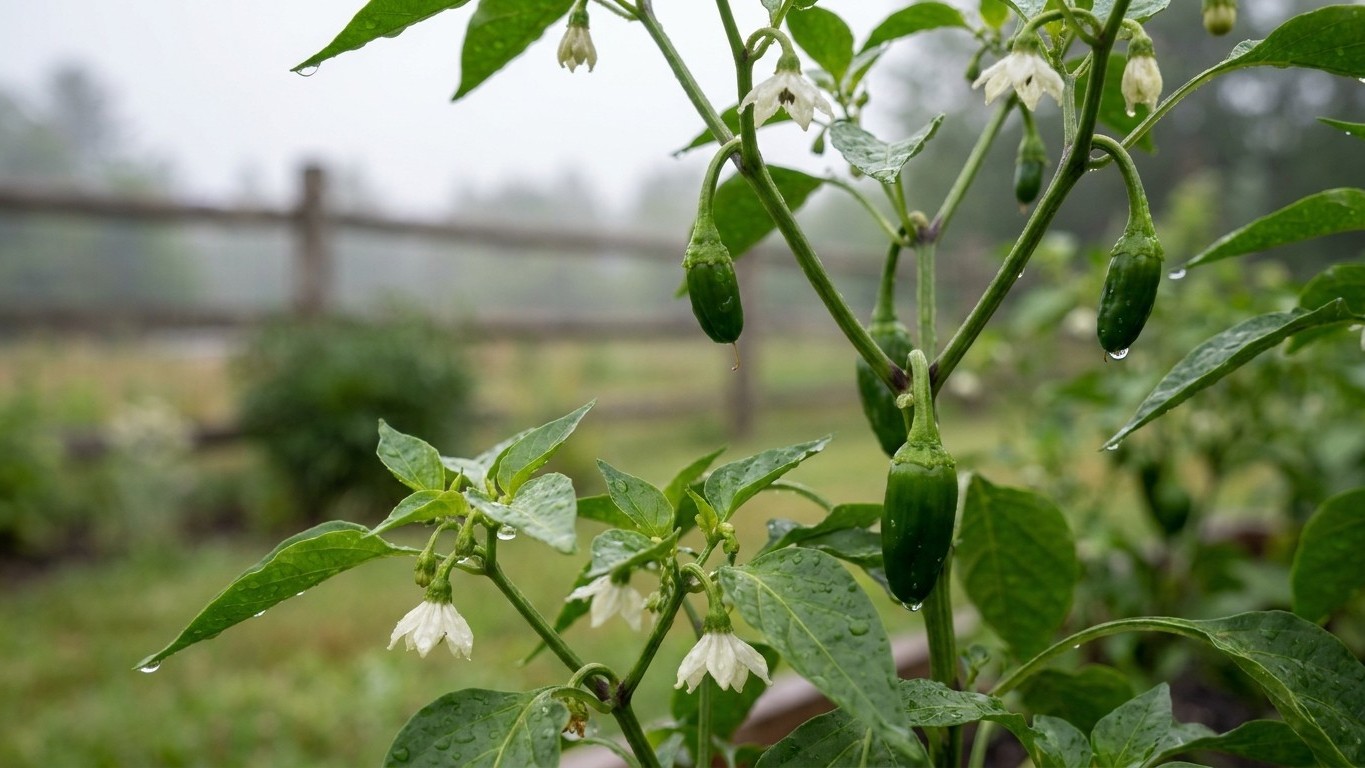

Maine peppers stall out more often from cold than from heat. With just 3.8 days a year reaching 90 F at the Portland reference station, blossom drop from excess heat is rare here. The bigger threat sits on the cool side, since fruit set also fails when nights drop below 55 F, and that number depends on your own thermometer, not a regional average.
The short answer

Start with what the climate record actually shows: Portland’s official 1991-2020 normal is 3.8 days a year at or above 90 F. That’s not a typo and not a range to round up. It means a Maine pepper grower sees, on average, fewer than four days a summer where daytime heat alone could push blossoms to drop. Compare that to states where 90-degree stretches run for weeks, and the picture changes. In Maine, heat-driven fruit set failure is the exception, tied to a short heat spell rather than a settled pattern of summer weather.
That doesn’t mean heat is off the table. A single afternoon above 90 F, especially with high humidity or still air, can still knock blossoms off a pepper plant that’s already stressed from uneven watering or a full fruit load. The Utah State University Extension threshold is clear on this: pepper fruit set fails once daytime highs climb past 90 F, whether that happens for four days or forty. So the low count matters for how often you’ll deal with it, not whether it’s possible at all.
The other end of that threshold is where Maine growers need to pay closer attention. Fruit set also fails when nights drop below 55 F, and this is the piece a Portland heat-day count can’t answer. This site tracks days above 90 F for each state, but it does not carry summer overnight low temperatures. There’s no substitute figure to fall back on here, and guessing based on latitude or on how cold January gets would be a mistake. Coastal air near Portland behaves differently than an inland valley an hour north, and a valley floor can sit several degrees cooler overnight than a hillside a mile away.
The practical move is to put a min-max thermometer in your pepper bed sometime in June and check it through July and August. If you’re seeing nights regularly dip into the low 50s during a cool stretch, especially after a clear, calm evening, that’s your fruit-set problem, not the heat. Peppers can look perfectly healthy, flower steadily, and still drop blossoms because the night air near the ground never held above that 55 F line. For a deeper look at this exact mechanism, see Why Peppers Fail to Set Fruit in Maine. Choosing from Pepper Varieties That Ripen in a Maine Season can help offset this risk by giving fruit a better shot at maturing within the state’s tighter warm-night window.
When to start seed here
Working out a seed-starting date for Maine means starting from a clear resource on When to Start Pepper Seed in Maine peppers means counting backward from two conditions that both have to be met before a transplant goes outside: the frost has passed, and the soil has warmed to 60 F. Here’s how the arithmetic runs, in an order you can redo for your own county.
- Find your last spring frost date. NOAA’s 1991-2020 climate normals put Portland’s window at April 22 to May 1, based on 32 F freeze probability data. That’s the mild end of the state. Inland and northern Maine push substantially later, sometimes by several weeks, so treat the Portland dates as a coastal reference point rather than a statewide one.
- Wait on soil temperature, not just the calendar. Pepper transplants need soil at 60 F before they go in the ground, and soil almost always trails the air temperature. A frost-free date in early May doesn’t guarantee 60 F soil the same week, particularly in a cold, wet spring or in heavier clay soils that warm slowly.
- Count back 8 to 10 weeks from your expected transplant date. If your local frost-free window lands around the start of May, that puts seed-starting somewhere in late February to early March, adjusted for however much later your soil actually reaches 60 F. If you garden inland or farther north, where frost lingers longer, push both the transplant date and the seed-starting date later by the same number of weeks your frost date runs behind Portland’s.
This backward count is the same math every pepper grower in the state should run, just with different anchor dates depending on how close to the coast or how far north the garden sits. A grower in a river valley with a documented history of late frost pockets should lean toward the later end of that 8 to 10 week window rather than the earlier one, since a pepper transplant set out too early into cold soil will simply sit and sulk instead of growing.
What goes wrong here
- Blossom drop during a hot spell or a cool night. Both ends of the fruit-set threshold apply in Maine, even if the hot end shows up rarely given the 3.8-day average. During one of those rare 90 F days, provide afternoon shade cloth over the pepper bed and keep soil moisture even, since drought stress compounds heat stress. On the cool end, when your own overnight readings drop toward 55 F, cover plants with a floating row cover in the evening to hold in a few degrees of warmth, and pull it off in the morning once the air warms.
- Sunscald on exposed fruit. Maine summer sun can still be strong enough to scald pepper skin, particularly on fruit that loses its leaf cover after aggressive pruning or after a storm knocks foliage down. The fix is to leave a fuller canopy of leaves around developing fruit rather than pruning heavily, and to use shade cloth over the row during the sunniest stretch of midsummer if scald has shown up in past seasons.
- Blossom-end rot on the fruit tip. This shows up as a dark, sunken patch at the blossom end of the pepper and traces back to inconsistent watering that disrupts calcium uptake, not to a soil calcium shortage in most cases. Even, regular watering through a layer of mulch keeps the soil moisture steady and is the most reliable remedy, especially through the uneven rainfall patterns of a Maine summer that can swing from a dry week to a soaking one.
Checking this against your own county
The Portland numbers here are a reference point, not a guarantee for your particular garden. Soil type, elevation, distance from the coast, and even which side of a hill your beds sit on can shift both your frost dates and your summer night lows away from what the state-level record shows. The University of Maine Cooperative Extension keeps county-level growing information and can help you check local frost timing and soil conditions against what’s laid out here. You can reach them at extension.umaine.edu. Bringing them a specific address or town, rather than just “Maine,” will get you a more useful answer than any statewide average can offer.
Common questions
Do pepper plants need full sun in Maine?
Yes, peppers need as much direct sun as a Maine garden can offer, since the growing season here is shorter and cooler than in warmer states. Full sun exposure supports steady flowering, though during a rare heat spell above 90 F, some temporary afternoon shade can protect blossoms from dropping.
How do I know if my nights are too cold for pepper fruit set?
Set a min-max thermometer in the pepper bed and check it through the growing season, since this site doesn’t carry summer night-low data and regional guesses aren’t reliable. If overnight readings are regularly falling below 55 F during a cool stretch, that’s likely behind any blossom drop you’re seeing, not the daytime heat.
Can I start pepper seeds too early in Maine?
Yes. Starting more than 10 weeks before your transplant date often produces leggy, root-bound seedlings that struggle once they go in the ground. Sticking to the 8 to 10 week window before your expected transplant date, timed to when both frost has passed and soil hits 60 F, gives the plant a better start.
Is blossom-end rot caused by a calcium-poor soil in Maine gardens?
Usually not. Most cases trace back to uneven watering that interrupts how the plant moves calcium to the fruit, rather than an actual shortage of calcium in the ground. Consistent watering and a layer of mulch to even out soil moisture address the problem more reliably than adding calcium products.