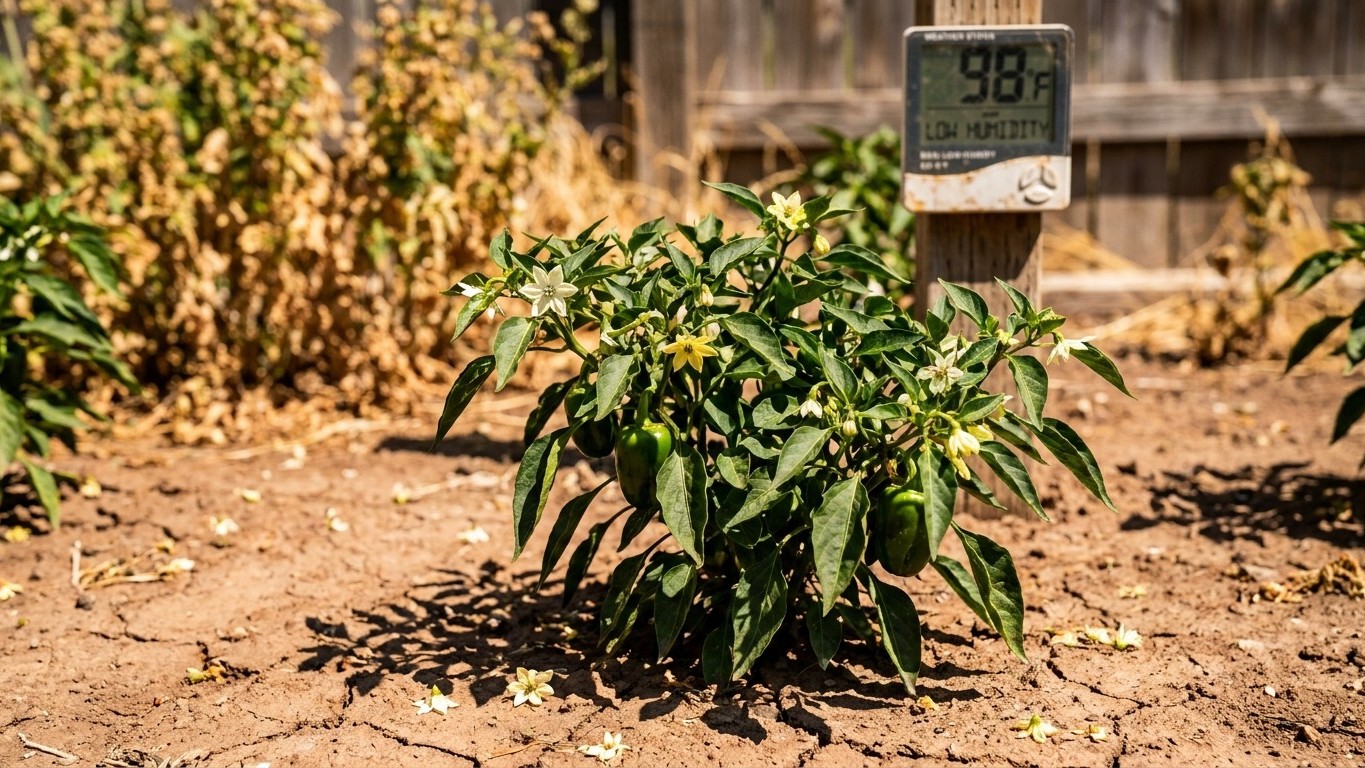

In the Boise valley, peppers face 47.5 days a year at or above 90 F, on average, enough heat to stall fruit set during the hottest stretch of July and August. The other risk, nights below 55 F, isn’t tracked here by county, so you’ll need to watch your own garden. Start seed 8 to 10 weeks before setting plants out, once frost has passed and soil has warmed to 60 F.
The short answer

Boise’s climate record puts the reference station at 47.5 days a year averaging 90 F or hotter, based on NOAA’s 1991-2020 Climate Normals. That’s not one bad heat wave, it’s nearly seven weeks scattered across the growing season, concentrated in July and August, right when pepper plants are supposed to be setting their heaviest flush of fruit. Once daytime highs push past 90 F, pepper pollen loses viability, and flowers that do open tend to abort before swelling into fruit. Growers see this as blossom drop: healthy plants, plenty of flowers, almost nothing to show for it come mid-August. Understanding Why Peppers Fail to Set Fruit in Idaho can help you spot the signs early and adjust before the worst heat hits.
The cool end nobody talks about
Heat gets the attention, but pepper fruit set fails just as fast on the other side of the thermometer. Nights that drop below 55 F interrupt pollen shed the same way scorching days do, and a plant that flowers through a run of cool nights can drop blossoms just as thoroughly as one baking through a heat spell, according to Utah State University Extension. The catch for Idaho gardeners: this site tracks daytime heat county by county, not overnight lows through the summer. Elevation turns a valley floor into a cool pocket within a few miles, and a spot that reads warm on a state map can still see nights in the 50s well into June. There’s no shortcut here. Watch your own thermometer overnight during flowering, especially early in the season and again once nights start turning in late summer.
The 47.5-day figure is an average, not a fixed schedule. Some years bunch that heat into a two-week stretch in late July; other years spread it thinly from June through September. Either way, the practical takeaway holds: expect at least one hot spell capable of stalling fruit set, and aim to have plants carrying a strong first flush of pods before the worst of it lands. Plants that go into July already holding green fruit tend to ride out a bad heat week better than plants still flowering for the first time. Choosing from the Pepper Varieties That Ripen in a Idaho Season can help ensure your plants reach that first flush before the worst heat arrives.
When to start seed here
Pepper seed needs 8 to 10 weeks indoors before it’s ready to go into the ground, according to Utah State University Extension, and that clock has to be set backward from a moving target: the date soil hits 60 F, which itself trails behind your last frost. For the Boise valley, NOAA’s 1991-2020 Climate Normals put the last spring frost somewhere between April 23 and May 7, based on the 30 to 70 percent freeze-probability band at station USW00024131. That’s a two-week window, not a single date, and it applies to the low valley floor around Boise specifically. Most of Idaho sits higher and colder, with a shorter frost-free season than that reference station shows.
Working the calendar backward
- Start with your last frost date. For the Boise valley, that falls between April 23 and May 7. Everywhere else in the state, pull your own county’s date rather than borrowing this one.
- Wait for the soil, not just the calendar. Soil at 60 F usually lags behind the last frost by a week or two, since it takes sustained warm days to push heat down past the top few inches. Peppers set into cold soil sit and sulk instead of growing, even when the air temperature looks fine overhead.
- Pick your transplant date once soil actually reads 60 F. That’s the anchor point for the rest of the calendar, and it’s worth checking with a soil thermometer rather than guessing from air temperature alone.
- Count back 8 to 10 weeks for your seed-starting date. If soil hits 60 F in mid-May, seed goes into trays indoors sometime between early and mid-March, depending which end of the 8-to-10-week range you use.
- Build in a buffer for a late spring. The frost window itself spans two weeks, and soil warming isn’t instant either, so treat your seed-starting date as a target with a week of slack on either side rather than a fixed deadline.
What goes wrong here
Three problems account for most of the disappointing pepper harvests in Idaho gardens, and all three trace back to the same swings between heat, cold and water that define the state’s climate.
The three repeat offenders
- Blossom drop. Flowers open, look fine, then fall off without ever setting fruit. The cause is either a hot spell pushing past 90 F or a run of nights below 55 F, both of which interrupt pollen viability, according to Utah State University Extension. There’s no forcing a flower to hold through either extreme, but timing the season so a strong first fruit set happens before the hottest stretch of summer gives the plant something to fall back on when the weather turns.
- Sunscald. Fruit exposed to direct, intense sun develops pale, papery patches that turn leathery and sometimes rot. Idaho’s clear skies and strong summer sun make this a regular problem, especially on plants that have lost leaves to wind, hail or heavy pruning. Leaving the plant’s own foliage in place to shade developing fruit solves most of it; a loose shade cloth over exposed rows helps on plants that are already thin-leaved.
- Blossom-end rot. A dark, sunken patch spreads from the blossom end of the fruit while the rest of the pepper looks healthy. It comes from uneven water delivery to the fruit rather than a soil deficiency in most home gardens, and it tends to show up hardest during the same hot stretches that cause blossom drop, when soil dries out fast between waterings. Consistent, even irrigation, mulch to hold soil moisture, and avoiding long gaps between waterings cut this back sharply.
Checking this against your own county
Everything above comes from the Boise valley reference station, the only long-term climate record this page draws on. Idaho’s terrain swings from low desert valleys to mountain benches within a single county, and a frost date or heat count measured in Boise won’t hold in Idaho Falls, Coeur d’Alene, or a canyon fifteen miles outside the capital. Before locking in a seed-starting date, check your own last frost date and soil-warming pattern with the University of Idaho Extension, which keeps county-level guidance reflecting actual elevation and microclimate rather than a single valley-floor station. That’s especially worth doing if you garden above 3,000 feet or in a low spot known for pooling cold air, since either condition can push your frost-free window well outside the range described here for Boise.
Common questions
Why do my pepper plants flower but never set fruit in July?
Most likely heat-driven blossom drop. Once daytime highs push past 90 F, pollen loses viability and open flowers abort before they can set fruit, a pattern documented by Utah State University Extension. Boise averages 47.5 such days a year, mostly clustered in July and August.
How many weeks before transplanting should I start pepper seed indoors?
Start 8 to 10 weeks before your planned transplant date, according to Utah State University Extension. Count that backward from the date your soil reaches 60 F, not from your last frost date directly.
Does Boise’s frost date apply to my county?
No. The April 23 to May 7 window comes from a single reference station in the low Boise valley. Most of the state sits higher and colder with a shorter season, so check your own county’s data through University of Idaho Extension.
How long does it take a pepper flower to become a ripe fruit?
Utah State University Extension puts that stretch at 35 to 45 days, counted from the flower opening, not from when you sowed or transplanted the seedling.