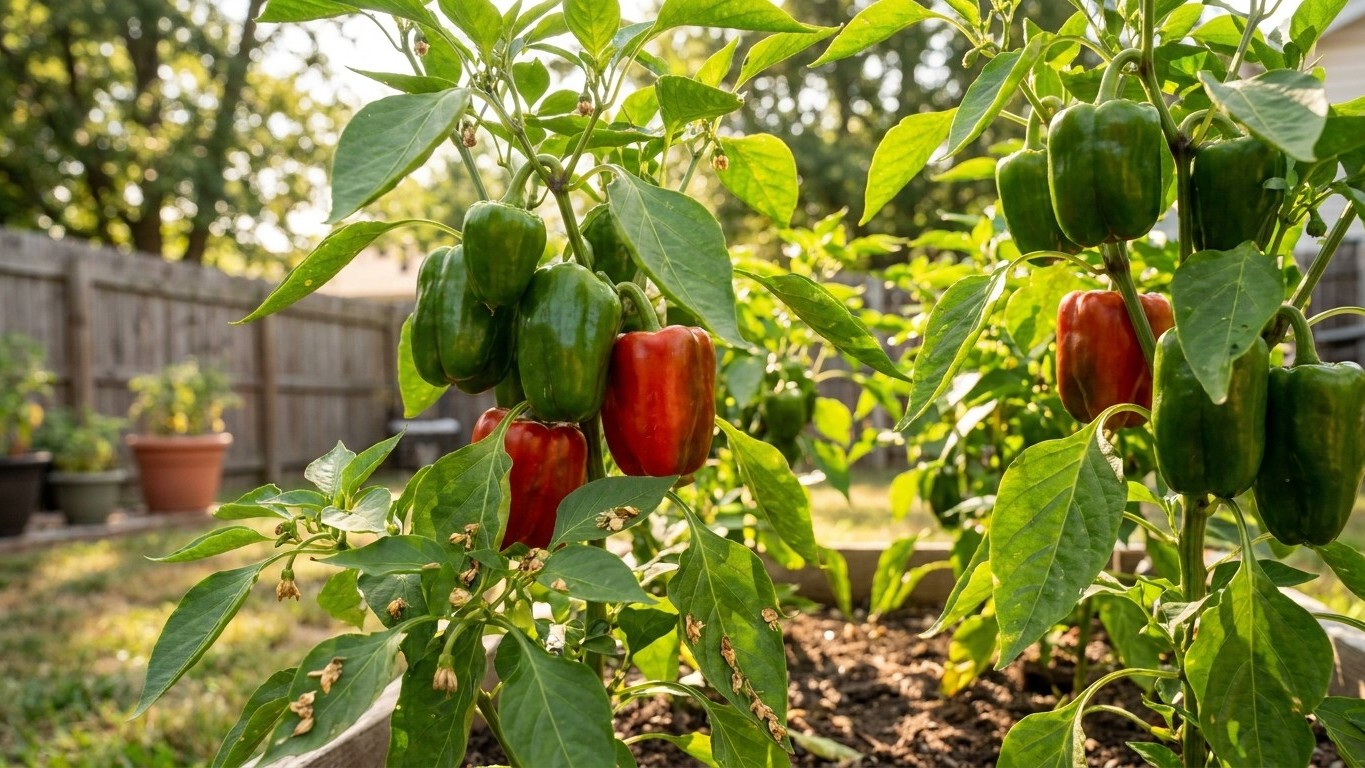

Missouri’s Kansas City reference station logs an average of 32.7 days a year at or above 90°F, based on the NOAA NCEI 1991-2020 Climate Normals. That’s more than a month of heat load that pushes pepper flowers to drop rather than set fruit. On the other end, pepper plants also stop setting fruit when nights fall below 55°F, and this site doesn’t track summer night minima for Missouri counties, so you’ll need to watch your own overnight lows through a thermometer or a local weather station rather than guessing from the calendar or your spot on the map.
The short answer

Thirty-two point seven days a year at or above 90°F is the number that matters most for anyone growing peppers in Missouri. That’s the mean at the Kansas City reference station over the 1991-2020 period, and it tells you something specific: pepper plants sitting in a garden bed during a stretch of 90-plus days will often drop blossoms rather than turn them into fruit. The flower opens, gets pollinated, and then the plant aborts it anyway because the heat stress is too much to sustain fruit development, a phenomenon explained in more detail in Why Peppers Fail to Set Fruit in Missouri. This isn’t a one-time event tied to a single afternoon. It’s a pattern that recurs across roughly a month’s worth of days scattered through a typical Missouri summer, usually clustering in July and August.
That number comes from one reference station, so a garden in the Bootheel or along the Missouri-Arkansas line will likely see more 90-degree days than that average suggests, while a garden in the northern part of the state may see somewhat fewer. Either way, the mechanism is the same: heat above 90°F during flowering knocks down fruit set, and the plant simply waits out the stretch rather than fruiting through it.
The other threshold gets less attention but matters just as much. Pepper fruit set fails when nights drop below 55°F, according to Utah State University Extension’s guidance on peppers. That’s a spring and fall problem more than a midsummer one in most of Missouri, but it’s not something this site can quantify for you. There’s no dataset here tracking summer night minima county by county, and guessing based on latitude or on how cold the coldest month of the year gets would be a mistake. A river valley can run several degrees cooler at night than a ridge two miles away. A low spot in a yard can collect cold air on a still night even when the regional forecast says otherwise. If you’re planting early, timing matters a great deal, and knowing When to Start Pepper Seed in Missouri can help you avoid setting plants out before nights reliably clear that 55°F floor. Or if you’re trying to squeeze out a fall crop after the first heat wave breaks, the only reliable move is to watch your own thermometer through the nights that worry you.
So the short answer has two halves. Missouri’s roughly 32.7 hot days a year are the heat-side reason for stalled fruit set, and they’re documented and countable. Choosing from the Pepper Varieties That Ripen in a Missouri Season can help you work around both halves of that equation. The cool-side reason, nights under 55°F, is just as real but has to be tracked locally, one thermometer reading at a time.
When to start seed here
Getting pepper timing right in Missouri means working backward from your last frost date, then backward again from the number of weeks a pepper seedling needs indoors before it’s ready for the garden. Here’s the arithmetic laid out step by step so you can rerun it for your own county.
- Find your last spring frost window. NOAA NCEI’s 1991-2020 climate normals put the 32°F freeze probability window for the reference station at April 6 to April 20. That reference station sits well north of Kansas City itself, so the downtown station runs about five days earlier in spring, and southern Missouri tends to be milder still. Pin down where your county falls in that range before doing anything else.
- Wait for 60°F soil, not just a frost-free date. Utah State University Extension is specific on this: transplant peppers once soil temperature reaches 60°F, and only after frost risk has passed. A calendar date without a soil check can put transplants into cold ground that stalls root growth even if the air feels warm enough.
- Count back 8 to 10 weeks for indoor seed starting. That’s the window Utah State University Extension gives for how long pepper seedlings need indoors before they’re sized up for transplanting. If your target transplant date lands in late April for a warmer southern Missouri county, count back 8 to 10 weeks from that date to land on your seed-starting date.
- Build in slack for a slow spring. Soil warms unevenly. A cold, wet April can push the 60°F soil threshold well past the frost-free date even in a county with an early frost window. Treat the frost date as the earliest possible transplant point, not the actual one, and confirm soil temperature before moving seedlings out.
- Remember the 35 to 45 day window comes after flowering, not after transplanting. Once a pepper plant is in the ground and flowering, expect another stretch of weeks before fruit is ready, and that clock starts at bloom, not at the transplant date or the seed-starting date. Planning a harvest target means adding that stretch on top of everything above.
Run through those five steps with your own county’s frost data and you’ll land on a seed-starting date that fits your specific location rather than a generic statewide guess.
What goes wrong here
Missouri’s climate creates a specific set of pepper problems tied directly to its heat pattern and its swing between cool nights and hot days. Here’s what tends to go wrong and how to work around each one.
- Blossom drop during a hot spell. When daytime highs push past 90°F, which happens on average 32.7 days a year near Kansas City, flowers open and then fall without setting fruit. There’s no way to stop the heat, but you can reduce added stress by keeping soil moisture even through irrigation, mulching to hold soil temperature steady, and avoiding fertilizer pushes right as a heat spell arrives, since a plant already under thermal stress doesn’t need a nitrogen surge on top of it.
- Blossom drop from a cool night. The opposite failure happens when nights drop below 55°F, usually in early spring right after transplant or in early fall as the season winds down. Since this site doesn’t track night minima for Missouri counties, the fix starts with watching your own thermometer during those shoulder-season stretches. Floating row cover pulled over plants on a night you know will dip low can hold enough heat to keep flowers viable.
- Sunscald on exposed fruit. Missouri’s summer sun is strong enough that fruit exposed directly to afternoon light can develop sunken, pale patches on the skin, especially on plants that have lost leaf cover to disease or aggressive pruning. Keeping foliage full and avoiding over-thinning of leaves gives fruit natural shade and cuts down on scald.
- Blossom-end rot on developing fruit. This shows up as a dark, sunken spot on the bottom of the fruit and is tied to inconsistent water delivery rather than a soil nutrient shortage in most home gardens. Uneven watering, common during a Missouri summer that swings between dry stretches and heavy rain, disrupts calcium movement into the fruit. A consistent watering schedule, ideally with drip irrigation or soaker hoses rather than sporadic hand watering, keeps this from recurring.
Checking this against your own county
Everything above is built on regional averages and general guidance, not a county-by-county forecast for your specific garden. Soil warms at different rates depending on drainage, slope, and whether it’s shaded or open to full sun. Frost dates shift by days or weeks across a state as long as Missouri. Night temperatures in a low-lying garden can run well below what a regional average would suggest.
For numbers specific to your address, the University of Missouri Extension service is the resource built for exactly this kind of local detail. Their office network covers counties across the state and can offer localized planting calendars, soil testing, and frost-date guidance tailored to your area rather than a single reference station. You can find county contact information and planting resources at extension.missouri.edu.
Common questions
Can I still get peppers to set fruit during a Missouri heat wave?
Fruit set slows or stops during stretches above 90°F, and there’s no way to override that with fertilizer or extra water. The plant will resume setting fruit once temperatures moderate, so the practical move is protecting existing flowers and fruit rather than trying to force new sets during the hottest days.
How do I know if my nights are too cold for fruit set in spring?
Track your own overnight lows with a thermometer placed in the actual garden bed, not just a regional forecast. Once nights consistently run below 55°F, expect flowers to drop rather than set fruit, and hold off on transplanting tender seedlings until that pattern passes.
Is it too late to start pepper seeds if I missed the 8 to 10 week window?
A late start means a later transplant and a later harvest, but it doesn’t necessarily mean no harvest, especially in warmer southern Missouri counties with a longer frost-free stretch. Check your local frost data through University of Missouri Extension to see how much growing season is left before fall’s first frost risk returns.
Does mulching help with Missouri’s heat and moisture swings?
Mulch moderates soil temperature and helps keep moisture levels steadier between rain and dry spells, which directly addresses the uneven watering pattern behind blossom-end rot. It won’t stop blossom drop during a 90-degree stretch, but it reduces one layer of stress on the plant during that period.