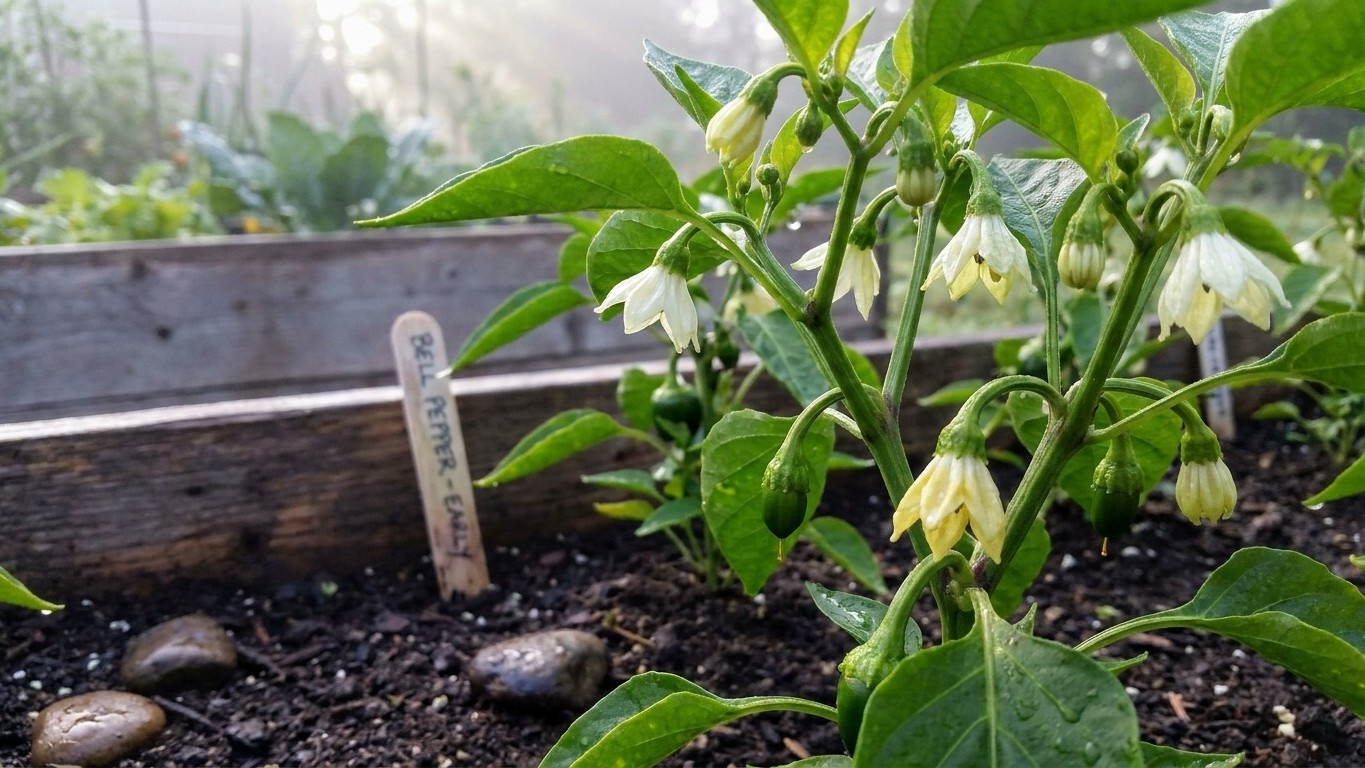

Western Washington rarely gets hot enough to stall pepper flowers on the heat end, but it also rarely stays warm enough at night in early summer to guarantee good fruit set either. The state’s short answer depends on which side of that window your microclimate sits on, and on soil temperature timing that matters more here than almost anywhere else in the country.
The short answer

Start with the number that actually exists for this territory: the Seattle reference station averages just 3.0 days a year at or above 90 F, based on NOAA NCEI Climate Normals covering 1991 to 2020. That is a remarkably small heat load. Pepper flowers can abort when daytime highs push past 90 F for stretches, so a climate that crosses that line only three days a year, on average, is not one where heat-driven blossom drop should be a grower’s main worry in most seasons.
The heat end: rare but not impossible
Three days a year is an average, not a guarantee. Some seasons will land closer to zero, others will bunch several 90-degree days together in a single July or August heat spell, and a bunched stretch does more damage to fruit set than the same three days spread out. Gardeners east of the Cascades are working with an entirely different climate, a high desert pattern with far more heat days than this Seattle-area figure reflects, so this number should not be stretched to cover that side of the state.
The cool end: watch your own nights
Fruit set fails at both ends. Pepper flowers can also drop or fail to set when nighttime temperatures fall below 55 F, because pollen viability and flower retention both suffer in cool night air. This is the end of the range that matters most for a mild, maritime climate like western Washington’s, where overnight lows in late spring and even early summer can dip into the 50s. For a closer look at Why Peppers Fail to Set Fruit in Washington, this site does not carry summer night minima for any territory, so there is no published figure here to hand you. Watch your own nighttime lows through a thermometer on your own property, in your own season, rather than guessing from latitude or from how cold your coldest winter month runs. Those two things do not predict a June or July overnight low.
When to start seed here
Pepper transplants need 8 to 10 weeks indoors before they go in the ground, and they should go into the ground only after the last frost and once soil temperature reaches 60 F, according to Utah State University Extension. For exact regional timing, see When to Start Pepper Seed in Washington. In western Washington, the last spring frost falls between February 27 and March 18, based on NOAA NCEI 1991-2020 Climate Normals freeze probability data for station USW00024233. But that frost date is only half the equation, and treating it as your transplant date is the single most common timing mistake, one that gets compounded further if you haven’t also chosen Pepper Varieties That Ripen in a Washington Season in this climate.
Do the math for your county
Cold, wet soil and lower spring light hold this region’s soil temperature back well behind the frost-free date. A mild frost date in early March does not mean the ground is warm enough for peppers in early March. Work the arithmetic in this order:
- Find your local last-frost window. For the western Washington reference station, that window runs February 27 to March 18. Your county’s own extension office may carry a more specific local figure.
- Track your soil temperature separately from the frost date. Because Washington springs run cool and wet, soil often lags weeks behind the air. Don’t transplant until a soil thermometer confirms 60 F at planting depth, regardless of what the calendar or the frost date says.
- Set your transplant date as the later of those two triggers, frost-safe or soil-warm, whichever comes second in your yard.
- Count back 8 to 10 weeks from that transplant date to find your indoor seed-starting date.
Worked in words: if your frost window closes in mid-March but your soil doesn’t hit 60 F until late April in a cool, wet spring, your real transplant date is late April, not March. Counting back 8 to 10 weeks from a late-April transplant date lands your seed-starting date in late February to early March, roughly two months earlier than the transplant date and well ahead of when the frost date alone would suggest you needed to start.
What goes wrong here
Four failures, four fixes
- Blossom drop from a sudden hot spell. Even with only 3.0 days a year averaging 90 F or above at the Seattle reference station, a bunched heat spell in July or August can still push flowers past their tolerance. Provide temporary shade cloth over plants during a forecast heat spike and keep soil moisture consistent through the spell, since drought stress compounds heat stress on open flowers.
- Blossom drop from a cool night. Nights below 55 F reduce pollen viability and cause flowers to fall without setting fruit, and this is the more likely failure point in western Washington’s cool, maritime shoulder seasons. Track your own overnight lows with a simple outdoor thermometer rather than assuming from the calendar, and use row cover or a cold frame to buffer plants during cool early-summer nights.
- Sunscald on exposed fruit. Fruit left bare after heavy pruning or leaf loss can scald under strong summer sun, showing as pale, papery patches on the fruit skin. Leave the plant’s natural foliage canopy in place rather than pruning hard for airflow, since that leaf cover is what shades developing fruit.
- Blossom-end rot. Irregular watering, a wet spring followed by a dry summer being a common Washington pattern, disrupts calcium uptake and shows up as a dark, sunken patch on the fruit’s blossom end. Keep watering consistent rather than letting soil swing between soaked and dry, and mulch to even out moisture between waterings.
Checking this against your own county
Everything above is built from a single reference station and a statewide climate normal, and Washington’s terrain makes county-level conditions swing widely from that baseline. A yard in a low-lying cold pocket, on a slope facing north, or east of the Cascades will not match the western Washington frost window or heat-day count used here. Washington State University Extension, at extension.wsu.edu, maintains county-level offices that can confirm local frost dates, soil temperature trends, and variety recommendations suited to your specific microclimate. A county-level check is worth the phone call before you commit an indoor seed-starting schedule to your calendar, especially if your property sits in a known cold spot or on the dry side of the state.
Common questions
Do I need to worry about 90-degree heat for peppers in western Washington?
Rarely. The Seattle reference station averages only 3.0 days a year at or above 90 F, so heat-driven blossom drop is uncommon, though a bunched heat spell in any given summer can still cause it.
Why did my pepper flowers drop even though it wasn’t hot outside?
Cool nights are the more likely cause in this climate. Fruit set fails when nighttime temperatures fall below 55 F, and western Washington’s maritime nights can dip that low even in early summer. Check your own overnight lows rather than assuming the mild daytime climate protects you.
When should I transplant pepper seedlings outdoors in western Washington?
After the last frost, which falls between February 27 and March 18 at the western Washington reference station, and only once soil temperature reaches 60 F. Because spring soil here often lags weeks behind the frost date, use a soil thermometer rather than the calendar alone.
Does this frost window apply to eastern Washington too?
No. The February 27 to March 18 window comes from a western Washington station and reflects a mild, maritime climate. Eastern Washington’s high desert climate runs a shorter, differently timed season, and a local check through Washington State University Extension is the better source for that side of the state.