
In and around Vancouver, August sits deep inside the growing season, not near either frost line. The average last spring frost falls near March 18 and the average first fall frost isn’t expected until around November 10, so there are roughly seven months of open ground on either side of this month. That gap is what makes August a planting month at all: it’s not for tender summer crops anymore, it’s for everything that needs the cool, shortening days ahead to mature well.
What goes in the ground in August

The decision this month isn’t “will it survive the cold” the way it is in April. It’s “does it have enough days left before November 10, on average, to bulk up before the light fades.” Soil temperature still matters, warm soil speeds germination, but the real constraint is the calendar running backward from that fall frost mean, not forward from the last spring one.
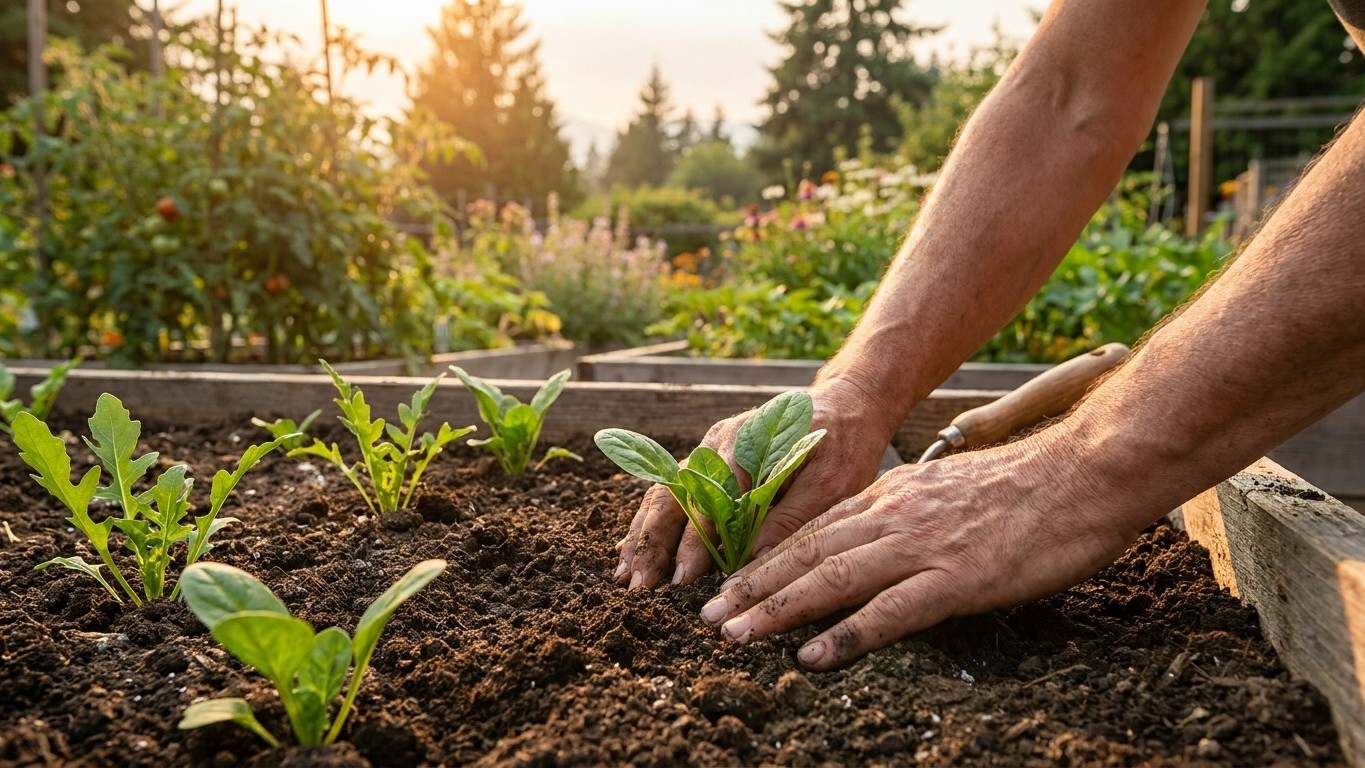
Early in the month, there’s still a window for a fast crop of bush beans in milder coastal pockets, though it’s a tight one and better treated as a bonus than a plan. Far more reliable are the classic fall and winter crops that thrive as the heat breaks: kale, chard, spinach, arugula, mesclun mixes, radishes, turnips, beets, and carrots sown for a fall harvest. Peas sown now for a fall crop do well in the milder coastal valleys, and scallions and overwintering onion sets can go in toward the back half of the month where beds free up.
Direct-sow candidates worth prioritizing
- Leafy greens: spinach, arugula, mesclun, lettuce for cooler weather
- Roots: beets, carrots, turnips, radishes
- Brassica greens: kale and chard sown directly where transplants aren’t ready
- Fast peas for a fall crop in milder coastal zones
- Scallions and sets for overwintering onions late in the month
Anything that needs a long, warm run, corn, squash, tomatoes started from seed outdoors, is off the table now. Not because of cold soil, but because there simply isn’t enough season left before that average November frost catches up with them.
What to start under cover
Working backward from the average November 10 first frost is the whole trick here. Take the days-to-maturity on a seed packet, add a few weeks for the plant to establish after transplanting, and subtract that total from the frost date. Whatever’s left tells you the latest safe start date, and August often lands right at the edge of that window for slower crops.
This is the month to get overwintering brassicas going under cover: purple sprouting broccoli, storage cabbage, and hardy kale varieties destined for a winter harvest all benefit from an early start in trays or a nursery bed, protected from the worst of the August heat and from cabbage moths, before they’re set out in September. Corn salad and winter-hardy spinach can also be started under cover for transplanting once the summer crops clear out.
The two ways this goes wrong are mirror images of each other. Start too early, in the thick of summer heat, and brassicas bolt or seedlings get rootbound and leggy sitting in trays waiting for space. Start too late and the plants are still small when the days shorten and growth slows to a crawl, they never bulk up before the cold arrives. A protected cold frame or an unheated tunnel buys a few extra weeks either way, which matters more in August than in almost any other month, since it’s the last real cushion before fall weather sets in.
What is ready to pick
August is peak harvest for the crops planted back in spring. Tomatoes should be coloring up steadily on the vine, and the ones that split or crack after a heavy watering are still worth eating, just use them fast. Peppers, cucumbers, summer squash, and beans all keep producing if picked often, picking is what keeps the plant setting new fruit rather than shutting down.
Sweet corn is ready when the silks turn brown and dry while the husk stays green, a quick tug test on a kernel (does it pop with milky juice, not clear liquid) confirms it. Blueberries and raspberries are in full swing on the coast, and everbearing raspberry varieties are often starting a second flush this month.
Garlic and the earliest onions, if planted the previous fall or early spring, should already be pulled and curing somewhere dry and shaded, not still sitting in wet ground. Checking those curing crops for soft spots or mold now, rather than after they’re bagged up for storage, saves the rest of the batch from spreading rot.
The jobs that matter this month
Watering rhythm is the single biggest lever in August. Deep, infrequent watering that reaches the root zone beats a daily light sprinkle, which just wets the surface and encourages shallow roots that struggle the moment the tap stops. For tomatoes especially, keeping the soil evenly moist rather than letting it swing from bone-dry to soaked is what prevents blossom end rot on the fruit that’s forming right now.
Staking and tying still pay off this late if plants have sprawled: a tomato vine or a heavy squash plant left unsupported into August is more prone to fungal issues where leaves sit on damp soil. Mulching around anything still growing holds moisture through the hottest stretch of the month and cuts down on the watering workload.
Succession sowing is the job that’s easy to let slip and costly to skip. A new round of lettuce, radish, or arugula sown every couple of weeks through August keeps the fall harvest coming instead of arriving all at once. Pest scouting matters too: cabbage moths laying eggs on brassica transplants, aphids clustering on the undersides of leaves, and the first signs of late blight on tomato foliage, which shows up fast in the coastal humidity, are all easier to deal with caught early than after they’ve spread through a bed.
Pruning summer raspberry canes right after they finish fruiting, thinning overloaded fruit tree branches so the remaining fruit sizes up properly, and starting to order seed for fall and winter sowing before the good varieties sell through round out the list. None of these are urgent in the sense of an emergency, but each one is easiest to do now and harder to fix later.
What not to do in August
The most common mistake is starting warm-season crops from seed because a stretch of hot weather makes it feel like early summer again. Corn, squash, and tomatoes sown outdoors now won’t have time to mature before the average November 10 frost catches up with them, no matter how warm the soil feels. Save that seed for spring.
Overhead watering tomato and squash foliage, especially in the evening, is a habit worth breaking this month. Wet leaves that stay damp overnight are exactly what late blight and powdery mildew need to take hold in coastal humidity, watering at the base, earlier in the day, avoids feeding the problem.
Heavy nitrogen feeding on fruit trees, shrubs, and perennials is another late-season trap. A dose of high-nitrogen fertilizer now pushes soft, leafy growth that won’t have time to harden off before fall rains and cooler nights arrive, leaving that new growth vulnerable to dieback. If feeding is needed at all this late, a lower-nitrogen, higher-potassium option supports ripening fruit and root development instead of forcing new shoots.
Uncovering cold frames or tunnels too eagerly after a warm spell, only to scramble back out to re-cover them when a cool, damp stretch rolls back in, wastes more effort than just leaving the covers loosely vented through the month.
Checking this against your own county
A single frost date for Vancouver International Airport is a starting point, not a rule for the whole province. British Columbia runs from mild coastal valleys to interior plateaus to northern districts with a much shorter season, and elevation alone can shift a planting window by weeks within the same region.
| Region type | How it compares to the coastal Vancouver window |
|---|---|
| Coastal lowlands and Vancouver Island | Closest to the published dates, mildest fall frost timing |
| Southern interior valleys (e.g. Okanagan) | Hotter summer days, but frost can arrive earlier at higher elevation sites nearby |
| Northern and higher-elevation districts | Shorter season overall, often weeks earlier on the fall frost side |
For a planting calendar built around a specific county, the BC Ministry of Agriculture and Food’s agriculture and seafood resources are the place to check local extension guidance before locking in a sowing date.
Common questions
Is it too late to plant tomatoes in August in British Columbia?
Yes, for seed. Started plants that already have a head start could still be transplanted very early in the month in the mildest coastal spots, but sowing tomato seed outdoors now leaves no realistic path to ripe fruit before the average November 10 frost.
What vegetables can still be sown in August for a fall harvest?
Fast leafy greens and roots do best: spinach, arugula, mesclun, lettuce, radishes, turnips, beets, and carrots. Fall peas work in milder coastal zones, and overwintering onion sets and scallions can go in toward the end of the month.
What is the hardiness zone for gardening near Vancouver?
The reference station falls in Canadian hardiness zone 9a, using Natural Resources Canada’s system. That’s a different scale from the USDA zones used elsewhere in the US, built on seven climate variables rather than one, so it shouldn’t be read as directly comparable to a USDA zone number.
When does the growing season actually end in this area?
On average, around November 10, based on Environment and Climate Change Canada’s 1981-2010 normals for Vancouver International Airport. That’s a mean date, not a guarantee, in roughly half of all years frost arrives later than that, so treat it as a planning midpoint rather than a fixed deadline.