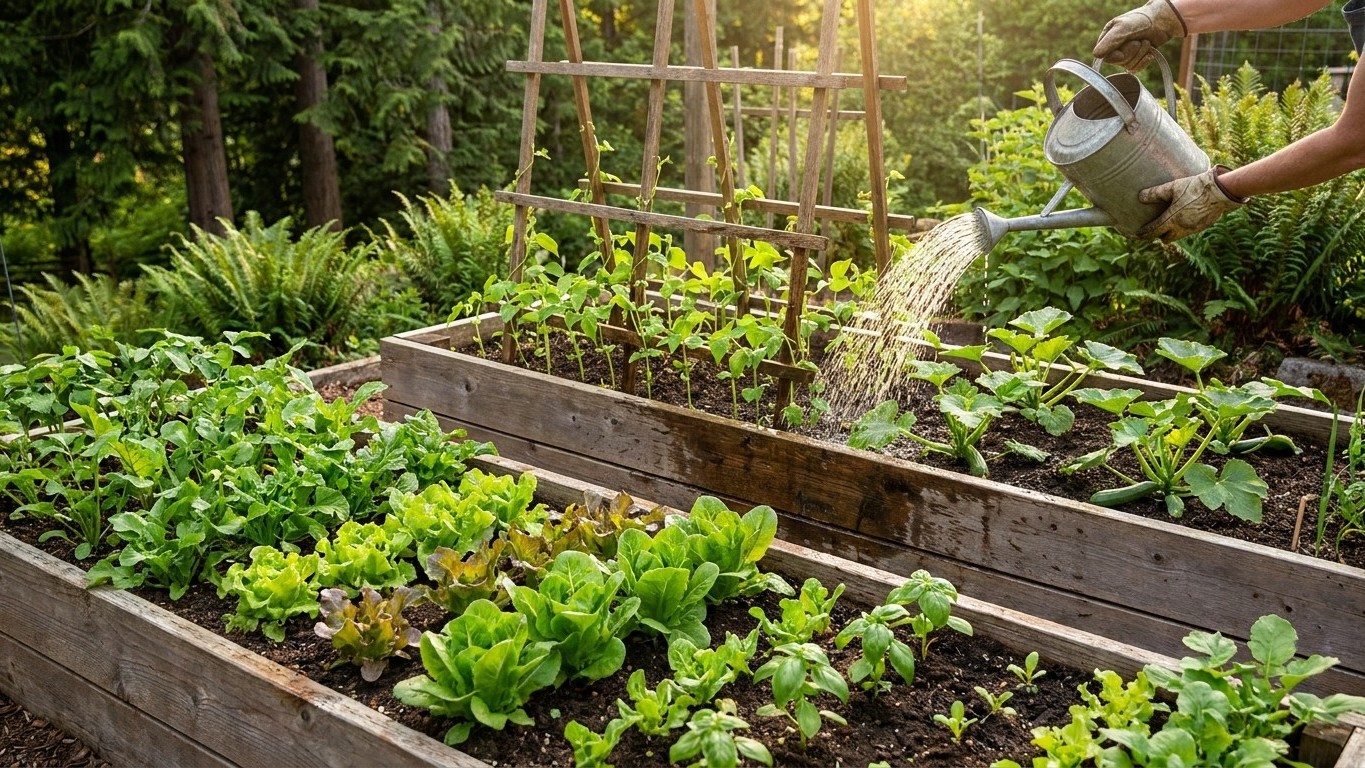

June across British Columbia’s southern coast is full-on growing season. With the average last spring frost long past (mid-March at Vancouver) and the first fall frost not expected until November, gardeners can put in warm-season crops, keep sowing successions of greens and roots, and shift attention from starting seedlings to keeping a crowded garden fed and watered through the driest stretch of the year.
What goes in the ground in June

By June, the coastal Lower Mainland and Vancouver Island are roughly ten to twelve weeks clear of the average last spring frost of March 18, recorded at Vancouver International Airport. That gap matters more than the date on a calendar. Soil in raised beds and south-facing plots has had time to warm well past the 60 F mark that beans, squash, and cucumbers need to germinate without rotting, and nighttime lows on the coast rarely threaten tender transplants anymore.
This is the window for direct-sowing bush beans, pole beans, corn, summer squash, zucchini, and cucumbers straight into open ground. Tomatoes, peppers, and eggplant that were started indoors earlier in spring should already be hardened off and in the ground; if not, they can still go in early in the month and catch up quickly in the longer days. Basil, another crop that sulks in cold soil, is safe to transplant now too.
It is also succession-sowing season. Lettuce, spinach, radishes, beets, carrots, and bush beans sown every two to three weeks keep the harvest coming rather than arriving all at once. Brassicas for fall and winter, like broccoli, cabbage, and Brussels sprouts, get their start as transplants this month so they mature before the cold returns.
One caution worth repeating: British Columbia is not one climate. The frost figures above come from the Vancouver station, and the province’s Canadian hardiness zone of 9a applies to that reference city, not to the Interior, the Kootenays, or northern communities, where frost can still be a risk into June and the growing window is considerably shorter. Gardeners outside the immediate coastal belt should treat everything above as a head start, not a guarantee.
What to start under cover
Seed-starting indoors in June is mostly about fall and winter harvests now, not spring ones. Working backward from the average first fall frost of November 10 is the more reliable method than counting forward from any single date. A crop that needs 80 days to mature, started under cover in early June and transplanted out two to three weeks later, lands its harvest in September with a comfortable margin before frost even shows up on the forecast.
That arithmetic favors starting leeks, storage cabbage, kale, and Brussels sprouts under cover now for transplanting later in the month. Celery and celeriac, both slow starters, also benefit from a protected start rather than direct seeding at this point. A cold frame or unheated greenhouse works fine for hardening these off before they move to open ground.
The two ways this goes wrong are familiar to anyone who has run a seed tray for a few seasons. Start too early and the seedlings sit too long indoors, turning leggy and rootbound before the garden has room for them, which sets fruiting and heading crops back weeks even after transplant. Start too late and the November 10 average frost arrives before a slow crop like celeriac has bulked up, leaving a disappointing harvest. Counting the days on the seed packet against that fall date, rather than trusting a fixed sowing date printed for a different climate, is the safer habit.
What is ready to pick
June harvests in coastal British Columbia lean toward what was planted or perennial from earlier in the season. Asparagus beds in their productive years are still yielding spears early in the month before the plants are let go to fern out. Rhubarb stalks are thick and ready for pulling, and strawberries, especially June-bearing varieties, hit their peak.
Spring-sown lettuce, spinach, radishes, and early peas are coming out steadily, and the first thinnings of carrots and beets can go straight into the kitchen. Herbs like chives, mint, and early basil are established enough for regular cutting without setting the plants back.
Checking ripeness matters more than checking a calendar. Peas are ready when pods fill out but before they turn dull and starchy. Strawberries should pull free with a gentle tug once fully colored, not before. Lettuce and spinach are best harvested in the cooler morning hours in June, since the longer, warmer days push both crops toward bolting fast once temperatures climb. Any stored winter squash, potatoes, or onions still in the pantry from the previous season should get a check now too; warmer air temperatures speed up rot in storage, and soft spots or sprouting eyes mean it is time to use them before they spread to the rest of the batch.
The jobs that matter this month
Staking, mulching, and water
Tomatoes, peas, and pole beans put on rapid growth in June, and staking or trellising them now, before they sprawl, saves a much messier fix in July. A two- to three-inch layer of mulch around vegetables holds soil moisture as days lengthen and temperatures rise, and it keeps weed pressure down at the exact point when weeds are also growing fastest. Watering rhythm becomes the real work of the month on the coast, where June often marks the start of the dry season: deep, infrequent watering that reaches the root zone beats a daily light sprinkle, which only encourages shallow roots.
Succession sowing and pest scouting
Keeping beds productive means resowing quick crops like lettuce, radishes, and bush beans as earlier plantings finish, rather than leaving bare soil once the first harvest is done. It is also the month to start walking the garden specifically looking for slugs and aphids, both of which build populations fast in the mild, damp coastal spring turning into a warmer June. Catching an aphid colony on young brassicas or a slug trail through the lettuce bed early is far easier than dealing with either once they have spread through a bed. Potatoes planted earlier in spring should be hilled up as the foliage grows, both to support the plants and to keep developing tubers covered and free of green, sunburned skin.
What not to do in June
The most common mistake this month is trusting the air temperature over the soil. A run of warm, sunny days can feel like license to push tender crops in early, but if the ground itself is still cool and wet from spring rain, seeds like corn and beans will simply rot rather than germinate. Checking soil temperature with a simple soil thermometer a few inches down is a better test than judging by how warm the afternoon feels.
Feeding nitrogen at the wrong point is another frequent slip. A heavy nitrogen application on tomatoes, peppers, or squash once they are flowering and setting fruit pushes leafy growth at the expense of the harvest itself. Nitrogen is most useful earlier, while plants are building their frame; once fruiting starts, a balanced or phosphorus-leaning feed serves better.
Overwatering is easy to fall into once an automatic system is running on a summer schedule, especially if it is not adjusted after a rainy stretch. Coastal June can still bring wet weeks, and watering on top of them encourages root rot and fungal disease rather than helping anything grow. Checking actual soil moisture before running the system, rather than watering on a fixed timer regardless of recent rain, avoids both an unnecessary water bill and a waterlogged bed.
Checking this against your own county
Everything above is built around the Vancouver International Airport station and describes a coastal, Zone 9a reality in the Canadian hardiness system. That system is not the same scale as USDA zones used elsewhere on this site, and it does not convert cleanly between the two. British Columbia’s elevation changes, its northern reach, and the divide between the wet coast and the drier, colder Interior can shift these windows by weeks in either direction. A garden in the Okanagan or the Peace River region is working with a different frost calendar entirely. For local specifics, the BC Ministry of Agriculture and Food’s extension resources are the better starting point than any province-wide average.
Common questions
Is it too late to start tomatoes from seed in June in British Columbia?
Starting tomatoes from seed indoors in June is generally too late for a full harvest before fall frost on the coast; buying started transplants is the more reliable route this late in spring.
Can I still direct-sow corn and beans in June on the BC coast?
Yes. With the average last frost falling in mid-March, soil is warm enough by June for direct-sown corn, beans, squash, and cucumbers across most of the coastal region.
Why is my lettuce bolting so fast in June?
Longer daylight hours and rising temperatures push lettuce and spinach toward flowering. Harvesting in the cool morning and sowing bolt-resistant varieties for June plantings helps slow it down.
Does the Zone 9a rating mean I can grow anything I want?
No. That figure applies specifically to the Vancouver reference station and uses the Canadian hardiness system, which is not the same as a USDA zone. Interior and northern parts of the province run considerably colder.