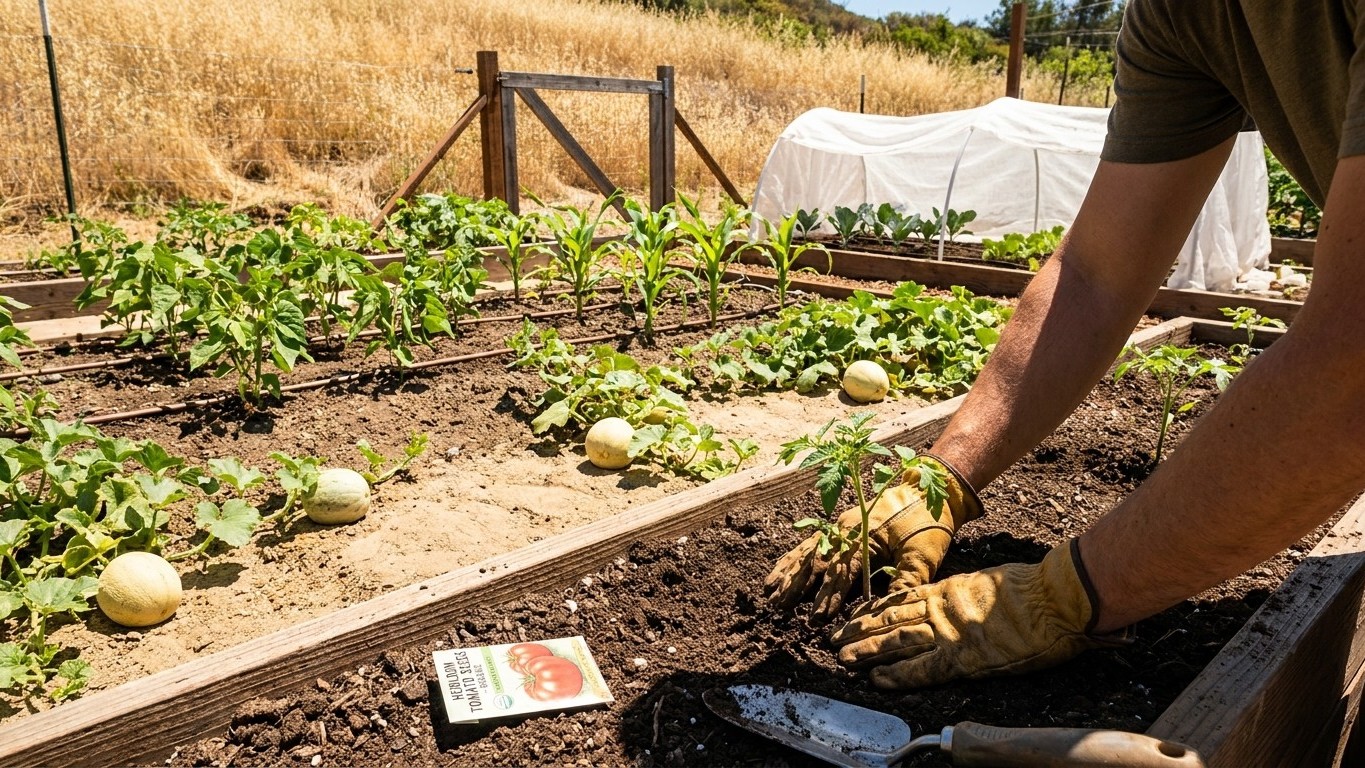

July in California means different gardens depending on where you stand. Along the coast and through the south, it’s full heat: beans, corn, squash and melons go straight into the ground, while fall brassicas start under cover for transplanting once the worst heat breaks. In the Central Valley, the same crops apply but shade cloth and watering timing become the difference between a harvest and a scorched bed. In the Sierra and higher mountain valleys, July is often the only real planting window the whole season offers.
What goes in the ground in July

The decision in July isn’t about frost, it’s about heat. Coastal and Southern California don’t see a computable frost date at all in an average year, according to NOAA’s 30-year climate normals for the region: the record shows zero days at or below 32 F, and the season is effectively listed as 365 days frost-free. That figure comes from a single reference station near Los Angeles, so treat it as a starting point for the coast and the south, not a claim about the whole state. Northern California, the Central Valley floor, and the Sierra foothills and higher elevations do freeze in a normal year, and this page doesn’t carry a published frost date for those zones. That gap matters less in July than it would in spring, since the entire state is well past any frost risk by midsummer regardless of zone.
Heat-lovers go in now
What actually limits July planting is soil and air temperature on the hot end, not the cold end. Bush and pole beans, sweet corn (if you want a crop before days shorten too much), summer squash, cucumbers, melons, okra, black-eyed peas, and sweet potato slips all tolerate or prefer the heat of a California July. Direct-sow these where soil is workable and irrigation is reliable. Lettuce and other cool-season greens are the opposite story: soil temperatures much above 85 F push many lettuce varieties into dormancy or poor germination, so these are better started indoors or in a shaded cold frame this month rather than direct-sown in open, sun-baked beds.
Gardeners in the state’s higher-elevation zones, roughly the 5a-7b end of California’s 5a-11a hardiness range as mapped by the USDA, are often in their single best planting window of the year right now. Short seasons at elevation mean corn, squash and beans that would already be established at lower elevations are only now going into the ground.
What to start under cover
Counting backward from a frost date works differently here than in most of the country, because much of the state doesn’t have one to count from. For coastal and Southern California gardeners, the real limiting factor for fall crops isn’t frost, it’s daylight and heat. Broccoli, cabbage and cauliflower need roughly 60 to 80 days from transplant to harvest depending on variety, and the goal is to have transplants ready to go into the ground once daytime highs start easing, typically as summer moves toward fall. Starting seed in flats or cell trays under light shade in July, rather than direct-sowing into blazing soil, is the standard workaround.
Two ways to get the timing wrong
Start too early in July heat and seedlings stretch and go leggy reaching for relief from the sun, or bolt before they ever get transplanted. Start too late and the transplants hit the ground while soil and air are still too hot for young roots to establish, leading to transplant shock or outright failure. In the state’s colder interior and mountain zones, where a real fall frost does eventually arrive even though this page doesn’t carry a specific date for it, the backward count needs to be run from whatever average first-frost date your local UC Cooperative Extension office publishes for your county, since that figure varies by hundreds of feet of elevation.
Shaded cold frames, floating row cover propped on hoops, or simply starting trays indoors under lights and moving them outside in the evening are the standard fixes for July’s heat rather than July’s cold.
What is ready to pick
July harvests differ sharply by region, but a few crops are coming in almost everywhere the water has reached. Tomatoes started earlier in the season are typically ripening their first fruit by midmonth in warmer zones, and slower in coastal fog-belt gardens where nights stay cool. Summer squash and cucumbers need daily checking, since a zucchini left two extra days can go from tender to a baseball bat.
Curing and storage crops
Garlic and bulb onions planted the previous fall are usually ready to pull once the tops have flopped over and started to brown, and both need a few weeks curing in a dry, shaded, well-ventilated spot before storage. Stone fruit, where a home orchard includes peaches, plums or apricots, tends to ripen in a compressed window in July, and fruit left on the tree even a day or two past ready draws wasps and splits in the heat. Early potatoes planted in spring can often be dug now as “new potatoes,” identified by skin that hasn’t fully set; leave the rest of the row for a later, larger harvest. Sweet corn, where planted early enough for the local season, is ready when the silks turn brown and a squeezed kernel releases a milky, not clear, liquid.
The jobs that matter this month
Watering rhythm matters more in July than almost any other task on the list. Deep, infrequent watering that reaches 8 to 12 inches down builds resilient roots; shallow daily sprinkling trains roots to stay near the surface, where they cook. Morning watering, rather than evening, cuts fungal disease pressure that thrives on foliage left wet overnight.
Mulch, stakes and scouting
Mulch laid now, whether straw, wood chips or compost, does double duty: it slows evaporation in a month when California’s water restrictions are often tightest, and it keeps root zones several degrees cooler than bare soil exposed to full sun. Tomatoes, peppers and vining squash left unstaked by July sprawl into a tangle that’s harder to manage and easier for pests to hide in, so cages and stakes installed now, before plants get heavy with fruit, save real time later. Pest scouting pays off specifically in July because populations of spider mites, aphids and tomato hornworm build fast in heat; checking the undersides of leaves every few days catches an infestation while a strong hose spray or hand-picking still solves it, rather than after it’s spread through the bed.
Succession sowing beans, corn and summer squash every two to three weeks through July extends the harvest window well into fall in most zones, and garlic and onion beds cleared this month can go straight into a second planting of beans or a cover crop rather than sitting fallow.
What not to do in July
The most common mistake is transplanting tender seedlings into open ground in the middle of a heat spike, simply because the calendar said it was time. A young transplant with an undeveloped root system can wilt and die in an afternoon of 100-degree exposure that an established plant shrugs off; moving transplants out in the evening, and shading them for their first two or three days, avoids this.
Feeding and watering errors
High-nitrogen fertilizer applied to tomatoes, peppers or squash once they’re setting fruit pushes leafy green growth at the expense of the fruit itself, and can actually delay ripening. A balanced or lower-nitrogen feed suits this stage better. Inconsistent watering, letting soil dry out hard between waterings and then soaking it, is the direct cause of blossom end rot in tomatoes and peppers, since the swings disrupt calcium uptake even when calcium is present in the soil. And gardeners who’ve read that coastal California is frost-free should resist applying that logic to Sierra or high-desert gardens; the two climates have almost nothing in common by midsummer beyond the state line.
Checking this against your own county
A single statewide month is only a starting point. California’s hardiness range, 5a to 11a on the USDA’s map, spans more variation than most entire regions of the country, and elevation, coastal fog and the north-south divide can shift a planting window by weeks in either direction. A garden in the Central Valley and one a few thousand feet up in the Sierra are effectively operating on different calendars in July, even though both sit inside California’s borders. UC Agriculture and Natural Resources maintains county-level extension offices and planting guidance built for exactly this kind of local variation, and it’s worth checking their county pages before committing a whole bed to any single recommendation here.
Common questions
Is California frost-free in July?
Frost is not a July concern anywhere in the state. Coastal and Southern California see no computable frost date in an average year at all, based on 30-year NOAA climate normals, while inland and mountain zones that do freeze in winter are well past that risk by midsummer.
Can you plant tomatoes in California in July?
Established tomato transplants can still go in early in the month in most zones, though they’ll need shade protection and consistent watering to get through peak heat. Later in July, it’s usually more reliable to start fall-harvest varieties from seed under cover rather than transplanting into the hottest soil of the season.
What is the best time to plant fall vegetables in California?
Seed for fall brassicas like broccoli and cabbage is typically started under cover in July so transplants are ready once daytime heat begins easing, generally as summer shifts toward fall. The exact window shifts by county and elevation, so check your local UC Cooperative Extension office for specifics.
Do I need shade cloth in July?
In the Central Valley and other high-heat inland zones, shade cloth over lettuce, transplants and even tomatoes during the hottest afternoon hours reduces stress and prevents scorching. Coastal gardens in the fog belt often need it far less, or not at all.