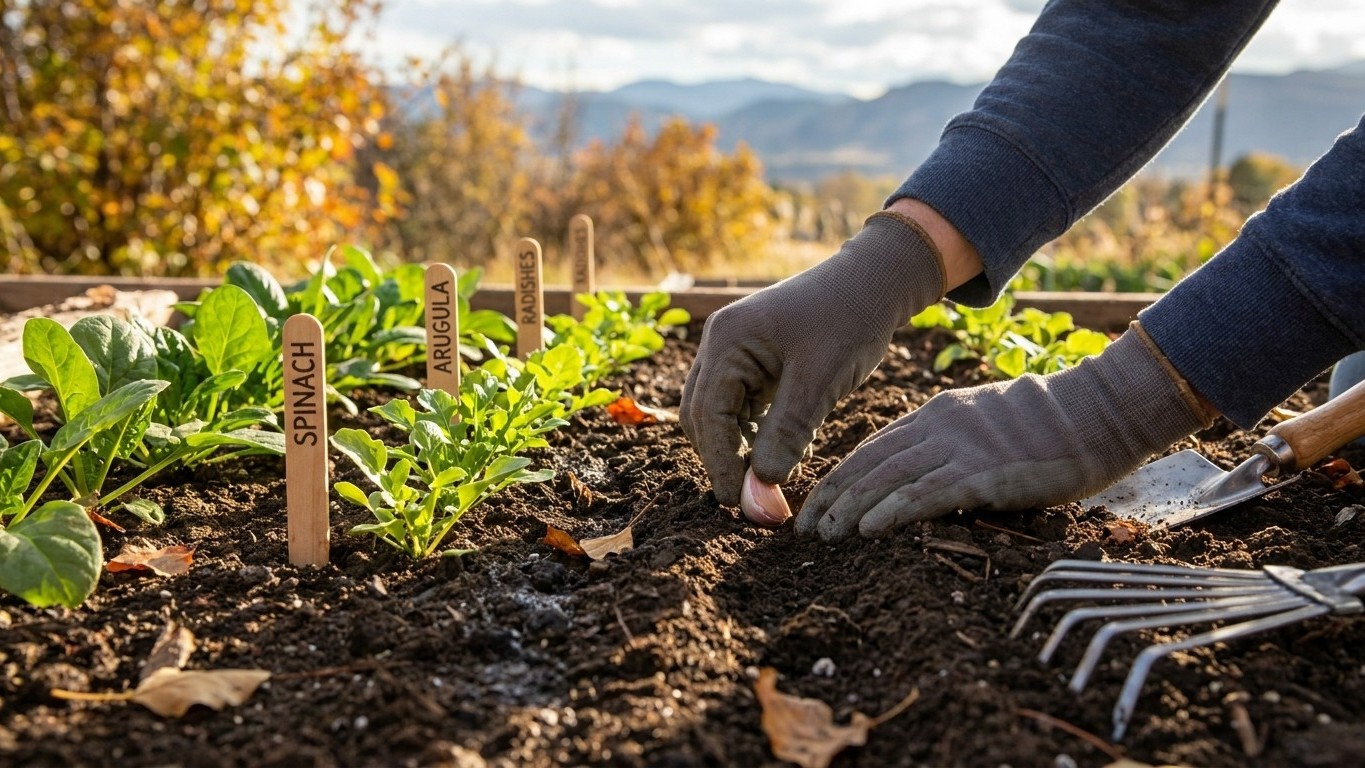

September in Colorado is a last-chance month more than a planting month. Fast-maturing greens and root crops still go in the ground, garlic gets tucked in for next year, and the real work shifts to protecting what’s already growing before the first fall frost lands, typically between September 30 and October 12 on the Front Range.
What goes in the ground in September

The decision this month is not the calendar, it’s the countdown. With first fall frost arriving between September 30 and October 12 near Denver, anything you direct-sow needs to reach a usable harvest inside that window, or it needs to be cold-hardy enough to shrug off a light freeze. That rules out almost everything except quick greens, roots, and one classic fall planting: garlic.
Spinach, arugula, mesclun mixes, radishes, and baby turnips are the safe bets. All of them can go from seed to harvest in 30 to 45 days, which fits comfortably inside early-to-mid September sowings even with the frost arriving on schedule. Lettuce works too, especially loose-leaf types picked young rather than full heads. These crops also tolerate a light frost once established, so a cold snap a few days early doesn’t wipe out the planting the way it would with beans or squash.
Garlic and shallots are the other September story, and they’re a gamble worth taking rather than a risk to avoid. Cloves go into worked soil a few weeks before the ground locks up for winter, which on the plains often means late September into October. Plant them now in loosened, well-drained soil and they’ll sit quietly through winter before pushing up in spring.
What’s a genuine gamble: transplanting broccoli, cabbage, or kale starts this late. Their maturity windows usually run 60 to 80 days, which doesn’t fit before frost unless you’re covering them through the fall. If you already have transplants on hand, get them under a cold frame or low tunnel rather than counting on open-ground time that isn’t there.
| Crop | Typical days to maturity | Fits before frost (Sept 30–Oct 12)? |
|---|---|---|
| Radish | 25–30 | Yes, sown through mid-September |
| Spinach, arugula | 30–40 | Yes, sown through mid-September |
| Loose-leaf lettuce | 30–45 | Yes, if harvested young |
| Garlic (cloves) | Overwinters, harvest next season | Plant now through October |
| Broccoli/cabbage transplants | 60–80 | No, needs cover to finish |
What to start under cover
September under cover in Colorado is less about starting seeds indoors for later transplanting and more about buying time for crops already in the ground or freshly sown outdoors. A cold frame or a length of row cover over hoops turns a 45-day green into a crop you’re still picking well past the average frost date, because the covered soil and trapped air run several degrees warmer than the open bed on a clear, cold night.
Count backward from the first fall frost window rather than from a fixed date on the wall. If you’re sowing mache, claytonia, or a fast spinach variety under cover in early September, you have roughly four to six weeks before that September 30 to October 12 window closes, plenty for a crop that matures in 30 days but tight for one that needs 50. Add a week or two of cushion, because cover extends the season on the back end, not on how fast a seed germinates.
The two failure modes here are opposite but equally common. Start too early, before the worst of the late-summer heat has broken, and cool-season greens under a closed cold frame can bolt or scorch instead of growing steadily. Start too late, past mid-September, and even a covered crop runs out of daylight before it runs out of days. Colorado’s high, dry sun helps, but it doesn’t replace the shortening day length that slows growth through fall regardless of temperature.
What is ready to pick
September is peak harvest for anything planted back in late spring. Tomatoes, peppers, summer squash, sweet corn, and pole and bush beans are all coming in, often faster than a household can eat them fresh. Melons and winter squash are finishing up too, and this is the month to watch them closely rather than assume they’ll keep improving on the vine indefinitely.
Tomatoes are ready when the color has fully developed and the fruit gives slightly to gentle pressure, not when it’s still firm and pale at the shoulders. Winter squash, unlike summer squash, actually benefits from staying on the vine until the rind resists a fingernail scratch and the stem starts to dry and corky; picking too early means poor storage later. Peppers can be picked green or left to color further, but once nights start dropping toward frost, it’s better to bring them in rather than gamble on one more week of ripening.
With frost landing anywhere from late September to mid-October depending on the year, this is also the month to do a hard sweep of the garden before a surprise cold snap. Tender crops like beans, squash, tomatoes, and peppers have no frost tolerance at all, so a single unexpected night in the low 30s can end the harvest overnight. If a cold night is forecast, picking everything at all viable stages beats losing it to the freeze.
The jobs that matter this month
Watering rhythm changes here even without a formal schedule change. Days are shorter and nights are cooler, so soil holds moisture longer, and overwatering out of summer habit is an easy mistake. Check soil moisture by hand before running the same irrigation schedule you used in July.
Staking and support matter now because heavy end-of-season fruit loads, especially on tomatoes and peppers, can snap stems that held up fine through the lighter growth of midsummer. A ten-minute check through the bed catches this before a wind event does the damage for you.
Pest scouting pays off disproportionately in September because populations of squash bugs, aphids, and spider mites often peak as plants stress heading into fall. Catching an infestation now, while there’s still time to act, beats discovering it in October when the plant is already declining from cold anyway.
Beyond the growing crops, September is when the fall task list opens up: working compost or aged manure into beds as they empty out, taking a soil test while the ground is still workable, and starting to think about garlic bed prep if it isn’t planted yet. Order garlic seed stock early if you haven’t, since the good varieties sell out well before planting time. Clean and sharpen tools that have been through a full season of use, and check any stored crops from earlier harvests, onions and potatoes especially, for the first signs of soft spots before they spread to the rest of the batch.
What not to do in September
The classic mistake is planting warm-season crops because a stretch of 80-degree days feels like summer isn’t over. It isn’t the air temperature that matters, it’s the frost date sitting at the end of the month. A tomato or squash transplant put in during a warm spell in early September has no realistic path to fruiting before the first freeze arrives, and the effort is better spent on the fast greens that actually fit the window.
Feeding a heavy dose of nitrogen fertilizer this late in the season is another common error. Nitrogen pushes soft, leafy new growth, and that growth is exactly what a fall frost damages first and worst. If a crop needs feeding this month, a lighter, more balanced approach serves it better than the nitrogen-heavy mix that made sense back in June.
With row covers and cold frames going up to protect fall greens, the mistake on the other side is uncovering too early after a mild stretch. A few warm days in late September can tempt a gardener to pull the cover off entirely, only to get caught by a cold night that the forecast didn’t fully call. Cracking a cover for ventilation on a warm afternoon is fine; removing it outright before the frost risk has genuinely passed is not.
Checking this against your own county
Everything above is built around the Denver-area frost window, and Colorado’s terrain makes that a starting point, not a rule. USDA hardiness zones across the state span 3b to 7b, a spread wide enough that a mountain town can see frost in July while a lower valley is still harvesting in October. Elevation is the biggest factor, but slope, valley cold pockets, and simple north-versus-south positioning move these dates by weeks in either direction.
Before locking in a planting or harvest date based on this page, check it against the Colorado State University Extension service at extension.colostate.edu, which tracks local frost data and planting guidance specific to your county.
Common questions
Can I still plant tomatoes in Colorado in September?
No. With first fall frost typically landing between September 30 and October 12 near Denver, a tomato transplant put in now has no realistic chance of fruiting before cold ends the season. Focus on fast greens and garlic instead.
Is September too late to plant garlic in Colorado?
Not at all. Garlic is one of the few crops that goes into the ground in fall specifically so it can overwinter. September through October, while the soil is still workable, is the standard window for planting cloves near Denver.
What vegetables can handle a light frost in Colorado gardens?
Spinach, kale, arugula, and most loose-leaf lettuces tolerate a light frost once established, which makes them a safer bet than tender crops as the first fall freeze approaches.
Does the frost date differ much across Colorado?
Yes, significantly. The state’s hardiness zones run from 3b to 7b, and mountain elevation shifts frost timing by weeks compared to the plains around Denver. Check the Colorado State University Extension service for county-level guidance rather than relying on a single statewide date.