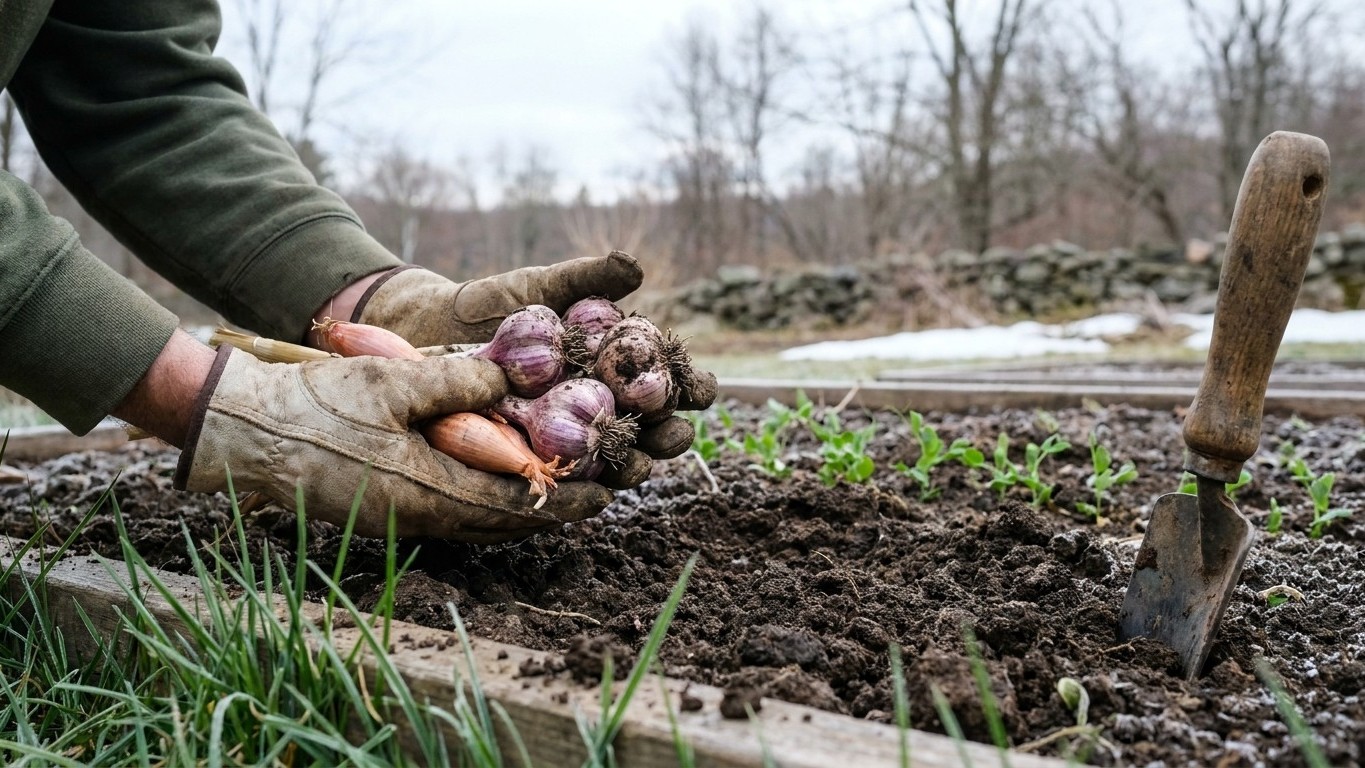

March in Connecticut sits almost entirely ahead of the frost-free window, so open-ground planting stays limited to the toughest crops and only when soil is workable. Garlic, shallots, and peas can go in if the ground has thawed and dried out. Everything else, from lettuce to tomatoes, waits for warmer soil or starts indoors this month for a later transplant.
What goes in the ground in March

The last spring frost across Connecticut falls between April 2 and April 12, based on 1991-2020 NOAA climate normals for the Bridgeport station. That means March, in its entirety, sits before the frost-free date for the whole state. Soil temperature, not the calendar, decides what survives. A 60-degree afternoon in the third week of March does not mean the ground six inches down has caught up, and root systems live in that six inches, not in the air.
For most of Connecticut, the honest answer is that very little goes into open ground this month with real confidence. But “little” is not “nothing.” Garlic and shallots, if they were not planted in fall, can still go in during early March wherever the ground has thawed enough to work a trowel through it without hitting a frozen layer. Both crops tolerate hard freezes once established and will simply pause growth until the soil warms.
Peas are the other reliable bet. They germinate in soil as cool as 40 degrees and shrug off a light frost on emerging shoots. Gardeners in the milder coastal band, closer to the 7b end of the state’s 6a-7b hardiness range, often get peas into the ground by mid to late March if the bed drains well and isn’t sitting in standing water from snowmelt. Inland and in the northwest hills, where zone 6a conditions and later thaws are common, that same planting may need to wait into April.
Spinach and other cold-hardy greens can follow the same logic late in the month, but only once soil has dried past the muddy stage. A cold frame or low tunnel buys two to three weeks of head start on any of these, warming the top few inches of soil enough to make late March sowings of spinach, arugula, or mâche realistic even where open beds are still too cold.
This is also the window for bare-root and dormant plantings: fruit trees, cane berries, and roses go in while still leafless, before bud break forces the plant to draw on stored energy while its roots are getting established. Skip corn, beans, tomatoes, and anything else that needs warm soil to germinate. Those are a gamble this early, and a losing one more often than not.
What to start under cover
Indoor seed starting in March works backward from the April 2-12 frost window, not forward from a fixed date on a seed packet. The math is simple once you set it up: count the weeks a crop needs before it goes outside, then count back from the date you actually plan to transplant, which for frost-tender crops is usually two to three weeks after the last frost range closes, not the day it opens.
Onions and leeks need 10 to 12 weeks of indoor growth before transplanting, and if they weren’t started in February, early March is the last reasonable window to get full-size plants by May. Broccoli, cabbage, and other brassicas need 6 to 8 weeks and go outside earlier than tender crops, often right around the frost window itself, since they tolerate a light freeze once hardened off.
Tomatoes and peppers also need 6 to 8 weeks indoors, but their outdoor date is not the frost window, it’s several weeks past it, typically mid-May for most of the state. Starting them in March lines up correctly with that later transplant date. Starting them in February, which some gardeners do out of impatience, routinely produces leggy, rootbound plants sitting in trays for weeks with nowhere to go.
The two failure modes run in opposite directions. Start too early and the seedlings outgrow their pots before the soil or air is ready, stretching toward weak light and developing thin stems that never fully recover. Start too late and the plant reaches transplant size without enough growing season left to produce before fall frost arrives between October 28 and November 10. Both mistakes trace back to the same error: picking a date instead of doing the count.
What is ready to pick
Outdoors, March offers little in most of Connecticut, and there’s no point dressing that up. What’s actually coming out of the garden this month is mostly what made it through winter under cover or under snow.
Kale and leeks planted the previous fall often keep going right through winter, especially where a layer of mulch or snow insulated the crown. Once the snow melts back, check these beds first; kale in particular sweetens after hard cold and can still be harvestable in March even after weeks of freezing temperatures. Leeks left in the ground store better outdoors than in a refrigerator and can be pulled as needed as long as the ground isn’t frozen solid.
Cold frames extend this further. Spinach, mâche, and hardy lettuce varieties planted under protection in fall or even earlier in late winter often produce a real harvest by March, weeks ahead of anything in open beds. Indoors, sprouts and microgreens fill the gap for households wanting fresh greens on a faster cycle, ready in one to two weeks with no outdoor dependency at all.
The other job this month is checking what’s in storage. Winter squash, potatoes, and onions put up in fall are now four to six months into their storage life, and this is exactly when the ones that are going to fail start showing it. Squash with soft spots or a sweet fermented smell need to be used immediately or composted. Potatoes that have sprouted eyes are still edible but degrading fast. Onions gone soft at the neck should be pulled from storage before they take the rest of the batch with them.
The jobs that matter this month
Dormant pruning is the single biggest task with a real deadline attached. Fruit trees, grapevines, and cane berries need to be pruned before bud break, while the plant is still fully dormant and the cuts won’t trigger a stress response or bleed sap. Once buds swell, that window closes for the season. Late winter into March is the last reliable stretch to get this done in most of the state, and pruning a week or two later than ideal costs noticeably more vigor than pruning a week too early.
Seed ordering belongs on this month’s list too, and it’s easy to underrate. Popular varieties, particularly disease-resistant tomatoes and anything sold as an heirloom, sell out at seed companies well before planting season, and a gardener who waits until the transplant window is close often ends up settling for whatever’s left rather than what was actually planned.
Soil testing pays off now because results take a couple of weeks to come back, and amendments like lime need time to adjust pH before the growing season starts in earnest. A test done in March still gives enough lead time to correct a low pH before summer crops go in. Turning the compost pile, once it’s thawed enough to work, speeds decomposition and gets finished compost ready for spring beds instead of fall ones.
Tool maintenance and bed repair round out the list: sharpening pruners and hoes before the season’s heavy use, cleaning off last year’s rust and sap, and fixing raised bed frames or fencing while beds are still empty and easy to access. None of this is glamorous, but every hour spent here in March is an hour not spent scrambling in May when the same job competes with actual planting.
What not to do in March
The most common mistake is transplanting anything tender based on how the air feels rather than what the soil is doing. A stretch of 65-degree afternoons in mid-March feels like spring, but soil six inches down often lags air temperature by weeks, and a tomato or pepper set out during that warm spell usually sits stalled in cold soil, or dies outright in the frost that follows a week later, well within the April 2-12 window.
Uncovering cold frames or removing winter mulch too early after a mild stretch is the flip side of the same error. Plants that spent winter protected have no cold tolerance built up for a sudden exposure, and a hard freeze after an early uncovering can undo months of overwintering in a single night. Leave protection in place until the frost window has actually passed, not until it feels unnecessary.
Feeding nitrogen early is another timing mistake. Applied to dormant beds or newly planted garlic and shallots before real growth has started, nitrogen either leaches away in spring rain before roots can use it, or pushes weak, soft top growth that’s more vulnerable to the next cold snap. Wait until plants show active growth before feeding.
Working wet soil is the quieter version of all this. Beds that are still saturated from snowmelt compact under foot traffic or tilling, and that compaction can affect drainage and root growth for the whole season. If a handful of soil forms a mud ball instead of crumbling, it’s too wet to work yet, regardless of what the calendar says.
Checking this against your own county
A statewide month is a starting point, not an instruction. Connecticut’s hardiness range spans zone 6a to 7b, and that gap alone shifts real planting dates by two to three weeks between the northwest hills and the Long Island Sound coast. Elevation, distance from the water, and local cold pockets all move the frost window in ways a single date can’t capture.
Before acting on any date in this article, check it against the UConn Extension and its planting calendar for the county in question. Extension agents track local conditions season to season and can flag a late thaw or an early warm spell that a statewide average misses entirely.
Common questions
Can tomatoes be planted outdoors in Connecticut in March?
No. Tomatoes are frost-tender and go outside only after the frost window closes, which runs April 2 to April 12 depending on location, and typically not until a couple of weeks past that for safety. Start seed indoors in March instead, timed 6 to 8 weeks before a mid-spring transplant date.
Is it too early to prune fruit trees in March?
No, March is usually the right window. Prune while trees are still dormant and before buds swell; once growth starts, pruning stresses the tree and can reduce fruit set for the season.
What vegetables tolerate frost and can go in early?
Peas, garlic, and shallots are the most frost-tolerant options for March planting, along with spinach and other hardy greens once soil has dried out enough to work.
Why does the same March date work differently across the state?
Connecticut spans hardiness zones 6a to 7b, and coastal areas near Long Island Sound thaw and warm weeks ahead of the northwest hills. Elevation and distance from water both shift the real planting window locally.