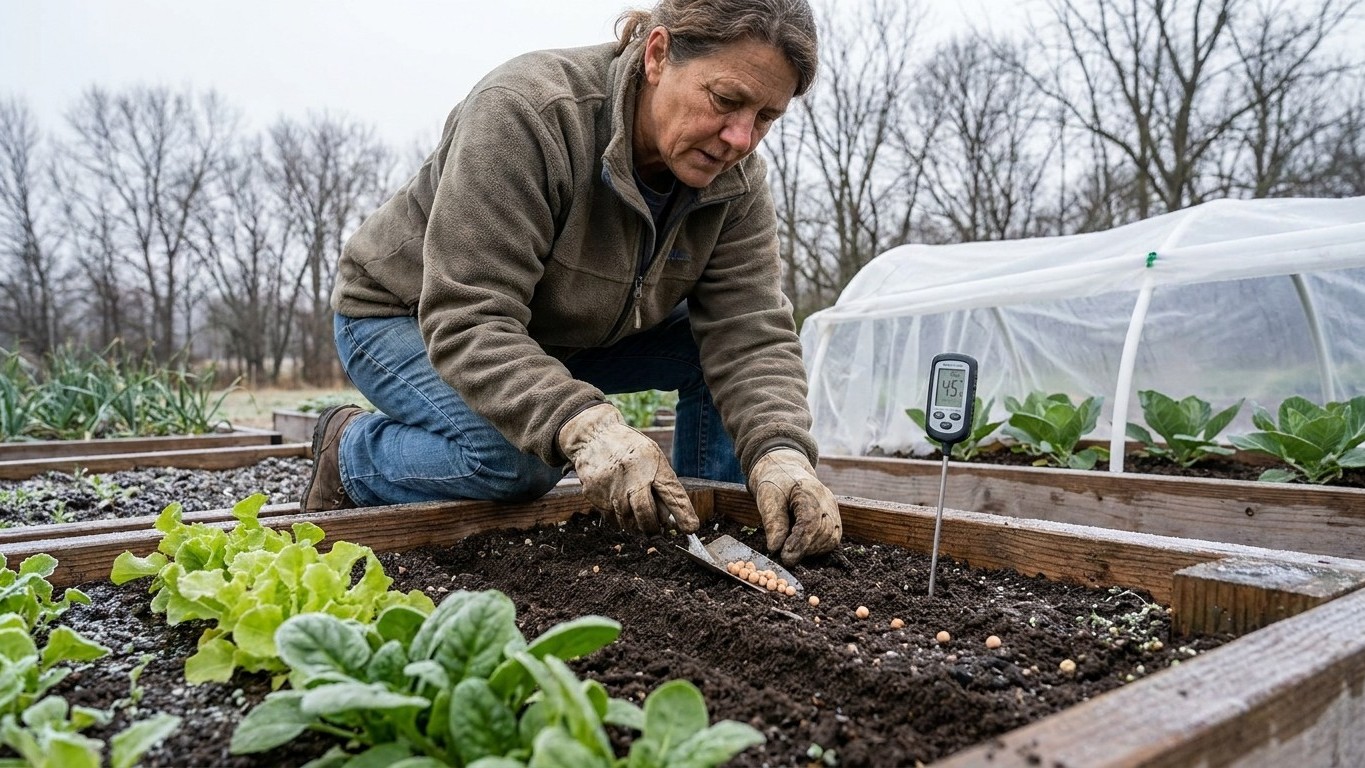

April in Connecticut sits right on top of the last frost window, so the answer changes by the week: early April still belongs to the hardiest crops in the ground, while the back half of the month opens the door to peas, onions, potatoes and brassica transplants under cover for protection. The exact date that matters for your yard is your own soil temperature, not the page of a calendar.
What goes in the ground in April

The number that actually runs the show is the last spring frost window, which for the coastal reference station at Bridgeport falls between April 2 and April 12, according to NOAA NCEI’s 1991-2020 Climate Normals for station USW00094702. That’s a 30-70% freeze probability band, not a hard line, and Bridgeport sits on Long Island Sound, the mildest pocket in the state. Inland valleys and the northwest hills run colder and later in spring, so treat this window as the early edge of what’s possible statewide, not a guarantee for every county.
Soil temperature, not air temperature, decides whether a seed germinates or just sits and rots. Cold-hardy crops tolerate both a light frost and a chilly seedbed, which is why they’re the safe bet through most of April even while the frost window is still active.
| Crop | Method | Frost tolerance |
|---|---|---|
| Peas | Direct sow | Handles frost once up |
| Spinach, arugula, lettuce | Direct sow | Tolerates light frost |
| Onion sets, shallots | Direct sow | Tolerates frost |
| Seed potatoes | Direct plant | Foliage damaged by hard frost, tubers fine below soil |
| Kale, cabbage, broccoli transplants | Transplant with cover | Needs hardening, protect on frost nights |
| Carrots, beets, radishes | Direct sow | Seeds tolerate cold soil |
What doesn’t belong outside yet is anything tender: tomatoes, peppers, squash, beans and cucumbers all sit indoors or under cover until well past that April 2-12 window, and inland gardeners should push that further out again. A cold frame or a floating row cover buys real insurance for brassica transplants set out in the second half of the month, letting you get a jump on the season without betting the crop on a mild week holding.
What to start under cover
Work backward from the frost window instead of a fixed date. Tomatoes and peppers need roughly 6 to 8 weeks indoors before they go into the ground, which means the earliest starts for an April 2-12 transplant date should already have happened by late February. If that ship sailed, a second round of seeding in early April still produces strong plants for a mid-to-late transplant push, and it isn’t wasted effort.
Cucumbers, summer squash and melons germinate fast and resent root disturbance, so they’re started closer to transplant time, roughly 3 to 4 weeks ahead. Sowing those indoors through April lines them up for setting out once the soil has genuinely warmed, well after the frost window closes.
The two ways this goes wrong both cost you a harvest. Start too early and tomatoes turn leggy and rootbound in their trays while you wait out a cold snap that pushes transplanting later than planned. Start too late, particularly with vining cucurbits, and the plants run out of runway before the first fall frost, which for this reference station lands between October 28 and November 10. That’s roughly six months of frost-free window to work with at the coast, less inland, so a crop that needs 90 days to mature has some room to spare but not a season to waste.
Peppers and eggplant are the slow ones. If they weren’t started back in February, an April sowing under lights still gets you a crop, just a later and possibly lighter one. That’s a reasonable trade if the alternative is skipping them entirely.
What is ready to pick
Little comes out of an open Connecticut garden bed in April, and that’s worth saying plainly instead of stretching a short list to look longer. What does feed the table this month comes mostly from what survived the winter or grew under protection.
Overwintered kale and leeks that made it through the cold months are often at their sweetest right now, since a hard freeze converts starches to sugars in both crops. Parsnips left in the ground over winter dig up the same way, and gardeners who mulched them heavily in fall are usually rewarded with a crop that tastes better than anything pulled in October.
Cold frames and low tunnels planted in late winter start yielding spinach, mache and baby lettuce mixes through April, and indoor sprouts or microgreens fill the gap for anyone without a frame. In zone 7b pockets of the state, an established asparagus bed may start pushing its first spears late in the month, but newly planted crowns need two to three full seasons before any harvest at all, so patience matters more than timing there.
This is also the month to walk the root cellar or basement shelf and check stored squash, potatoes and onions for soft spots, sprouting eyes or a sweetish smell that signals rot has started. One bad squash left in a bin will take its neighbors down with it, so pulling it now protects everything else stored alongside it.
The jobs that matter this month
Dormant pruning of fruit trees and cane berries has a closing window, not an open one. Once buds break and sap is fully running, cuts heal more slowly and invite disease, so April is close to the last practical stretch for that work in most of the state.
Soil testing and amending pays off disproportionately when done before planting rather than after. A basic test tells you whether lime, compost or a targeted fertilizer actually matches what your beds need, instead of guessing and either wasting money or overfeeding plants that don’t need it.
- Turn and screen finished compost while beds are still being prepared
- Clean and sharpen pruners, loppers and hoes before the heavy-use season starts
- Repair raised bed frames, trellises and fencing while access is still easy
- Set stakes and cages for peas and early brassicas before they need support, not after they’ve flopped
- Order remaining seed now, since popular varieties of tomatoes and peppers often sell out by late spring
Mulching deserves a second thought this month. Piling mulch on beds too early traps cold and slows soil warming right when you want the opposite, so hold off on a thick layer until the soil itself has started to warm, then use it to conserve that warmth and moisture rather than block it. Pest scouting also starts now: aphids, cabbage moths and slugs all show up early on tender transplants, and catching the first few by hand beats spraying a full-blown infestation three weeks later.
What not to do in April
The classic mistake is trusting a warm afternoon over the calendar of averages. A run of 70-degree days in early April feels like summer, but the ground underneath is still cold, and tomatoes or peppers set out on that warm week usually sulk, stall or die outright the next time temperatures drop back toward freezing, which they reliably do inside the April 2-12 window and often after it inland.
Pulling row covers or cold frame lids off too early after a mild stretch is the same mistake in reverse. Those covers exist specifically to buffer the swings this month is known for, and removing them the moment it feels warm outside defeats the purpose they were built for.
Nitrogen timing trips up a lot of gardeners too. Feeding a heavy dose of nitrogen fertilizer to beds or lawns before plants are actively growing mostly feeds weeds and leaches into groundwater rather than helping the crop you planted it for. Wait until seedlings have true leaves and are visibly putting on growth before the first feeding.
Working wet soil is the quieter version of the same impatience. Spring rains keep Connecticut clay and loam soils saturated well into April, and tilling or digging beds while they’re still wet compacts the structure for the rest of the season. Squeeze a handful of soil first. If it forms a tight, slick ball instead of crumbling, it’s not ready yet.
Checking this against your own county
A statewide frost window is a starting point, not an instruction for your specific yard. Elevation, distance from Long Island Sound, and even a nearby lake all shift these dates by real weeks, and the Bridgeport reference station used here sits in the mildest coastal strip of the state. Inland valleys and the northwest hills run their last frost later in spring and their first frost earlier in fall than the numbers above.
The most reliable way to narrow that gap is to check your own conditions against the UConn Extension service, which tracks local frost data and planting guidance specific to Connecticut counties.
Common questions
Can I plant tomatoes outside in April in Connecticut?
Not safely for most of the state. The last spring frost window runs April 2 to April 12 at the mild coastal reference station, and inland areas trend later. Tomatoes are tender and die at freezing, so they stay indoors or in a hardening-off routine until well past that window.
What’s the earliest thing I can direct-sow in April?
Peas, spinach, lettuce, radishes, onion sets and seed potatoes all tolerate cold soil and light frost, making them the safest direct-sow choices through the month.
Is Connecticut‘s whole state the same hardiness zone?
No. The USDA Plant Hardiness Zone Map (2023 edition, built on 1991-2020 averages) places Connecticut across zones 6a to 7b, meaning the coast and the northwest corner can differ by more than one full zone in average extreme minimum temperature.
When does the growing season actually end in Connecticut?
At the coastal reference station, the first fall frost typically falls between October 28 and November 10. Inland and northern areas should expect that date earlier, which shortens the window for late-maturing crops.