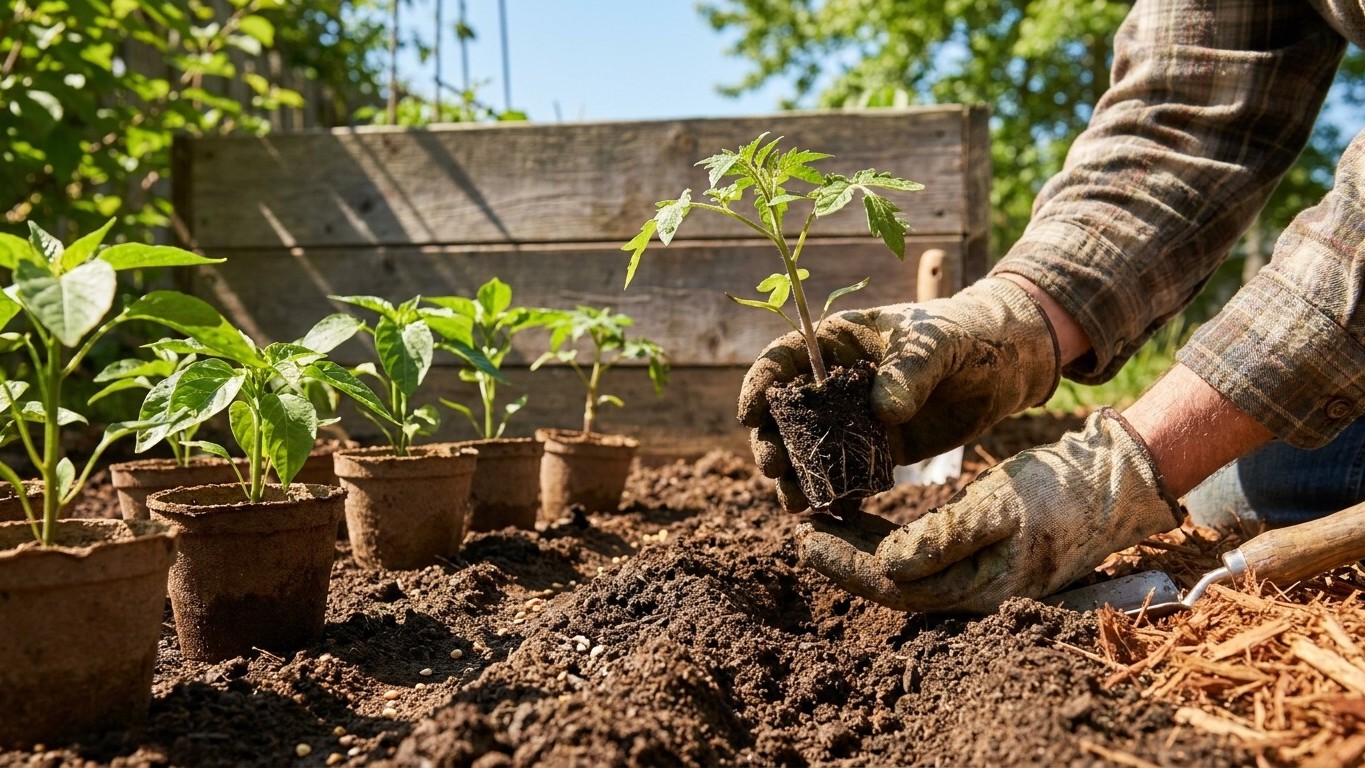

June in Delaware means the frost risk from early April is long gone, so this is the month for warm-season crops that need real heat: tomatoes, peppers, beans, squash, melons, and sweet corn all go into the ground now, either as transplants or direct-sown seed, once the soil has held steady warmth for at least a week.
What goes in the ground in June

The last spring frost at the reference station (Wilmington’s USW00013781, per NOAA NCEI 1991-2020 Climate Normals) falls between April 3 and April 14. By June, Delaware gardens are roughly two months past that window, which means soil temperature, not calendar risk, is what decides what goes in now. Warm-season crops need soil consistently above 60F at planting depth, and by June that threshold has usually been cleared across the state, including the cooler pockets inland and at slightly higher elevation in New Castle County.
Direct-sow bush and pole beans, sweet corn, cucumbers, summer and winter squash, and melons straight into garden beds. These germinate fast in warm soil and resent being started indoors and transplanted, since their roots dislike disturbance. Okra, a crop that struggles in cooler zones, does well in Delaware’s Zone 7a-8a heat and can go in now too.
Transplant tomatoes, peppers, eggplant, and sweet potato slips if this hasn’t happened yet. These benefit from a head start indoors, but June transplanting still leaves enough of the growing season, roughly four to five months before the first fall frost between October 26 and November 7, for a full harvest from most varieties.
Herbs like basil, which is genuinely frost-tender and slow to establish in cool soil, belong in June plantings rather than earlier ones. Succession sow beans and summer squash every two to three weeks through the month to spread out harvest rather than getting one glut. What doesn’t belong now: cool-season crops like spinach and lettuce, which will bolt or turn bitter in the rising heat. Save those for late-summer sowing aimed at a fall harvest instead.
What to start under cover
June is when fall-harvest brassicas get their start, and the math runs backward from the first fall frost rather than forward from today. With frost arriving between October 26 and November 7, and fall broccoli or cabbage needing roughly 60 to 80 days from transplant to harvest, plus another three to four weeks as seedlings before they’re ready to go outside, seeds started indoors or under light shade cover in June land the transplant date in mid-to-late July, right when garden space opens up from spring crops.
Starting too early under cover in June creates the same problem gardeners face with spring seedlings: broccoli and cabbage started in a hot, bright windowsill in early June often bolt or stall by transplant time, becoming rootbound in small cells while waiting for cooler outdoor conditions. Starting too late runs the opposite risk, pushing harvest past the first fall frost with plants that never size up.
A practical middle point: start fall brassica seeds under light shade cloth or in a cool basement setup in the back half of June, aiming for transplant in mid-July. Lettuce and other quick-maturing greens can wait until July or August for direct starts, since they don’t need the same lead time.
Cover crops of buckwheat, sown thickly in any bed that’s between spring and fall crops, work well started now too. They suppress weeds and add organic matter, and they die back easily with the first frost without needing tilling under while actively growing.
What is ready to pick
June harvests in Delaware lean toward what got planted in the cool weeks of March and April. Strawberries hit peak ripeness this month, best picked when fully red with no white shoulders, since they don’t ripen further once removed from the plant. Snap peas and shell peas wrap up their season as the heat builds, and pods should be picked while still firm and bright green before they turn dull or start to bulge unevenly.
Lettuce, spinach, and other spring greens are finishing their run too. Harvest whole heads or outer leaves before hot weather triggers bolting, which shows up as a sudden central stalk shooting upward, a signal that the leaves left behind will turn bitter fast. Radishes sown in early spring should come out of the ground by now; leaving them too long in warming soil makes them woody and hollow inside, which you’ll only find out by cutting one open.
Garlic planted the previous fall sends up scapes, the curling flower stalks, in June. Cutting scapes early redirects energy into bulb growth and gives you an edible bonus with a mild garlic flavor, good in a stir-fry or blended into a sauce. Full garlic bulb harvest usually comes later in summer, once the lower leaves start browning.
Early greens under any protective covering from spring, like a cold frame, are also finishing up, and it’s worth clearing that space now for a summer crop rather than letting bolting greens hold ground they’re no longer using well.
The jobs that matter this month
Staking, mulching, and water rhythm
Tomatoes, peppers, and vining squash need support installed before they sprawl, not after. A cage or stake driven in once a plant is already leaning sideways damages roots and stresses the plant right when it’s trying to set fruit. Mulch beds now with straw or shredded leaves, both to hold moisture through Delaware’s warm, sometimes humid June and to keep weed pressure down before it explodes. Watering rhythm matters more than volume: deep, infrequent watering (aiming for the equivalent of about an inch a week, adjusted for rainfall) builds deeper root systems than a light daily sprinkle, which trains roots to stay shallow and makes plants more vulnerable to the dry spells that show up later in summer.
Pest scouting and succession
Colorado potato beetles, squash bugs, and Japanese beetles all become active in June across the mid-Atlantic, and catching the first generation early, before egg masses hatch into large larvae, is far easier than dealing with a full infestation in July. Check the undersides of squash and potato leaves weekly. Thin direct-sown carrots, beets, and beans to their final spacing now; crowded seedlings compete for water and light and produce smaller roots and pods later. Keep succession sowing beans and summer squash on a two-to-three-week rotation through the month so the harvest doesn’t collapse into one short window in August.
Weeding now, while roots are shallow and soil is workable, costs a fraction of the effort it takes once weeds set seed or send down deep taproots in the heat of midsummer.
What not to do in June
The most common mistake this month is treating June as one long safe window without checking soil, not air, temperature before planting heat-loving crops like melons and sweet potatoes into beds that stayed cool and wet from spring rain. Cold, damp soil rots seeds and stunts transplants even when the air feels warm. Let soil dry and warm for a few days after a heavy rain before planting.
Overfeeding nitrogen on tomatoes and peppers once they start flowering is another frequent error. Nitrogen pushes leafy growth at the expense of fruit set, so a plant that looked thin in May and gets a heavy nitrogen feed in June often ends up bushy and green with little to show for it by August. Switch to a balanced or phosphorus-leaning fertilizer once flowering starts.
Removing row covers or cold-frame protection too early after a mild stretch is a risk too, since a late cool night can still stress tender transplants that haven’t hardened off. And leaving mulch piled directly against plant stems, rather than a few inches back, invites rot and gives pests like squash vine borers an easy entry point at the base of the plant.
Finally, skipping the thinning step on direct-sown crops because it feels wasteful to pull healthy seedlings costs more in the long run: crowded plants produce fewer, smaller vegetables than a properly spaced row.
Checking this against your own county
The frost dates and hardiness range cited here come from one reference station and a statewide USDA zone band (7a-8a), and Delaware’s small size still hides real variation between the coastal south and the slightly cooler inland north. Elevation, proximity to the Delaware Bay, and local soil drainage can shift a planting window by a week or two in either direction. Treat this page as a starting point, then confirm timing with the University of Delaware Cooperative Extension, which tracks local conditions and county-specific guidance.
Common questions
Is it too late to plant tomatoes in Delaware in June?
No. With the first fall frost not arriving until late October or early November, June-planted tomatoes still have four to five months to produce a full harvest, especially with faster-maturing varieties.
Can I still direct-sow beans and squash this month?
Yes, and succession sowing every two to three weeks through June extends the harvest window rather than concentrating it into one short burst later in summer.
Why are my lettuce and spinach bolting already?
Rising June heat triggers bolting in cool-season greens regardless of planting date. Harvest what’s left promptly and hold off on new lettuce or spinach sowings until temperatures cool again in late summer.
Should I start fall broccoli seeds now or wait?
Starting in June, aimed at a mid-to-late July transplant, lines up with the 60-to-80-day maturity window most fall brassicas need before the first frost in late October or early November.