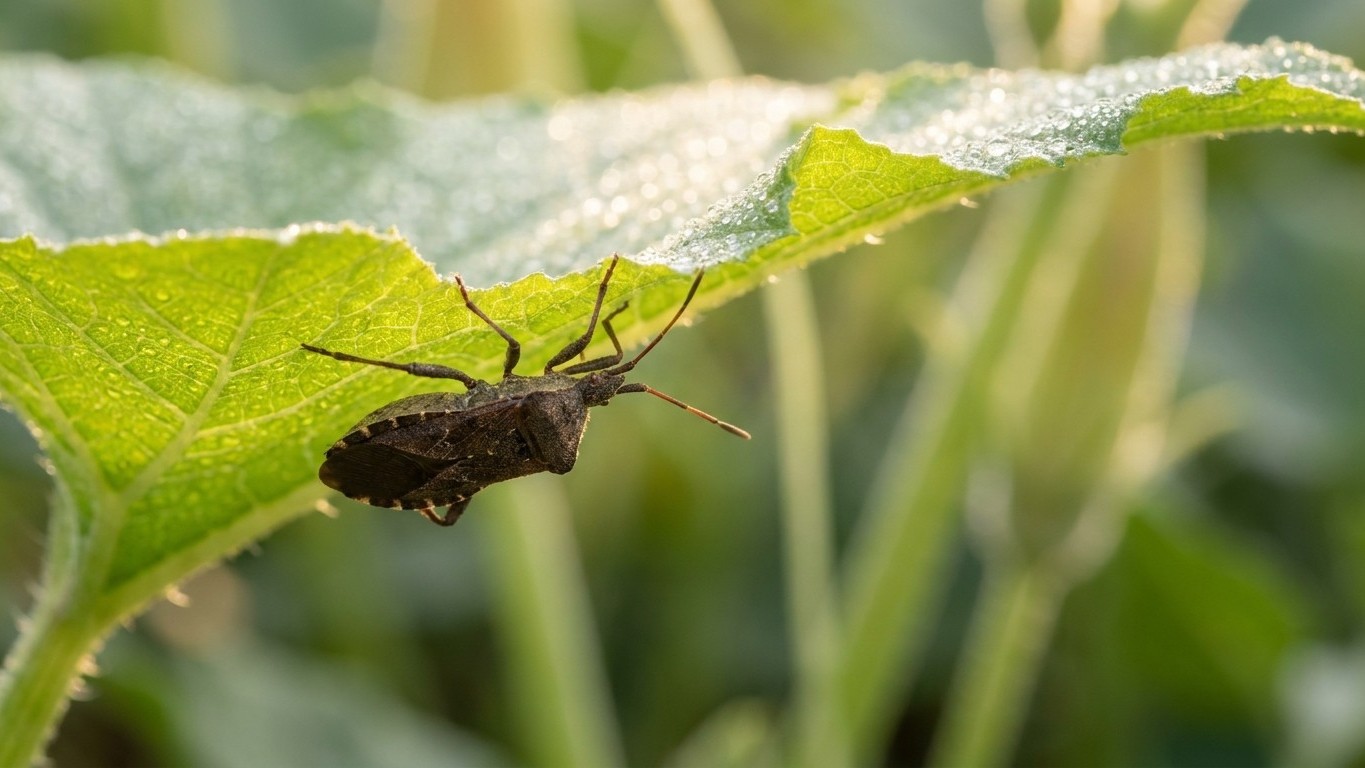

Squash bugs start showing up in Delaware gardens around late May, once daytime temperatures hold steady above 70°F for a week or two. That timing lines up with when squash and pumpkin vines are putting out their first true leaves, which is exactly what these pests are waiting for. The best control window runs from that first emergence through mid-June, before egg clusters hatch into the nymph stage that’s much harder to kill.
Delaware’s mid-Atlantic climate, humid summers with mild winters, gives squash bugs (Anasa tristis) a longer active season than gardeners in cooler states deal with. In New Castle County and up toward Wilmington, the growing season often stretches from mid-April to late October. Down in Sussex County near the coast, that window opens even earlier. Two full generations of squash bugs in a single season isn’t unusual here, which means the fight doesn’t end after the first wave.
When Squash Bugs Actually Arrive in Delaware Gardens

Adult squash bugs overwinter as full-grown insects, tucked into leaf litter, mulch piles, wood stacks, or the cracks of old fence posts. They don’t die off with the first frost the way some garden pests do. Instead, they wait out the cold in a dormant state and re-emerge once soil temperatures climb into the 60s.
In a typical Delaware season, that re-emergence happens sometime between the third week of May and the first week of June, depending on how quickly spring warms up. Coastal counties tend to see activity a little earlier than inland areas. Once adults find a host plant, usually squash, pumpkin, or cucumber vines, mating begins almost immediately, and egg-laying follows within days.
The eggs themselves are the giveaway. They’re a distinctive bronze or copper color, laid in tight clusters on the undersides of leaves, often right where two veins meet. A single female can lay dozens of eggs over her lifetime, and those eggs hatch in about a week to ten days depending on temperature. Nymphs go through five stages before reaching adulthood, and the whole process from egg to breeding adult takes roughly six weeks in Delaware’s summer heat. That’s fast enough for a second generation to hit gardens by mid-to-late July, right when zucchini and yellow squash are hitting peak production.
Spotting the Damage Before It Spreads
Squash bugs don’t chew visible holes in leaves the way beetles do. They feed by piercing plant tissue with a needle-like mouthpart and sucking out fluids, which starves the leaf of nutrients rather than tearing it apart. The result looks a lot like drought stress at first: yellow speckling that turns brown, then a wilted, almost scorched appearance that spreads from the point of feeding outward.
Gardeners often mistake early squash bug damage for bacterial wilt, since both cause vines to collapse seemingly overnight. The difference matters for treatment. Bacterial wilt is spread by cucumber beetles and has no cure once it takes hold. Squash bug damage, caught early, can still be managed if the population hasn’t exploded.
A few signs point clearly to squash bugs rather than another pest:
- Copper-colored egg clusters on the underside of leaves, usually near vein junctions
- Gray or brown nymphs clustered at the base of the plant, especially in the cooler morning hours
- Wilted leaves that start at the runner tips and progress toward the crown
- A sharp, unpleasant odor when the adults are crushed or disturbed
That odor is actually one of the more useful identifying traits. Squash bugs release a defensive smell similar to a stink bug when threatened, which helps distinguish them from beneficial insects like assassin bugs that sometimes get mistaken for pests.
Which Delaware Crops Are Most at Risk
Not every plant in the cucurbit family gets hit equally hard. Yellow squash and zucchini are the top targets in most Delaware gardens, followed closely by pumpkins grown for fall harvest. Butternut and other hard-shelled winter squash varieties tend to show more resistance, partly because their thicker stems and denser leaf structure make feeding harder. Cucumbers and melons get some squash bug attention but usually far less than their squash relatives.
What Actually Stops Squash Bugs in Delaware Gardens
Timing beats chemistry when it comes to squash bugs. Because the eggs and early nymphs are far more vulnerable than adults, most of the effective control happens in a narrow window right after the first generation emerges.
Handpicking eggs off leaf undersides remains one of the most reliable methods, and it costs nothing but a few minutes every couple of days. Checking plants every three to four days during peak egg-laying season, roughly early June through early July in Delaware, catches most clusters before they hatch. Simply scraping them into a bucket of soapy water or crushing them directly kills the eggs on contact.
Trap boards work surprisingly well for adults. A flat piece of untreated wood or a shingle laid on the ground near the base of squash plants gives adult bugs a place to hide overnight, since they’re most active at dusk and dawn and prefer sheltered spots during the heat of the day. Flipping the board each morning and dropping any bugs found underneath into soapy water can meaningfully reduce the adult population over a few weeks without any spraying at all.
Row covers offer strong protection but only during a specific window. Covering young plants right after they emerge or transplanting keeps adults from reaching the vines to lay eggs in the first place. The covers need to come off once flowering starts, though, since squash relies on pollinators to set fruit. That means row covers work best as an early-season strategy rather than a season-long fix.
Cultural Practices That Reduce the Next Generation
Fall cleanup matters more than most gardeners realize. Since adults overwinter in plant debris, clearing out old vines, fallen leaves, and mulch after harvest removes a huge chunk of the shelter population would otherwise use to survive Delaware’s winter. Composting that debris in a hot, actively managed pile can kill overwintering adults, but tossing it in a cold pile or leaving it in the garden simply gives them a place to wait out the season.
Crop rotation helps too, though it’s less effective against squash bugs than against soil-borne diseases, since adults can fly to find new host plants. Still, moving squash and pumpkin plantings to a different part of the yard each year, combined with cleanup, cuts down on the built-in advantage overwintering bugs get from emerging right next to last year’s crop.
Some gardeners plant a “trap crop” of blue hubbard squash a few weeks before their main crop. Squash bugs strongly prefer hubbard varieties over most others, so a small planting can draw the first wave of adults away from the main harvest. Once the trap crop is covered in bugs, it gets pulled and destroyed, taking a large portion of the local population with it.
When Insecticides Make Sense
Chemical control works best against nymphs in their first two stages, when their exoskeletons are still soft. Once nymphs mature past the third instar, most contact insecticides lose much of their effectiveness, and adults are tough to kill with sprays. That narrow window is why timing checks with the egg-laying calendar matters so much.
Insecticidal soap and neem oil are commonly used for lighter infestations and carry less risk to pollinators when applied in the early morning or evening, after bees have finished their daily foraging. For heavier infestations, products containing permethrin or carbaryl are labeled for squash bug control on home garden crops, though the same pollinator timing precautions apply. Always check the product label for the specific vegetable being treated and the required waiting period before harvest, since these vary by active ingredient.
Diatomaceous earth, sprinkled around the base of plants, can help control nymphs as they move between the soil and the plant, though it needs reapplication after rain or heavy dew since it loses effectiveness once wet.
A Season-Long Approach for Delaware Gardens
No single method wipes out a squash bug population in Delaware. The combination that tends to work best pairs early monitoring, egg removal through June, trap boards for adults, and thorough fall cleanup to knock down the overwintering population heading into next spring. Skipping the fall step is probably the most common mistake, since it essentially resets the fight to square one every single year.
Gardeners who’ve dealt with heavy infestations one summer often notice a much lighter second season after committing to full debris removal that fall. It’s not a guarantee, since adult bugs can still fly in from neighboring yards or wild host plants along field edges, but it shifts the odds. In a state where backyard gardens sit close together in suburban New Castle County neighborhoods or spread across small farm plots in Kent and Sussex, what a neighbor does with their own squash bed can end up affecting the whole block.