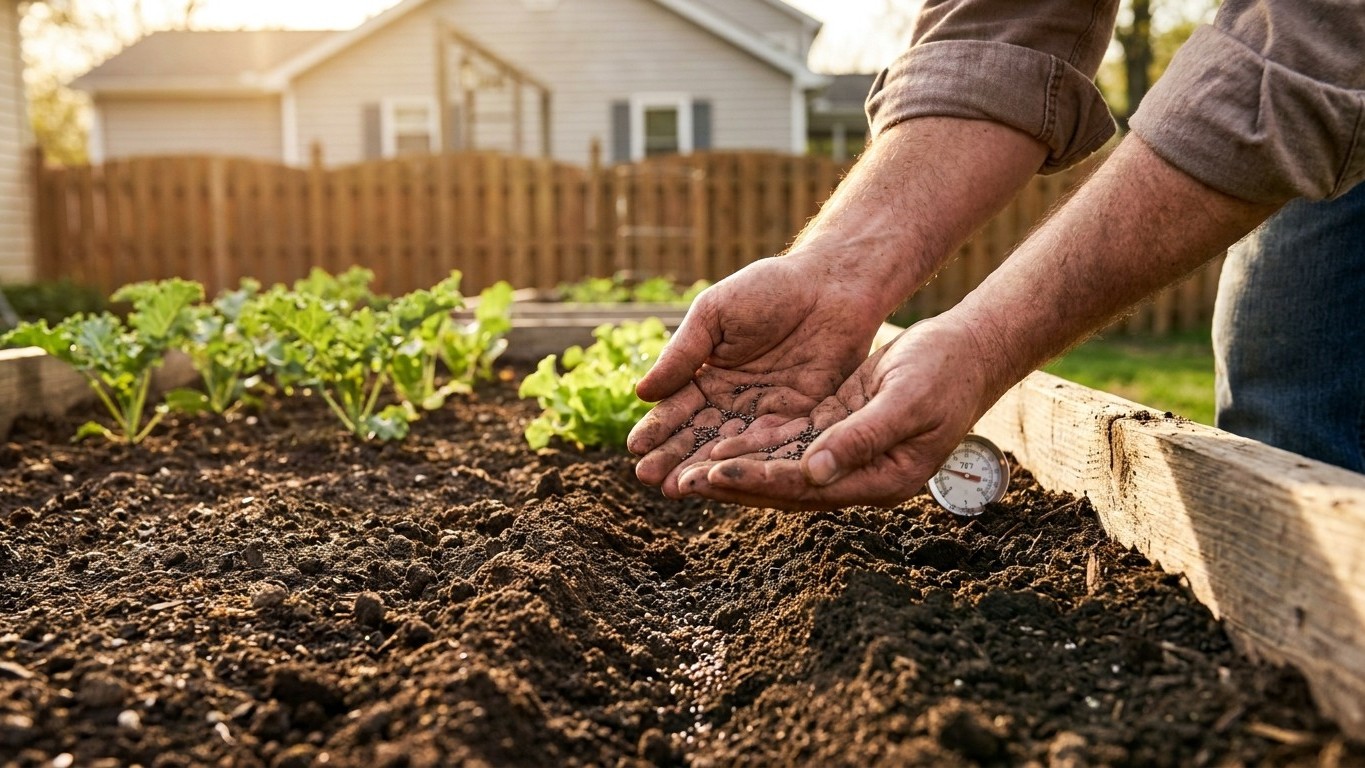

In Indiana, August is the last realistic month to start a fall vegetable garden from seed. Bush beans, beets, carrots, kale, and salad greens can still go into the ground, chosen by counting backward from the average first fall frost, October 21 to October 30 at the Indianapolis reference station, rather than by the calendar date itself. Warm-season crops like corn, melons, and winter squash are finished for the season; anything needing more than about ten weeks to mature won’t make it home before the cold does.
What goes in the ground in August

The rule for August sowing in Indiana isn’t a date, it’s arithmetic. Take the average first fall frost, October 21 to October 30 for the Indianapolis area, and work backward by however many weeks a given crop needs to reach a harvestable size. A bush bean sown in the first week of the month, needing roughly two months to mature, finishes right around the start of October, comfortably ahead of frost. A carrot sown mid-month needs closer to ten weeks, which still lands inside the window as long as the soil hasn’t turned cold and hard by then.
Soil temperature matters just as much as the frost countdown. August ground in Indiana routinely holds heat well into the seed-sowing depth, which suits beans and beets fine but works against lettuce and spinach, both of which germinate poorly, or not at all, once the soil gets that warm. The usual workaround is timing: sow lettuce and spinach in the last third of the month, after the soil starts to cool, or start them in a shaded spot and move the sprouted seedlings out once conditions ease.
| Crop | Sowing method | General timing note |
|---|---|---|
| Bush beans | Direct sow | Best sown in the first two weeks of the month |
| Beets, carrots, turnips | Direct sow | Sow through mid-month for a clean fall harvest |
| Kale, collards, Swiss chard | Direct sow | Tolerant enough to sow most of the month |
| Radishes, kohlrabi | Direct sow | Fast enough to sow into September |
| Lettuce, spinach | Direct sow, shaded | Better sown in the last third of the month as soil cools |
What’s off the table entirely: sweet corn, melons, winter squash, and anything else that belonged in a May or June planting decision. None of these have enough runway left, no matter how warm the air feels. And anything marketed as needing more than about ten weeks to mature is a gamble past mid-month, since it pushes harvest dangerously close to, or past, the average frost window.
What to start under cover
Fall broccoli, cabbage, and cauliflower are usually started as transplants, not direct-seeded, because they need three to five weeks under cover before they’re sturdy enough to move outside, and then another two to three months to size up and mature. Counting backward from the October 21 to October 30 average frost window, anything on that timeline needs to be under cover no later than the first half of the month.
The safer version of that math uses the earlier end of the frost range, October 21, as the working deadline rather than October 30. Building in that ten-day cushion covers the years when frost arrives on the early side of average, and it means a transplant finishing “right on schedule” still has room to spare instead of ending its life on the exact night of the first freeze.
A cold frame, a shaded cell tray, or a length of shade cloth over a nursery bed extends the starting window a bit further into the month, since it moderates the heat and moisture swings that make direct germination of finicky seedlings so unreliable outdoors in high summer.
The two ways fall transplants go wrong are opposites of each other. Start too early, in the thick of August heat, and seedlings sit in trays past their prime, become rootbound, and stall once they’re finally set out, never quite recovering their growth rate. Start too late, waiting for a break in the weather before sowing, and there isn’t enough season left for the transplant to harden off and mature before frost shuts things down. Sowing in the first two weeks of the month, for anything destined for the garden by early September, splits that difference for most of the state.
What is ready to pick
August is peak output for the summer garden. Tomatoes color up daily now, and the test is simple: a fruit that gives slightly under gentle pressure and has colored fully to its variety’s mature shade is ready, not one that’s merely started to blush. Peppers can be picked green or left to ripen to their final color for a sweeter flavor, depending on the variety and the gardener’s patience.
Sweet corn signals readiness through its silks, which turn brown and dry while the husk stays green; a quick peek at a few kernels, pressed until they release a milky juice, confirms it. Cucumbers and summer squash need picking every couple of days at this point, since both turn from tender to woody or seedy within a week if left on the vine. Melons are the trickiest call: a cantaloupe that “slips” free from the vine with light pressure is ready, while watermelon relies on the dulling of the skin’s sheen and a hollow sound when thumped.
Beans, whether bush or pole, come off the plant continuously once they start, and picking often is what keeps the plant producing instead of shutting down to focus on the pods left behind. Blackberries and early apple varieties are also coming in through the month in much of the state. Meanwhile, garlic and onions harvested and cured earlier in summer deserve a check now: any bulb going soft, sprouting, or smelling off should be pulled from storage before it spreads to the rest.
The jobs that matter this month
Succession sowing is the job with the shortest fuse. A second round of bush beans, radishes, or quick greens sown now, rather than waiting to see how the first planting turns out, is what keeps the harvest going into fall instead of stopping cold once the summer crops wind down.
Watering rhythm matters more in August than almost any other month, since Indiana’s dry spells tend to cluster here just as fruiting crops are under the most stress. A deep soak that reaches the root zone, rather than a light daily sprinkle that wets only the surface, encourages roots to grow down instead of staying shallow and vulnerable. A layer of mulch over that watered soil holds the moisture in and keeps roots several degrees cooler than bare, sun-baked ground.
Sprawling tomatoes, vining squash, and top-heavy peppers still need staking or tying up if they haven’t been already, since a plant that flops over into wet mulch is an invitation to rot and slug damage. Pest scouting pays off every week it’s done and costs plants when it’s skipped, and a few repeat offenders show up reliably in Indiana gardens this time of year:
- Japanese beetles, skeletonizing leaves on beans, roses, and grapes
- Squash vine borers, boring into stems at the base of squash and pumpkin plants
- Tomato hornworms, stripping foliage overnight and easy to miss until the damage is obvious
- Cucumber beetles, spreading bacterial wilt between cucurbit plants as they feed
Clearing spent bean or pea vines and working compost into that bare soil now sets up the space for the fall transplants going in over the next few weeks, rather than leaving that bed prep for a rushed weekend later.
What not to do in August
Setting out tomato, pepper, or eggplant transplants now, on the logic that the weather still feels like peak summer, is a common misstep. There isn’t enough season left for a newly transplanted warm-season crop to establish, flower, and produce fruit before the average frost arrives in October, no matter how mild the days still feel.
Heavy nitrogen fertilizer late in the season does more harm than good on crops that are supposed to be finishing up, not starting over. A tomato or pepper plant pushed into fresh leafy growth in August puts its energy into foliage instead of ripening the fruit already set, and that new soft growth is also the most vulnerable to an early frost if one arrives ahead of schedule.
Letting the garden coast on watering because the summer rush feels like it’s winding down is another one. Indiana’s August dry stretches don’t announce themselves, and a squash or melon plant that goes from adequately watered to drought-stressed in the space of a week will drop fruit or split what’s already sizing up.
Leaving ripe produce on the plant “for one more day” repeatedly is the last habit worth breaking. Overripe beans go tough, overripe cucumbers go bitter and seedy, and rotting fruit left in place draws exactly the pests already scouted for above.
Checking this against your own county
A statewide frost window is a starting point, not an instruction. Indiana’s climate shifts noticeably from the Lake Michigan shoreline in the north to the Ohio River counties in the south, and the state’s own hardiness range, 5b to 7a under the USDA Plant Hardiness Zone Map, reflects that spread: the northern tier sits toward the cooler 5b end, the southern counties toward the warmer 7a end. Even the spring frost date carries roughly a 10% chance of a freeze arriving after the published window closes, a reminder that any single average hides real year-to-year variation.
For a county-level frost window and a locally tuned planting calendar, the Purdue Extension service is the right next stop.
Common questions
Can I still plant tomatoes in Indiana in August?
No. There isn’t enough time left before the average first fall frost, October 21 to October 30, for a newly set transplant to establish and produce a real harvest.
What vegetables can I plant in Indiana in August?
Bush beans, beets, carrots, turnips, kale, collards, chard, and, toward the end of the month once soil cools, lettuce and spinach.
When does the first frost usually hit Indiana?
Around Indianapolis, the average first fall frost falls between October 21 and October 30, based on NOAA’s 1991-2020 climate normals. Southern counties typically see it later, northern counties earlier.
Is it too late to start fall broccoli or cabbage in August?
Not if it’s started in the first half of the month. These need weeks under cover before transplanting, plus two to three months to mature, so waiting until late August usually runs out of season.