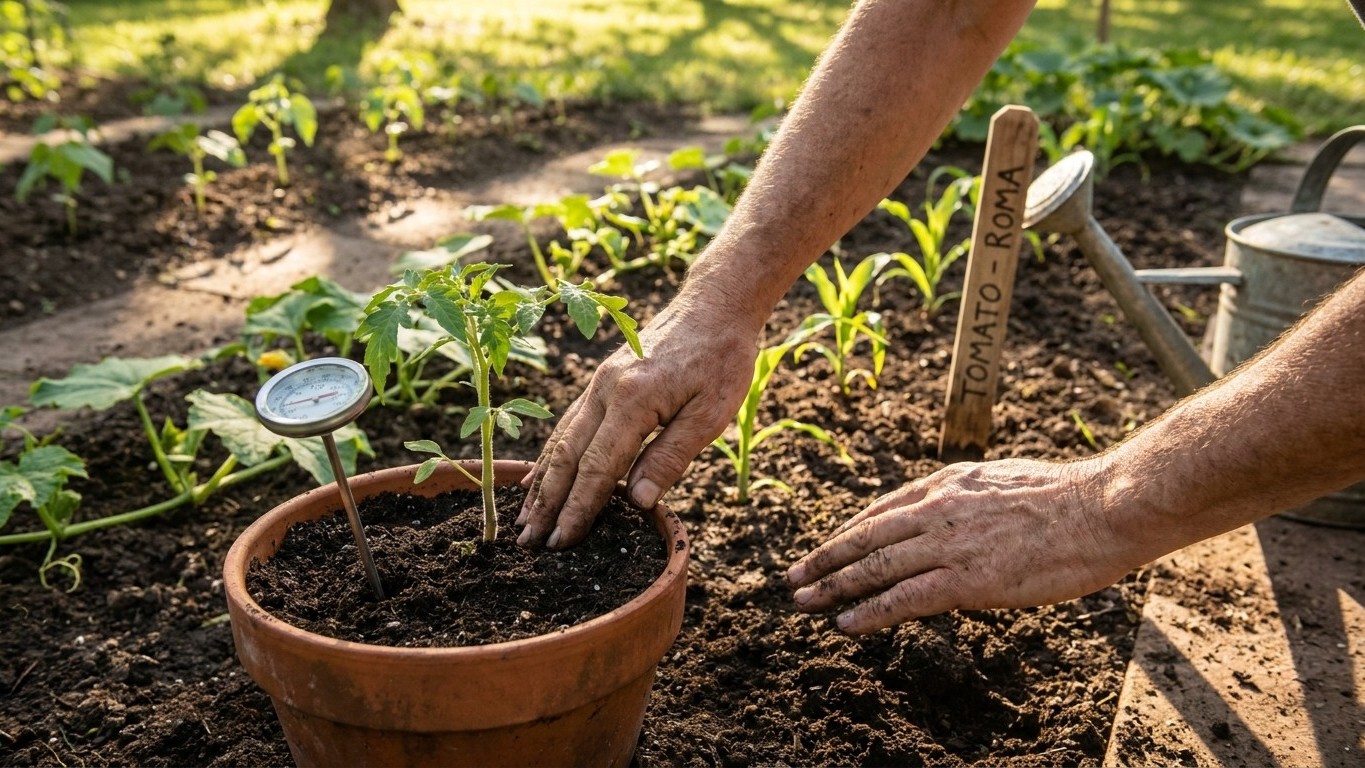

By June, the frost question is settled almost everywhere in Kansas. Soil has warmed enough for beans, corn, squash, melons, and tomato and pepper transplants that were held back in cooler weeks. The real work this month is less about “can I plant it” and more about heat, water, and staying ahead of pests before the summer sun turns every mistake into a bigger one.
What goes in the ground in June

Soil temperature, not the calendar, decides what belongs in the ground this month. Kansas’ last spring frost typically falls between April 4 and April 18, based on NOAA NCEI 1991-2020 Climate Normals for the reference weather station used in this data set. That window has long passed by June, which means soil at planting depth has generally climbed well past the 50°F mark that warm-season crops need to germinate reliably. Bean seed rotting in cold, wet soil is a May problem. In June it is rarely the risk.
That said, “June” covers four weeks, and early June soil in a shaded, poorly drained bed can still lag behind a sunny raised bed by several degrees. Push a soil thermometer four inches down before committing a whole tray of melon transplants to open ground.
Crops suited to early, mid, and late June
| Timing | Direct sow | Transplant |
|---|---|---|
| Early June | Snap beans, sweet corn, cucumbers, summer squash | Tomatoes, peppers, eggplant (if not already in) |
| Mid June | Pole beans, okra, winter squash, pumpkins | Second round of peppers, basil |
| Late June | Succession beans, corn for later corn, cowpeas | Sweet potato slips where soil stayed cool |
Okra and sweet potatoes actually prefer the heat that builds through June, so they are better bets late in the month than in a cooler, wetter May. Melons and winter squash want the full stretch of summer ahead of them, so mid-June is close to the last comfortable window for direct-sown pumpkins in most of the state, especially the drier western counties where the growing window closes earlier than in the wetter east.
What to start under cover
Starting seed under cover in June is really about the fall garden, not the summer one already in the ground. Work backward from Kansas’ first fall frost, which falls between October 23 and November 2 for the reference station in NOAA’s 1991-2020 Climate Normals. Fall broccoli, cabbage, and cauliflower typically need 10 to 14 weeks from seed to a harvestable head, plus a buffer for slowing growth as days shorten. Counting back from early November puts the seeding window for those transplants squarely in June, started in trays where they get shade from the worst afternoon sun.
The two ways this goes wrong are familiar to anyone who has done it more than once. Start too early in a hot, bright window and the seedlings stretch into leggy, rootbound stems before the ground is even ready for them in August. Start too late, especially if July turns into a heat wave that stalls growth, and the fall crop runs out of season before the head sizes up ahead of frost.
Lettuce and other quick greens don’t need the same lead time. A tray started indoors in air conditioning in late June, then moved outside to a shaded spot for transplanting in July, sidesteps the worst of the bolt-inducing heat that direct-sown lettuce faces in open June soil.
What is ready to pick
June is one of the more generous harvest months in a Kansas garden, spanning the tail end of the cool-season crops and the first wave of summer produce. Garlic planted the previous fall is often ready to pull once the lower leaves brown, usually by late June. Garlic scapes, the curling flower stalks, should come off as soon as they appear, both to eat and to push the bulb’s energy back into growth.
Peas wind down as heat arrives; pick pods while they still snap cleanly, because a few hot days turn them starchy fast. Strawberries hit their peak early in the month. Lettuce and spinach still standing should be harvested promptly, since bolting accelerates once daytime highs push past the mid-80s. Radishes and early beets are usually ready, pulled at golf-ball size before they turn woody.
Toward the back half of the month, the first zucchini and yellow squash start showing up, best picked young, six to eight inches, before the skin toughens. Early potatoes planted in March or April can be dug as “new potatoes” once the plants flower, checked by gently digging one hill to see the size before committing to the whole row.
The jobs that matter this month
Mulching is the single highest-return job in a Kansas June. Soil temperatures under bare ground can spike well above what tomato roots tolerate comfortably, and a two to three inch layer of straw or shredded leaves keeps roots cooler and cuts watering frequency at the exact point summer heat starts pulling water out of the soil faster than it goes in.
Staking and caging come next, and they need to happen before plants sprawl, not after. A tomato plant staked in June is a five-minute job. The same plant staked in July, once it has flopped over its neighbors, means untangling stems that are already fruiting.
Watering rhythm matters more than volume. Deep, infrequent watering, roughly one to one and a half inches a week delivered in one or two sessions rather than a daily sprinkle, trains roots to grow down instead of staying shallow and vulnerable when a hot spell hits.
Succession sowing keeps beans, corn, and cucumbers coming instead of dumping the whole harvest in a two-week window. Sowing a new short row of beans every two to three weeks through June stretches the picking season into fall.
Pest scouting should start now, before populations explode. Squash bugs lay clusters of bronze eggs on the underside of squash and pumpkin leaves; checking weekly and scraping off egg clusters is far easier than fighting adult populations in July. Colorado potato beetle larvae and aphid colonies on peppers and beans are worth the same weekly look.
What not to do in June
The most common June mistake is treating a hot afternoon as proof the soil is ready, when air temperature and soil temperature are not the same thing. A cucumber or melon transplant set into soil that is still cool a few inches down, shaded by mulch laid too early, can sit stalled for a week even while the air feels like midsummer.
Overfeeding nitrogen is the second classic error, particularly on tomatoes and peppers. A heavy nitrogen application once plants are flowering pushes leafy growth at the expense of fruit set, leaving a lush, dark green plant with disappointing yields. Side-dress lightly and lean on phosphorus and potassium once flowering starts instead.
Shallow, frequent watering causes more blossom end rot in tomatoes and peppers than any calcium deficiency does. Inconsistent soil moisture, wet one day and dry the next, disrupts the plant’s ability to move calcium into developing fruit even when the soil has plenty of it. Fixing the watering schedule solves more blossom end rot than any calcium spray.
Finally, letting cool-season greens linger past their prime, hoping for one more picking, usually just means bitter, bolted lettuce and spinach taking up bed space that beans or a second squash planting could use instead.
Checking this against your own county
A statewide picture is a starting point, not an instruction for a specific backyard. Kansas spans USDA Hardiness Zones 5b through 7a, and elevation changes across the western High Plains versus the eastern lowlands shift both the last spring frost and the first fall frost by a week or two in either direction. A garden in a low-lying valley can also run a few degrees colder overnight than one on a nearby ridge, even within the same county.
For a planting calendar tuned to local conditions, check with K-State Research and Extension, which publishes county-specific guidance and can confirm frost timing for a specific area rather than a statewide average.
Common questions
Is it too late to plant tomatoes in June in Kansas?
No. Tomato transplants set out in early to mid June still have plenty of season ahead before the first fall frost, which falls between October 23 and November 2 based on NOAA’s 1991-2020 Climate Normals for the reference station. Late June transplants may see a slightly smaller total harvest but will still produce.
Can I still direct-sow corn or beans in June?
Yes, both grow well from June sowings since Kansas soil is reliably warm by then. Staggering bean sowings every two to three weeks through the month extends the harvest well into late summer.
Why is my lettuce bolting in June?
Lettuce and spinach bolt once sustained daytime temperatures push into the mid-80s and beyond, which is common across Kansas by June. Harvest what remains promptly and shift new sowings to a shaded spot or hold them for a fall planting instead.
What should I be starting indoors right now for fall harvest?
Broccoli, cabbage, and cauliflower for fall transplanting are typically started indoors in June, counting back roughly 10 to 14 weeks from the first fall frost window of October 23 to November 2. Starting them in a cooler, shaded spot indoors avoids the leggy growth that early June heat can cause outdoors.