
By May, Kansas gardens are past the frost line and into full planting mode: tomatoes, peppers, squash, beans, corn, and melons all go outside this month, alongside continued sowings of lettuce and beans every couple of weeks. The window is wide, but soil temperature, not the calendar, decides when each crop actually thrives.
What goes in the ground in May

The reference frost window for this region runs April 4 to April 18, based on NOAA’s 1991-2020 climate normals for the airport station used to build these averages. By May, that window has closed almost everywhere in the state, which is exactly why this month carries the bulk of the planting calendar rather than a cautious trickle of cold-hardy crops.
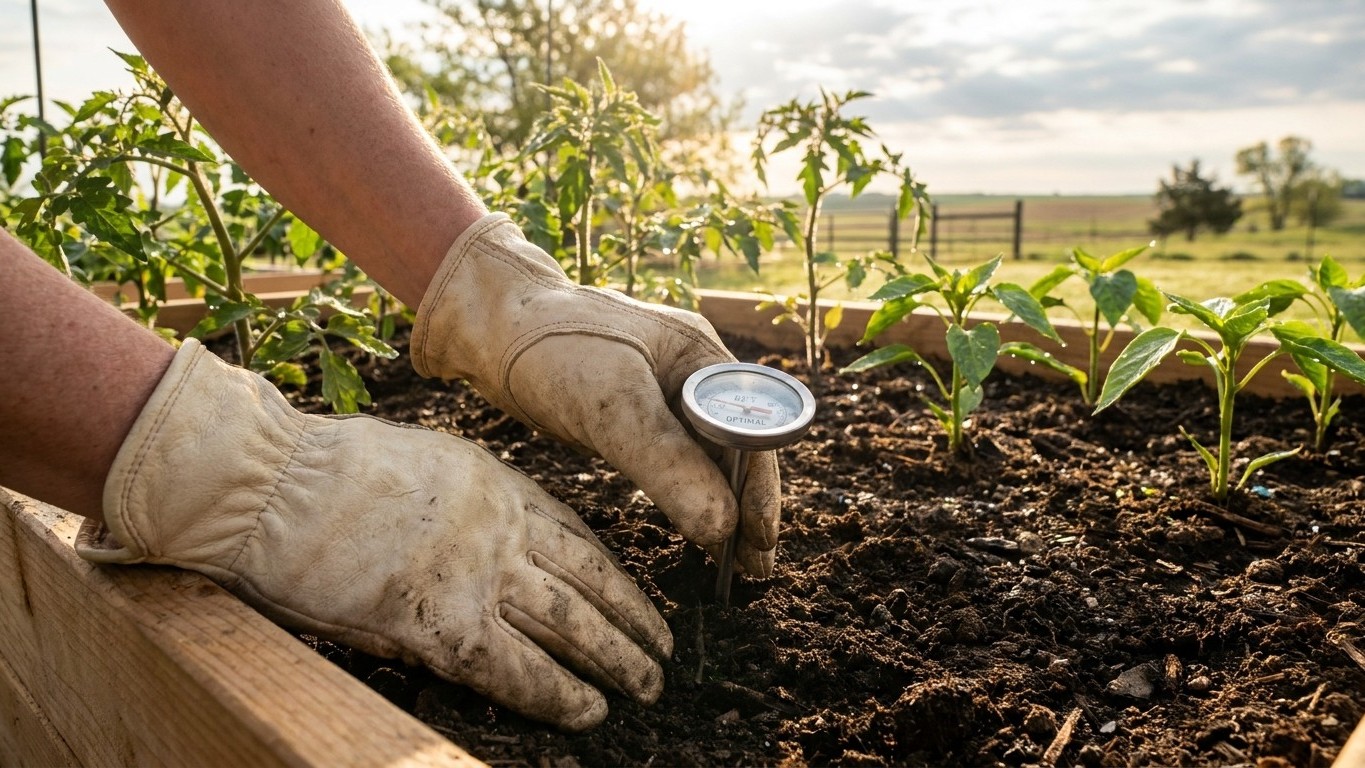
Air temperature is not the number that matters here. Soil temperature is. Bean seed rots in ground colder than 60°F. Squash, cucumbers, and melons want soil closer to 65-70°F before germination reliably kicks in. A warm afternoon in early May can feel like summer while the soil four inches down still sits in the mid-50s, especially after a cool, wet spring. A basic soil thermometer, checked at planting depth in the morning, takes the guesswork out of it.
With that caveat in place, direct-sow beans, sweet corn, squash, cucumbers, and melons once soil has warmed. Sweet potato slips go in once nights stay reliably above 55°F. Transplant tomatoes, peppers, and eggplant after hardening them off over a week of graduated outdoor exposure. Seed potatoes can still go in during the first half of the month in northern counties running slightly behind the reference window.
Cool-season holdovers still have a place too. Lettuce, spinach, and radishes can be sown in succession through early May before the heat pushes them toward bolting. Onion sets and garlic, if not already in from earlier in the spring, should be finished by now rather than started fresh. Herbs like basil and cilantro can go outside once the soil-temperature threshold is met, basil especially, since it sulks and yellows in anything cooler than 50°F overnight.
What to start under cover
Most of the classic “start indoors” work for the main season already happened six to eight weeks before the April frost window, so tomato and pepper starts should be hardening off, not germinating, by now. What still makes sense under cover in May is different: insurance starts and forward planning for fall.
A second round of squash or cucumber seedlings started indoors in early May gives a backup in case direct-sown seed rots in a cold, wet spell, or replaces plants lost to cutworms. These transplant out within two to three weeks, well ahead of the outdoor-sown batch, so they rarely compete for the same harvest window.
The more useful arithmetic runs forward from the first fall frost, which lands October 23 to November 2 at the reference station. Broccoli, cabbage, and other fall brassicas need roughly 70 to 100 days from seed to harvest depending on variety, which puts their ideal start date in late May to June for a September transplant and an October harvest, comfortably ahead of that fall frost window. Counting backward from a date that hasn’t happened yet feels premature in May, but skipping this step is exactly how gardeners end up starting fall brassicas in July and racing the frost with underdeveloped heads.
The two failure modes here are mirror images of each other. Start too early under cover and transplants get rootbound and leggy in their trays, stalling once they finally go into the ground. Start too late and the plant runs out of season before it finishes, especially with anything that needs 90-plus days to maturity. Marking a start date on a calendar the moment seed is ordered avoids both.
What is ready to pick
May harvests skew toward crops that quietly built through the cooler months. Asparagus from an established bed (three years or older) is in full swing and should be cut daily once spears reach 6 to 8 inches, before the tips loosen and go feathery. Rhubarb stalks are thick and ready once they reach 12 to 18 inches; only the stalk is edible, the leaves are toxic and go straight to the compost pile.
Spring-sown lettuce, spinach, and radishes planted in March or early April are usually finishing up by mid-to-late May, right as the weather turns against them. Harvest lettuce by the outer leaf or cut the whole head before hot days trigger bolting, which turns the leaves bitter almost overnight. Radishes left in the ground past their prime split and go pithy, so pull them the moment the shoulders show above the soil line at the expected size for the variety.
Green onions and any overwintered kale or collards that survived winter under mulch are still worth pulling and eating through early May before they get tough or bolt. In southern Kansas counties running ahead of the reference frost window, early strawberry varieties can start ripening by late May; check the underside of the berry for full red color since strawberries don’t ripen further once picked.
The jobs that matter this month
Staking and caging go in before plants sprawl, not after. A tomato cage set over a foot-tall seedling costs five minutes; the same job attempted on a three-foot plant with brittle stems usually means broken branches and a damaged root system from forcing the cage down around it.
Mulching follows close behind. A two-to-three-inch layer of straw or shredded leaves laid down once soil has warmed locks in moisture before the first real hot spell and keeps weed pressure down through the crops’ most vulnerable early weeks. Mulching too early, while soil is still cold and wet, slows warming and works against the crops it’s meant to protect.
Watering rhythm matters more in May than most gardeners assume. Young transplants and freshly germinated seed need consistent moisture, not deep soaks followed by dry stretches, until root systems establish. Once plants are established, switching to deeper, less frequent watering encourages roots to grow down rather than staying shallow and vulnerable to the first dry week.
Succession sowing keeps the harvest from arriving all at once and then stopping. Beans, corn, and lettuce all benefit from a new round going in every two to three weeks through the month rather than a single planting date.
Pest scouting starts in earnest now. Flea beetles show up on young brassicas and eggplant almost as soon as they’re transplanted, squash bugs lay their bronze egg clusters on the underside of cucurbit leaves, and Colorado potato beetle larvae appear on potato foliage within weeks of emergence. Checking the undersides of leaves twice a week catches all three before populations explode, and it’s far easier to squash a dozen eggs than to spray an infestation two weeks later.
What not to do in May
The most common mistake is trusting the air instead of the soil. A stretch of 80-degree afternoons convinces gardeners the ground is ready for tomatoes and peppers, but soil temperature lags air temperature by days, sometimes longer after a cool, cloudy spring. Transplants set into soil below 50°F at night often stall for weeks with a purplish tint on the leaves, a classic sign of chilling injury that no amount of fertilizer fixes.
Skipping the hardening-off process is a close second. A seedling raised indoors or in a greenhouse has never dealt with wind, direct sun, or temperature swings. Moving it straight from a sheltered tray to open ground usually means sunscald, wind-whipped stems, or transplant shock that sets the plant back further than simply waiting a week to acclimate it gradually would have.
Nitrogen timing trips up even experienced gardeners. A heavy dose of high-nitrogen fertilizer on tomatoes early in the season pushes lush, dark green foliage at the expense of flowering and fruit set. The plant looks impressive and produces almost nothing. Phosphorus and potassium matter more once flowering starts; nitrogen is better used sparingly and earlier, mainly for leafy greens and corn.
Overwatering newly transplanted seedlings out of anxiety, rather than checking actual soil moisture with a finger test two inches down, drowns roots before they’ve had a chance to establish. A soggy, waterlogged bed is just as damaging as a dry one, and considerably harder to fix once root rot sets in.
Checking this against your own county
A state-wide month is a starting point, not an instruction. Kansas stretches across USDA hardiness zones 5b to 7a, and elevation, local topography, and the straightforward distance between the northern and southern borders of the state shift both frost windows by a couple of weeks in either direction. The April 4-18 last-frost figure and the October 23-November 2 first-frost figure both come from one reference weather station, and a rural garden in a low-lying spot nearby often sees frost linger later in spring and arrive earlier in fall than that station records.
For a planting date tuned to an actual county rather than a statewide average, the Kansas State University Research and Extension service publishes local planting guidance and frost data drawn from stations across the state.
Common questions
Is it too late to plant tomatoes in Kansas in May?
No. May is the standard month for setting out tomato transplants across most of Kansas, well after the reference last-frost window of April 4-18. Later in the month is actually safer in cooler microclimates, since it gives soil more time to warm past the 50°F overnight threshold tomatoes need to avoid chilling stress.
Can I still direct-sow corn and beans in Kansas in May?
Yes, and May is the best month to do it. Both crops need warm soil to germinate reliably, and staggering sowings every two to three weeks through the month extends the harvest instead of concentrating it into a single short window in mid-summer.
What vegetables are still too risky to plant outdoors in early May in Kansas?
Anything that needs consistently warm nights, like sweet potato slips or okra, benefits from waiting until closer to mid-to-late May, particularly in northern counties or low-lying areas that tend to run a week or two behind the reference frost dates.
When should fall broccoli and cabbage be started for a Kansas garden?
Counting back from the first fall frost window of October 23 to November 2, and allowing 70 to 100 days from seed to harvest depending on the variety, most gardeners start these seeds indoors in late May to June for transplanting out in July or August.