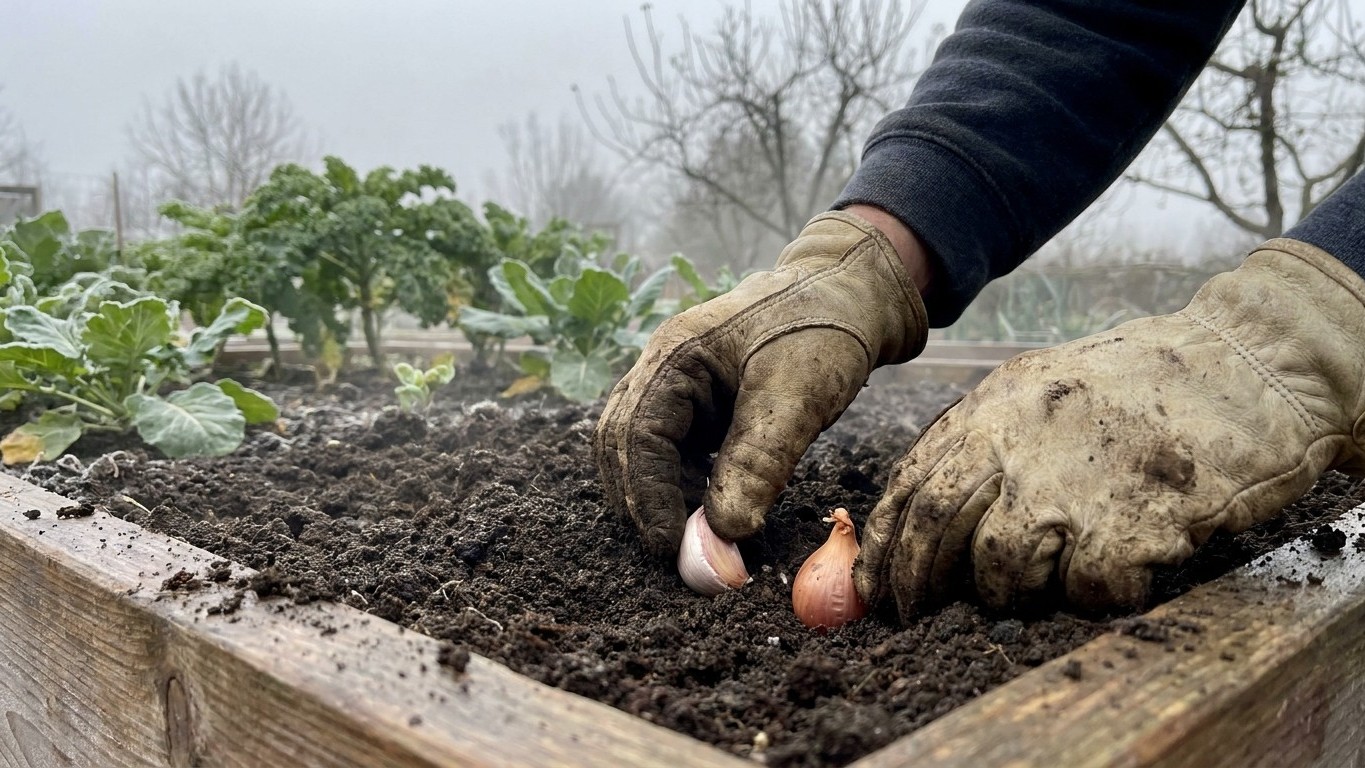

January in Louisiana means garlic and shallot sets still going into workable ground, hardy greens holding on in the garden, and satsumas and navel oranges coming off the tree. It also means watching the sky, because this state’s freeze risk this month is real but unreliable, and that combination trips up more gardens than a hard winter ever does.
What goes in the ground in January

The number that matters here isn’t the calendar, it’s the freeze probability. Based on 1991-2020 NOAA climate normals for a reference coastal station, the first fall freeze in south Louisiana falls somewhere between December 17 and January 8, and the last spring freeze doesn’t wrap up until January 18 to February 8. Read that again: those two windows nearly touch. January sits right in the gap, or just past it, depending on where in the state a garden sits. A 32°F freeze shows up in only 86.8 percent of years at that station, meaning roughly one winter in seven brings no freeze at all. That’s not a green light. It means six years out of seven, something does freeze, and the plants in the ground need to tolerate it.
Given that, hardy crops are the safe bet. Collards, mustard, turnips, kale, and spinach can go in as transplants or direct-seeded where soil is workable. English peas tolerate a light frost and often go in this month across the southern half of the state. Onion transplants and sets, plus garlic and shallot cloves, still go into beds that drain well, since standing winter water rots bulbs faster than cold ever will. Radishes and carrots can be direct-sown in south Louisiana where the ground hasn’t turned to soup after rain.
What doesn’t go in: tomatoes, peppers, beans, squash, corn, and anything else that came from a warm-season seed packet. Soil temperature, not air temperature, decides germination, and January soil is too cold to sprout them even on a mild afternoon. North Louisiana, sitting in the cooler end of the state’s 8a to 10a hardiness range, sees more reliable hard freezes than the coastal station data above reflects, so gardeners there should treat this month as firmly dormant-season and lean on cold frames or low tunnels for anything green.
| Crop | January status |
|---|---|
| Collards, kale, mustard, turnips | Direct sow or transplant where ground is workable |
| English peas | Direct sow, tolerates light frost |
| Garlic, shallots, onion sets | Still plantable in well-drained beds |
| Radishes, carrots | Direct sow in south Louisiana |
| Tomatoes, peppers, beans, squash | Hold off, soil too cold |
What to start under cover
Everything warm-season starts indoors this month, counted backward from that spring freeze window of January 18 to February 8. Tomatoes, peppers, and eggplant typically need 8 to 10 weeks under lights before they’re sturdy enough to transplant, which puts a seed tray start in early to mid-January for a transplant date once the freeze window has closed at that gardener’s location. Because the window itself spans three weeks depending on where in the state a garden sits, the safest approach is to start from the later end of the range and adjust once local conditions are known, rather than assume the earliest date applies everywhere.
Cole crops for a spring harvest, broccoli, cabbage, and cauliflower, can also go under cover now for transplanting a few weeks ahead of the tomatoes, since they tolerate a light frost after hardening off. Onion seed, if not using sets or transplants, needs an early start too, since onions are slow from seed and need months of growth before bulbing triggers in daylength.
Two ways this goes wrong. Start too early, and warm-season transplants sit under lights for weeks past their prime, turning leggy and rootbound in a 4-inch pot long before the ground and air are ready for them. Start too late, and there’s a different problem specific to this state: Louisiana’s real limiting factor isn’t the frost window, it’s the summer heat that shuts down tomato and pepper fruit set once nighttime temperatures climb. A transplant that goes in a month late doesn’t just risk frost, it risks running out of productive season before July heat takes over.
| Crop | Weeks indoors before transplant |
|---|---|
| Tomatoes, peppers, eggplant | 8 to 10 weeks |
| Broccoli, cabbage, cauliflower | 5 to 7 weeks |
| Onions from seed | 10 to 12 weeks |
What is ready to pick
Citrus carries this month in south Louisiana. Satsumas and navel oranges are at or past peak, and a light frost actually sweetens the fruit rather than ruining it, as long as the tree itself was protected during any hard freeze. That’s one of the genuine perks of gardening in zones 9a and 10a: a harvest window most of the country doesn’t get in January at all.
Beyond citrus, the garden is leaning on what was planted back in fall. Collards, kale, mustard, and turnip greens all improve in flavor after cold snaps, and repeated light picking of outer leaves keeps the plant producing for weeks. Carrots and beets sown earlier can stay in the ground and be pulled as needed rather than harvested all at once, since cold soil holds them better than a refrigerator does. Cold-frame lettuce and parsley, cilantro, and other cool-tolerant herbs are still cutting.
Stored crops need a check-in too. Sweet potatoes, winter squash, and stored onions should get a hands-on inspection this month, since one soft or moldy piece in a bin can spread to the rest within a couple of weeks. Pull anything showing a soft spot, dark patch, or sprouting before it takes down its neighbors, and use it first rather than composting good food.
The jobs that matter this month
Dormant pruning tops the list for deciduous fruit like figs, peaches, and pears, since cutting them back while they’re leafless and inactive means less stress and a cleaner view of the branch structure than waiting for spring growth to hide it. Citrus is the exception: hold off pruning satsumas and oranges until freeze risk has clearly passed, since fresh cuts and new flush growth are more cold-sensitive than established wood.
Freeze protection for citrus deserves its own line item, since Louisiana’s freeze window runs right through this month and a single hard freeze can undo years of tree growth. Mulching the trunk base, having covers or blankets ready, and watering trees the day before an expected freeze (moist soil holds heat better than dry soil) are worth doing before the first cold snap, not during it.
Seed ordering matters now too. Popular varieties, especially heirloom tomatoes and disease-resistant peppers suited to Gulf Coast humidity, sell out of catalogs by late winter, and ordering early beats scrambling for a substitute in March. This is also the month to pull out last season’s notes and plan crop rotation, since planting the same family in the same bed two years running builds up soil-borne disease pressure that shows up as a mystery wilt come summer.
Round out the list with soil testing (a $10-15 kit or a sample sent to the state extension lab tells a gardener more than a guess ever will), turning the compost pile so it doesn’t go anaerobic over winter, sharpening and oiling pruners and hoes before the spring rush, and walking fence lines and raised bed frames now while there’s time to repair them before planting season crowds out the work.
What not to do in January
The most common mistake in this state is trusting a warm afternoon. A 72°F day in the middle of January feels like spring, and it tempts gardeners into direct-sowing tomatoes or beans a full six weeks early. The soil hasn’t caught up to that afternoon warmth, and a freeze is still possible for weeks afterward given that the spring frost window doesn’t close until sometime between January 18 and February 8. Seeds either rot in cold soil or germinate into seedlings that get killed by the next cold front.
The second mistake follows the first: uncovering citrus, tender herbs, or cold frames after a few mild days, then getting caught when temperatures drop again. That one-in-seven-year mild winter is real, but it means six years out of seven bring a freeze severe enough to matter, and there’s no way to know in advance which kind of winter this one will be. Keep protective covers within reach through the whole month.
Third, skip the nitrogen fertilizer on lawns and dormant perennials right now. Nitrogen pushes soft, tender new growth, and that new growth is exactly what a freeze damages worst. Wait until active spring growth is underway and the freeze risk has genuinely passed. Last mistake: working wet soil. Louisiana’s winter rains leave beds saturated, and tilling or digging in soggy soil compacts it into clumps that take a full season to break back down.
Checking this against your own county
A statewide answer is a starting point, not an instruction. Louisiana’s hardiness range spans zones 8a to 10a, and the frost data above comes from one coastal reference station, meaning north Louisiana around Shreveport experiences colder, more reliable freezes than the numbers cited here suggest, while the far southern coast rarely sees ice at all. Elevation barely factors into it in this flat state, but latitude does, and that alone can shift planting dates by several weeks between the north and south ends of Louisiana.
For local frost data and a planting calendar tuned to a specific parish, the LSU AgCenter is the state’s land-grant extension service and the best next stop.
Common questions
Can I plant tomatoes outdoors in Louisiana in January?
No. Soil is too cold for germination or for transplants to establish, and the spring frost window doesn’t close until between January 18 and February 8 depending on location. Start seed indoors now instead, for transplanting once that window passes locally.
Does Louisiana really get freezes in January?
Yes, in most years. NOAA climate normals show a 32°F freeze occurring in 86.8 percent of years at the reference coastal station, meaning about one winter in seven skips a freeze entirely. North Louisiana sees freezes more reliably than that coastal figure reflects.
What vegetables can I harvest in a Louisiana garden in January?
Overwintered collards, kale, mustard, and turnip greens, plus carrots and beets left in the ground from fall plantings. Citrus, especially satsumas and navel oranges, is the standout harvest for south Louisiana this month.
Should I prune my citrus trees in January?
Hold off. Fresh cuts and the new growth they trigger are more vulnerable to cold than established wood, and January still falls within the freeze window in much of the state. Wait until freeze risk has clearly passed before pruning satsumas or oranges.