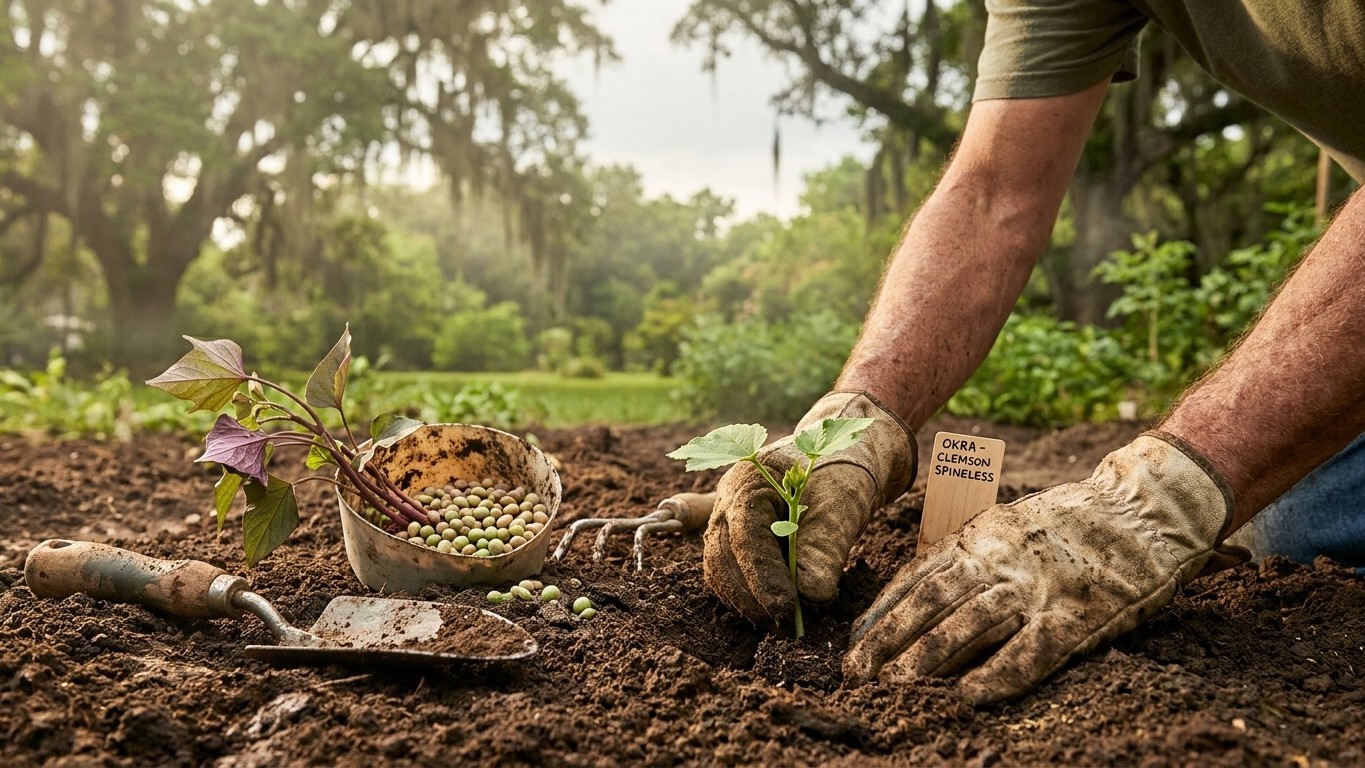

June in Louisiana isn’t a frost question at all, it’s a heat question. With the last spring freeze already months behind (mid-January through early February, per NOAA) and the next one not due until deep in the following winter, the calendar risk disappears and a different one takes over. Okra, southern peas, sweet potato slips, yard-long beans, hot peppers, eggplant, Malabar spinach and luffa all go in now, chosen because they shrug off 95-degree afternoons rather than because they dodge a frost date.
What goes in the ground in June

The mechanism that matters this month isn’t the freeze-probability chart, it’s soil temperature and how a plant’s roots and pollen handle sustained heat. Louisiana’s hardiness zones run from 8a in the north to 10a along the coast (USDA Plant Hardiness Zone Map, 1991-2020 normals), and by June soil across nearly the entire state has been above 75°F for weeks. That’s plenty warm for germination, so the decision isn’t “is it warm enough” but “is it too hot for this particular crop to set fruit or avoid bolting.”
Southern peas (cowpeas, black-eyed peas, purple hulls) are the classic June direct-sow crop statewide, tolerant of heat and drought once established. Okra goes in the same week, soaked overnight to speed germination in the hard July heat that’s coming. Sweet potato slips get set into raised, loosened soil now for a fall harvest. Yard-long beans and Malabar spinach, both far more heat-forgiving than their temperate cousins (regular pole beans and standard spinach), fill the gap where a typical garden would otherwise sit idle. Hot peppers and eggplant transplants, started earlier under cover, move outside once nighttime lows stay reliably above 65°F, which they do statewide by June.
What to skip planting now
Snap beans, cucumbers and summer squash can still go in during the first half of the month in north Louisiana, but in the southern parishes they’re racing squash vine borer and blossom drop from heat stress. Sweet corn planted this late is a gamble anywhere in the state; earlier successions from April and May are the ones that’ll actually fill an ear.
What to start under cover
Because the state’s first fall frost doesn’t arrive until December 17 through January 8, counting backward from that date the way a northern gardener would makes no sense here, the window it implies is far too generous and would leave brassicas trying to head in near-90°F September heat. The real target for fall broccoli, cabbage and cauliflower is cooler weather arriving in late September or October, not the frost line itself.
Working backward from that cooler window, seeds started indoors or under shade cloth in June, with a six-to-eight-week head start before transplanting outside in late July or August, land brassica transplants in the ground right as temperatures begin easing. Start too early in an un-air-conditioned space and seedlings get leggy and stressed before they ever see garden soil; start too late and they’re trying to establish roots in soil that’s still baking.
Tomatoes for a fall crop follow the same logic: a second round started under cover in June, protected from direct afternoon sun, gives transplants ready to go out in August once the worst heat starts to break. Bell peppers can follow the same schedule. None of this depends on frost timing at all this time of year, it depends on outrunning the heat rather than outrunning the cold.
What is ready to pick
June is one of the more generous harvest months in Louisiana gardens. Garlic and onions planted the previous fall or winter are bulbing up and ready to pull once their tops yellow and flop over, then need curing in a dry, shaded spot for a couple of weeks before storage. Blueberries hit peak production statewide in June, and a berry that comes off with a gentle tug and shows full color, not just blue skin over a green-tinged base, is genuinely ripe rather than just colored.
Summer squash and zucchini planted in April and May are producing steadily by now, and picking them small (six to eight inches) keeps the plant producing instead of pouring energy into oversized, seedy fruit. Cucumbers should come off the vine every couple of days, since a cucumber left too long turns bitter and signals the plant to slow down. Early tomato varieties set in spring start ripening, snap beans are coming in, and in south Louisiana the first watermelons of the season, thumped for that hollow sound and checked for a yellowed ground spot, are ready toward month’s end.
The jobs that matter this month
Mulching is the single highest-payoff task in a Louisiana June. A three-to-four-inch layer of straw, pine straw or shredded leaves keeps soil moisture from evaporating in triple-digit heat and keeps root zones cooler, which directly affects whether tomatoes and peppers keep setting fruit or drop blossoms. Skip it now and the difference shows up within two weeks as wilting plants and cracked, dry beds.
Staking and caging need to happen before, not after, plants sprawl. Tomatoes, pole beans and cucumbers put on rapid growth in June heat, and a cage set around an already-sprawling plant damages roots and stems that a cage set early would have supported cleanly.
Watering rhythm matters more than watering volume. Deep, infrequent watering in the early morning, aimed at the root zone rather than the leaves, builds deeper roots and reduces the fungal disease pressure that comes from wet foliage sitting overnight in humid air. Afternoon watering in Louisiana summer mostly evaporates before it does any good.
Succession sowing keeps southern peas, okra and beans coming through the season rather than producing one big flush and quitting. Pest scouting matters just as much: squash vine borer, stink bugs, aphids and early tomato hornworms are all active by June, and catching an infestation in its first week is the difference between hand-picking a few pests and losing a whole squash planting. Hurricane season also opens this month, which makes it a reasonable time to check that raised beds and trellising drain well and won’t wash out in a heavy tropical rain event.
What not to do in June
The most common mistake is planting cool-season crops out of habit or leftover seed packets, lettuce, spinach and peas sown now will bolt to seed within days once soil temperatures climb, producing bitter greens instead of a harvest. Save that seed for fall.
Heavy nitrogen fertilizing is another classic misstep at this point in the season. Tomatoes, peppers and eggplant that get a strong nitrogen feeding in June respond with lush green growth and few flowers, since nitrogen pushes foliage at the expense of fruit set. A lower-nitrogen, higher-phosphorus and potassium feed supports blossoms and fruit instead.
Watering shallowly at midday, rather than deeply in early morning, is a habit worth breaking now. It wastes water to evaporation and leaves roots shallow and heat-vulnerable exactly when they need depth to survive the hottest stretch of the year. And uncovering row covers or shade cloth too early on a mild-feeling day is its own trap, a single afternoon of full, unshaded sun on tender transplants can scorch leaves that took weeks to grow.
Checking this against your own county
A statewide June guide is a starting point, not a fixed instruction. Louisiana stretches from the Arkansas line to the Gulf Coast, and that distance moves both hardiness zone (8a in the north, up to 10a near the coast) and the practical heat load a garden faces by several weeks in either direction. A garden in Shreveport and a garden in Houma are not on the same clock in June. For a planting calendar built around a specific parish, and for current freeze and heat advisories, the LSU AgCenter is the reliable state-level source to check against.
Common questions
Is it too hot to plant tomatoes in Louisiana in June?
New tomato transplants set out in early June can still work in north Louisiana, but sustained heat above roughly 90°F causes blossom drop statewide, which is why many gardeners shift to starting a fall crop under cover this month instead of transplanting more tomatoes outright.
Can I still plant okra this late in the season?
Yes, okra is one of the most reliable June direct-sow crops statewide precisely because it thrives in the heat that stresses other vegetables, and it can be succession-sown again in July for continued production.
Why do fall brassicas get started indoors in June?
Because Louisiana’s first fall frost doesn’t arrive until mid-December at the earliest, the real deadline for broccoli and cabbage isn’t frost, it’s getting transplants into the ground before the cooler weather of late September closes in, which means starting seeds under cover six to eight weeks earlier.
What’s the biggest risk to a June garden in Louisiana?
Heat stress and water management outrank pest and disease pressure as the top risk this month, since inconsistent or shallow watering combined with high temperatures causes blossom drop, bolting and stunted root development faster than any single insect or fungus does.