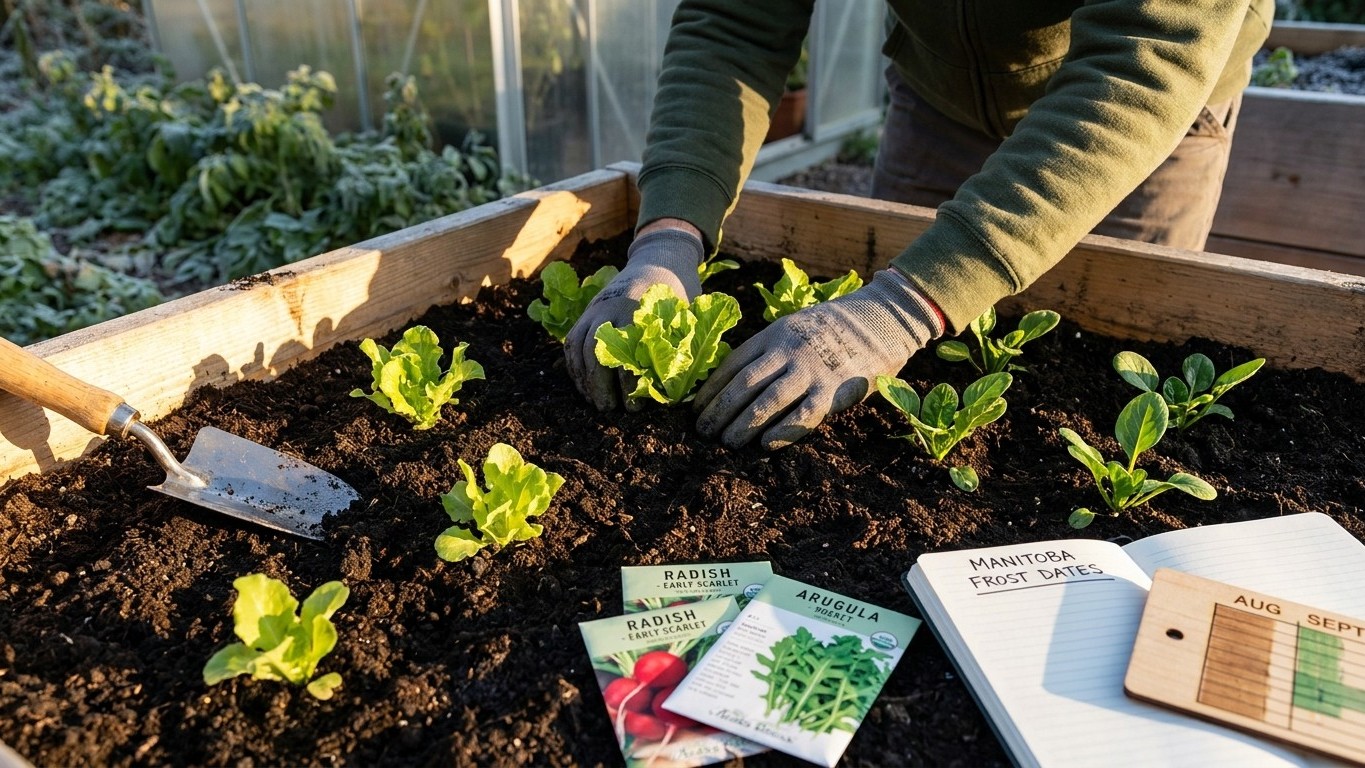

August in Manitoba sits inside the frost-free window, not at its edge. With the last spring frost averaging May 23 and the first fall frost averaging September 22 at Winnipeg, gardeners still have roughly six to seven weeks of frost-free growing left at the start of the month. That’s enough time for fast crops, harvest work, and fall prep, but not enough for anything that needs a full season to mature.
What goes in the ground in August

The math that matters here isn’t the calendar, it’s the countdown to September 22. That date is a mean, not a guarantee, so treat it as the midpoint of a range rather than a line you can plant right up to. In one year out of two, frost at the Winnipeg Richardson station arrives later than that date; in the other, it can arrive earlier. Anything you direct-sow in early August needs to reach a usable stage in 40 to 55 days to have real margin. By late August, that window shrinks to three to four weeks, and only crops that mature in 25 to 35 days still make sense.
Early August still allows a second round of bush beans if you choose a quick 50-day variety, along with more peas where soil hasn’t overheated. Radishes, spinach, arugula, baby lettuce, turnips, and green onions are the safest bets through most of the month because they size up fast and tolerate the cool nights that start creeping in by late August. Beets sown now will likely give you greens before roots size up fully, which is still a usable harvest.
What doesn’t belong in the ground this month is anything warm-season that hasn’t already been growing for weeks. Tomato, pepper, squash, and melon transplants set out now won’t have time to produce before frost risk climbs in September. If you’re tempted by warm afternoon air in early August, remember that soil temperature and the shrinking frost-free window decide the outcome here, not how the day feels.
Garlic is often the crop gardeners ask about this month, and the honest answer is: not yet. Manitoba’s typical garlic planting window falls later, after the soil starts to cool in fall, so August is better spent sourcing seed garlic and prepping the bed than putting cloves in the ground.
What to start under cover
Counting backward from September 22 changes what’s worth starting indoors or under a cold frame this month. If a fall lettuce or Asian green transplant needs three to four weeks to size up before it goes outside, and then another three to four weeks in the ground before frost, early August is close to the last practical start date for anything destined for open soil. Past mid-August, cover becomes less a bonus and more a requirement, since a cold frame or low tunnel buys back one to three weeks of season by trapping daytime heat and blocking the first light frosts.
The two failure modes here are opposite but equally common. Start too early in a warm room and quick crops like lettuce bolt or get leggy before they even reach the garden, wasting the head start. Start too late, past the point where the plant can reach usable size before the frost-free window closes, and you end up hardening off a transplant with nowhere productive to go. The safer play in Manitoba is to treat early August as the cutoff for anything you intend to transplant outdoors unprotected, and to shift to sowing directly under cover for anything after that.
This is also the month to start thinking about cover crops for beds that are finishing up. Fall rye and clover, sown as space opens, use the remaining frost-free weeks to establish roots before winter, protecting soil that would otherwise sit bare through a prairie winter.
What is ready to pick
August is peak harvest across most of southern Manitoba. Bush and pole beans, peas, zucchini, cucumbers, and the first new potatoes (dug young, before the vines die back) come off steadily through the month. Garlic planted the previous fall is typically pulled once the lower leaves brown, then cured in a dry, airy spot for a couple of weeks before storage. Onions follow a similar pattern: once tops flop over and yellow, they’re ready to lift and cure.
Tomatoes started early indoors under Manitoba’s short season begin ripening through August, though a run of cool nights can slow the process considerably. Saskatoon berries and early raspberries usually finish their main flush earlier in summer, but late raspberry canes can still be producing into August in a good year.
Knowing when something is actually ready matters more than a calendar date. Beans should snap cleanly, not bend. Zucchini is best picked at 6 to 8 inches, before the skin toughens. New potatoes are ready once the plant flowers, but for storage potatoes, wait until the vines die back naturally. Garlic pulled too early won’t cure properly, and garlic left too long in the ground tends to split its wrapper and store poorly.
The jobs that matter this month
Succession sowing is the job that costs you the most if it slips. Every week in early August that passes without a new round of quick greens or radishes going in is a week of harvest you won’t get back before frost. Set a simple rule: keep sowing fast crops until the calendar tells you there isn’t time left for them to mature before the September frost window.
Watering rhythm matters more in August than almost any other month, since this is typically the hottest stretch of the Manitoba growing season and root zones dry out fast under full sun. Deep, infrequent watering beats a light daily sprinkle, especially for fruiting crops like tomatoes and squash that are actively filling out.
Staking and support should already be in place by now for indeterminate tomatoes, tall peas, and heavy-fruited squash vines, but if it isn’t, do it immediately rather than waiting for a wind event to flatten the bed. Mulching around these same plants helps hold soil moisture and keeps weed pressure down while everything is growing hard.
Pest scouting deserves a walk through the garden every few days. Grasshoppers build up through prairie summers and can strip young leaves fast, cabbage worms target brassicas, and Colorado potato beetle larvae can defoliate a potato patch in days if missed early. Catching any of these in the first week saves the crop; catching them in the third week often doesn’t.
Garlic and onion curing, once harvested, needs airflow and shade, not direct sun, or the bulbs can scald and rot in storage later. Weeding before anything sets seed also pays off directly, since a weed that flowers in August is a weed problem for several seasons after.
What not to do in August
The most common mistake is planting warm-season transplants because the weather finally feels reliably warm. By the time August air feels settled, the frost-free window is already closing, and tomatoes, peppers, or melons started now simply won’t have the six to eight weeks they need to produce before the season ends.
A related error is uncovering cold frames or row covers too early after a mild stretch, assuming the risk has passed. Since September 22 is a mean date and not a guaranteed one, a cold snap can arrive well before it in some years, catching exposed tender crops off guard.
Feeding heavy nitrogen late in the month is another trap. It pushes soft new leaf growth right when plants should be shifting energy into ripening fruit and hardening off for the season ahead. That soft growth is also the most attractive to aphids and the most vulnerable to an early cold snap.
Letting garlic and onions sit in the ground too long after their tops die back is a smaller but real mistake too, since both can rot or split if left past their point of readiness, especially after a rain. Pull, cure, and store on schedule rather than by convenience.
Checking this against your own county
Everything above is built on data from a single station, Winnipeg Richardson International Airport, and Manitoba is not one climate. Elevation, distance from Lake Winnipeg, and simple latitude between the province’s south and north push frost dates by weeks in either direction. A garden near Brandon or in the Interlake region won’t share the same August window as one in Winnipeg’s suburbs, and northern districts run well behind both. The Canadian hardiness zone rating of 3b cited for the reference city is also specific to that location and its own seven-variable climate model, not a province-wide figure, and it doesn’t convert directly to the USDA zones used elsewhere in the U.S. For local frost records and a province-specific planting calendar, Manitoba Agriculture is the reliable next stop.
Common questions
Is it too late to plant vegetables in Manitoba in August?
Not for fast crops. Radishes, spinach, lettuce, and turnips sown in early August still have time to mature before the average September 22 frost. Warm-season crops like tomatoes or squash are too late to start now.
When should garlic actually go into the ground in Manitoba?
Garlic planting typically happens later in fall, once soil has started to cool, not in August. August is better used to source seed garlic and prepare the bed.
How reliable is the September 22 frost date for planning harvests?
It’s a mean date from Environment and Climate Change Canada’s 1981-2010 normals for the Winnipeg Richardson station, meaning frost arrives later than that in roughly half of all years and earlier in the other half. Treat it as a midpoint, not a safe deadline.
What’s the single most useful job in the Manitoba garden this month?
Keeping up with succession sowing of quick greens and staying ahead of pest scouting, since both directly determine how much harvest you get before the frost-free window closes.