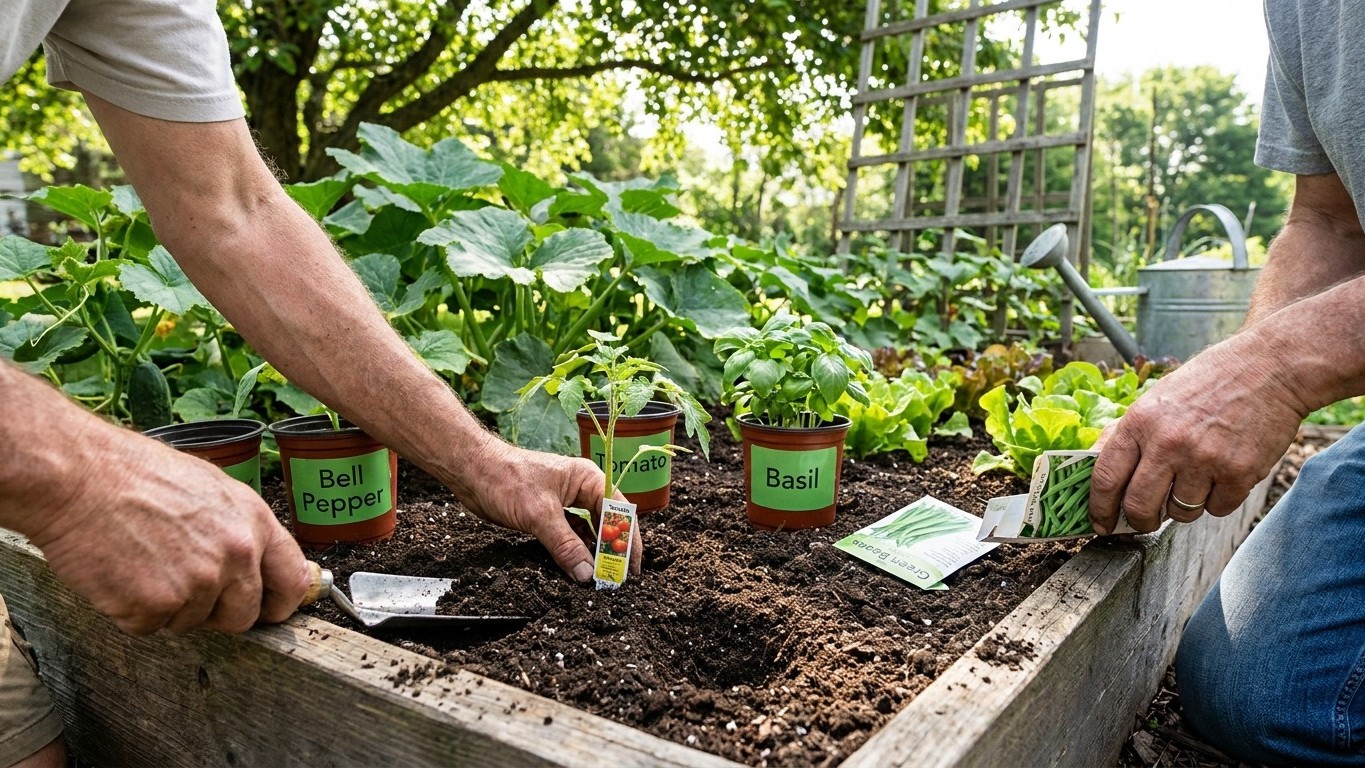

By June, Massachusetts gardens are past the frost line and running on soil warmth, not the calendar. This is the month to fill remaining bed space with warm-season crops, keep succession sowings going for beans and salad greens, and get transplants like tomatoes and peppers into their final spots if that has not already happened.
What goes in the ground in June

The last spring frost at Boston’s Logan Airport, the state’s official climate station, falls between April 1 and April 8 based on 30-70% freeze-probability normals. That means by June, the entire state has almost certainly cleared its frost window, including the Berkshires and colder inland valleys that lag behind the coast by a couple of weeks. Soil temperature, not the date on the wall, is what actually decides whether a seed germinates or a transplant sulks. Warm-season crops want soil consistently above 60°F at planting depth, and by June that threshold has usually been met across the state.
This is the month for direct-sowing bush and pole beans, sweet corn, cucumbers, summer and winter squash, melons, and okra where the season allows it. It is also prime time to set out tomato, pepper, and eggplant transplants if they were not already in the ground in late May, along with basil, which sulks badly in cool soil and does far better once nighttime lows settle.
Succession sowing matters more in June than in almost any other month. Lettuce, spinach, and other cool-season greens planted now will often bolt in summer heat, so gardeners who want a steady salad supply should sow small batches of heat-tolerant lettuce varieties every couple of weeks rather than one large planting. Carrots, beets, and bush beans also take well to repeat sowing through June, staggering the harvest into July and August.
Root crops like carrots and beets can still go in from seed, and it is the last realistic window for main-crop potatoes in most of the state if they were not planted earlier in spring. Sweet potato slips, which need genuinely warm soil, go in now rather than in May almost everywhere in Massachusetts.
What to start under cover
Most of the classic indoor seed-starting work for the season, tomatoes, peppers, eggplant, has already happened by June, since those transplants need six to eight weeks of indoor growth before the April frost window clears. But starting under cover is not finished for the year. Counting backward from the first fall frost, which lands between November 3 and November 14 at the Logan reference station, still leaves a long runway for a second round of transplants.
Fall broccoli, cabbage, and other brassicas are typically started indoors in June for transplanting out in July or early August, giving them roughly 10 to 12 weeks to mature before frost shuts things down. Winter squash and pumpkins destined for October harvest can also be started in cell trays now if garden space is tight, then moved out once a spot opens up.
The two failure modes are worth naming plainly. Start fall brassicas too early in June’s first week under indoor lights with no hardening-off plan, and they get leggy and stressed before they ever see soil. Wait until late June or July to even think about it, and there may not be enough weeks left before the fall frost window to bring a full head of cabbage or broccoli to size, especially in the cooler Berkshire and western valley zones where autumn cold arrives sooner than at the coast.
A cold frame or unheated hoop house is useful in June mainly for hardening off, not for warmth, since outdoor temperatures rarely require season-extension protection this time of year.
What is ready to pick
June is when the garden starts paying rent. Cool-season crops planted in April, spinach, radishes, and the earliest lettuce, are typically ready through the first half of the month, before longer days and rising heat push them toward bolting. Once a lettuce plant sends up a central seed stalk, the leaves turn bitter fast, so harvest is a race against the calendar as much as anything.
Overwintered or early-spring garlic scapes, the curling flower stalks that hardneck garlic sends up, are a distinctly June crop. Cutting them not only gives an early harvest but redirects the plant’s energy into bulb size ahead of the July garlic harvest.
Strawberries hit their peak in most of Massachusetts during June, and the signal for readiness is simple: fully red color all the way to the cap, since strawberries do not ripen further once picked. Peas, both snap and shelling types planted in April, also come in through June; pods are ready when they fill out but before they lose their bright green color and start to look dull or leathery.
Rhubarb stalks harvested in June should still be firm and at least 10 to 12 inches long; stop pulling by early summer to let the plant rebuild energy reserves for the following season. Herbs like chives, mint, and early basil can be cut regularly now, which encourages bushier growth rather than a single late-season flush.
The jobs that matter this month
Staking, mulching, and watering rhythm
Tomatoes, peas, and pole beans grow fast enough in June heat that staking or trellising needs to happen before plants sprawl, not after. A tomato left unstaked for even a week or two develops a sprawling growth habit that is nearly impossible to correct later without breaking stems. Mulching beds now, once soil has warmed, locks in moisture before summer heat arrives and suppresses the weed flush that June’s combination of sun and warm soil reliably triggers.
Watering rhythm matters more in June than earlier in the season because roots on new transplants are still shallow. A deep soak two or three times a week generally beats a light daily sprinkle, since shallow watering trains roots to stay near the surface where they dry out fastest.
Pest scouting and succession planning
June is when early pest pressure shows up: flea beetles on brassicas and eggplant, aphid colonies on new growth, and the first squash bugs or cucumber beetles on cucurbits. Checking the undersides of leaves weekly catches infestations while a simple hand-removal or row cover still solves the problem, rather than after populations have exploded.
This is also the month to think ahead rather than just react. Ordering seed for fall crops, if it was not done earlier, avoids the scramble in July when popular brassica and lettuce varieties sell out. Side-dressing heavy feeders like corn and squash with compost or a balanced fertilizer once they are established supports the growth spurt already underway. And keeping a simple log of what went in where pays off in the fall when planning next season’s crop rotation.
What not to do in June
The most common June mistake is trusting air temperature over soil temperature. A run of warm, sunny days can feel like permission to plant heat-loving crops like peppers, melons, or sweet potatoes, but if the soil itself has not caught up, seeds rot before germinating and transplants stall for weeks. Checking soil temperature with an inexpensive probe thermometer a few inches down beats guessing from how warm the air feels on skin.
Overwatering is another June trap, particularly right after a rainy stretch. Adding irrigation on top of already-saturated soil starves roots of oxygen and invites fungal problems like root rot, especially in raised beds with poor drainage. Letting the top inch or two of soil dry between waterings, checked by hand rather than by calendar, is a better guide.
Nitrogen timing trips up a lot of gardeners with tomatoes and peppers in June. Heavy nitrogen feeding once plants are flowering pushes lush green foliage at the expense of fruit set, delaying harvest and sometimes reducing it. A lower-nitrogen, phosphorus-and-potassium-leaning feed once flowering starts supports fruit development instead of leaf growth.
Finally, letting cool-season greens sit too long in June heat without harvesting is a quiet loss. Lettuce and spinach that bolt do not come back; pulling them for a final harvest and replacing with heat-tolerant greens or a warm-season crop makes better use of the bed than hoping they recover.
Checking this against your own county
The frost windows and hardiness range cited here come from the Logan Airport climate station in Boston, the mildest, most coastal spot in Massachusetts. Inland suburbs, the Connecticut River Valley, and especially the Berkshires run measurably colder, with later spring frosts and earlier fall ones, and their USDA hardiness zone can sit closer to 5a rather than the 7a-7b found along the coast. Elevation and distance from the moderating effect of the ocean both shift these dates by real weeks, not days.
Gardeners who want numbers specific to their own town should check the University of Massachusetts Amherst Extension service, which maintains region-specific planting guidance for the state.
Common questions
Is June too late to plant tomatoes in Massachusetts?
No. Tomato transplants set out in June still have the entire summer growing season ahead of them before the first fall frost, which arrives between November 3 and November 14 at the coastal reference station. Inland areas with earlier fall frosts leave a somewhat shorter window, but June transplanting is still well within range statewide.
Can I still direct-sow lettuce in June in Massachusetts?
Yes, but rising heat pushes lettuce toward bolting faster than in spring. Choosing heat-tolerant varieties and sowing in partial shade or small, frequent batches produces better results than a single large June sowing.
What vegetables should I avoid starting from seed indoors in June?
Tomatoes, peppers, and eggplant started indoors in June will not have time to reach a useful transplant size before outdoor conditions are already ideal for direct planting or nursery transplants; those should have started six to eight weeks before the April frost window. Fall brassicas are the better indoor-starting candidates this month.
Does the USDA hardiness zone matter for June planting decisions?
Not much directly, since hardiness zones measure average annual extreme minimum winter temperature, not spring planting timing. It matters more for choosing perennials, fruit trees, and shrubs suited to a given part of the state than for deciding when to sow June’s annual vegetables.