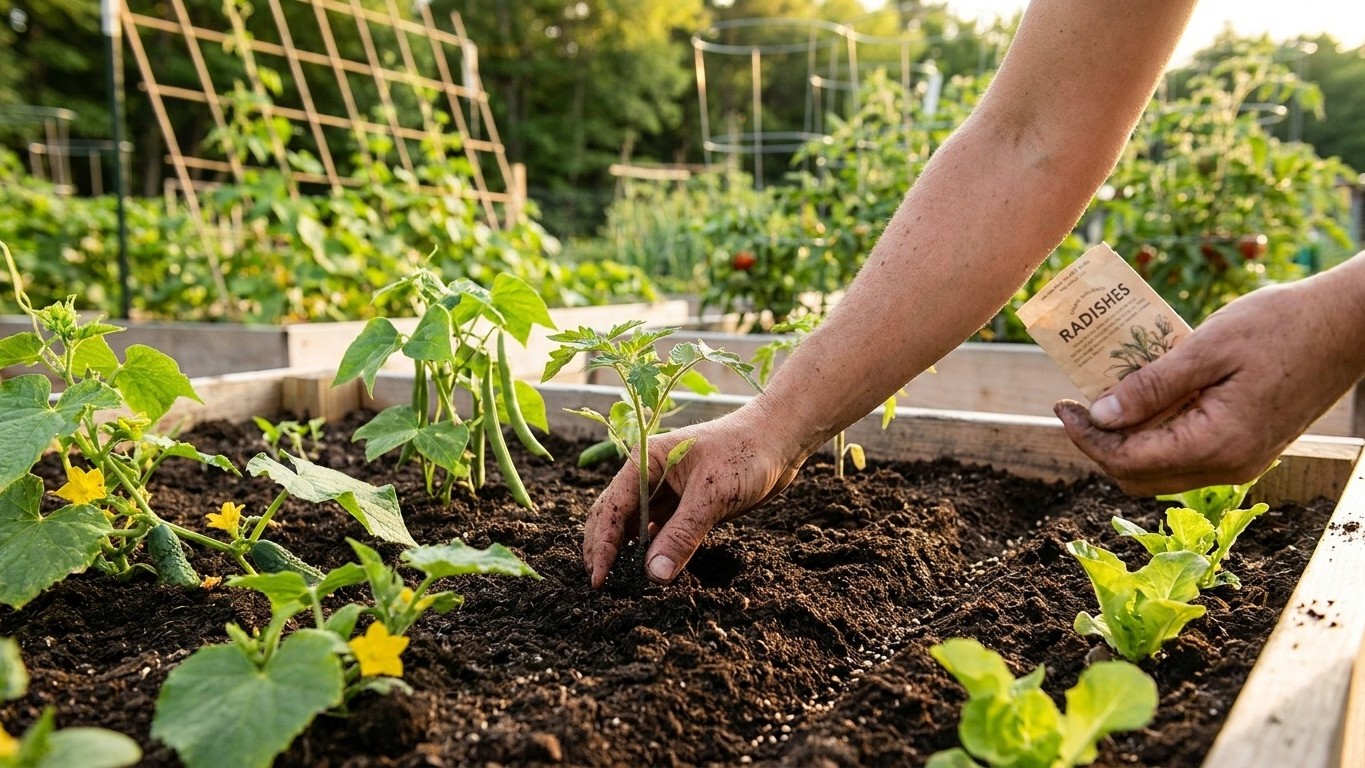

July in Massachusetts sits deep in the frost-free stretch, months past the last spring freeze and months before the first fall one, so the answer is simple: keep sowing fast crops, get transplants in for fall, and stay ahead of the harvest. The real work this month is timing the last safe sowings and keeping up with what’s already producing.
What goes in the ground in July

The last spring frost at the Boston reference station lands between April 1 and April 8, and the first fall frost doesn’t arrive until November 3 to November 14. That leaves a wide window, but by July it’s shrinking fast for anything with a long days-to-maturity count. Soil temperature stopped being the limiting factor months ago. The question now is arithmetic: how many days does a crop need, and does that number fit before frost shows up in your particular county.
Direct sowing is still very much on the table. Bush beans, cucumbers, and summer squash all go in fine through early and even mid-July in most of the state, since they mature in 50 to 65 days. Beets, carrots, and a second round of lettuce for a fall harvest work well sown now too, especially with a bit of afternoon shade to keep the soil from cooking the seedlings. Quick greens like arugula and mustard can go in through the whole month.
Transplanting is where the gamble starts to show. Tomatoes and peppers set out in early July can still ripen a decent crop along the coast, but push it past mid-month and you’re racing a clock that inland growers, especially in the Berkshires where hardiness zone runs closer to 5a, may not win. Fall brassicas (broccoli, cabbage, cauliflower) are a better bet as July transplants, since they tolerate cool weather at the finish line rather than needing to beat it.
What’s a genuine gamble: full-size pumpkins and storage winter squash sown from seed in late July. Those need 90 to 100-plus days, and stacked against a November frost window that can arrive as early as the 3rd in some spots, there’s little room for a cool, wet stretch to throw off the math.
What to start under cover
Fall brassicas are the main project under cover this month. Broccoli and cabbage typically need 60 to 80 days to harvest from transplant, plus another three to four weeks as seedlings before they’re ready to go out. Counting backward from the November 3 to November 14 frost window, seed started under cover in early to mid-July gives transplants that go into the garden in mid-August with enough runway to mature, even allowing for a slow finish in a cooler fall.
Fall lettuce and spinach benefit from starting in cell trays under light shade cloth rather than direct in open soil, since summer heat pushes both crops to bolt before they ever form a head. Started under cover, seedlings stay cooler and more even, then transplant out once the worst heat breaks in August.
The two ways this goes wrong are familiar to anyone who’s done it a few times. Start too early, with no ventilation and full afternoon sun on the tray, and seedlings get leggy and stressed before they ever reach the garden, or they bolt while still in the cell. Start too late, especially for anyone gardening in the cooler inland counties where frost tends to arrive ahead of the coastal average, and the transplant goes into the ground with too few weeks left to size up before cold shuts things down. Splitting the difference, sowing brassicas the first two weeks of July, covers most of the state without much risk either way.
What is ready to pick
July is when the garden starts paying rent. Garlic planted the previous fall comes out this month, and the signal is the lower third of the leaves turning brown while the top stays green; pull too early and the bulbs are small, too late and the wrappers split. Early potatoes are usually ready for a first dig once the plants flower.
Peas are wrapping up as the heat builds, so pick the last pods before vines go crisp and pull them to make room for a fall crop. Summer squash and zucchini need daily attention once they start, since a fruit left two extra days on the vine can double in size and turn woody. Cucumbers follow the same rule: pick at 6 to 8 inches rather than letting them yellow and go bitter.
Blueberries and raspberries hit their stride in Massachusetts through July, and green beans start coming in steadily, best picked while pods still snap cleanly rather than bend. Late in the month, the earliest tomatoes and first sweet corn plantings start to ripen, especially for anyone who transplanted or direct-sowed early. Herbs like basil and cilantro are ready for regular cutting, which also keeps them from bolting in the heat.
The jobs that matter this month
Succession sowing is the job that separates a garden that produces through September from one that peaks in July and quits. Every two to three weeks, another short row of beans, beets, carrots, or lettuce keeps the harvest coming instead of arriving all at once and then stopping.
Staking, watering, and mulch
Tomatoes, pole beans, and cucumbers sprawling on the ground by mid-July are much harder to stake without breaking stems, so cages and trellises need to go in while plants are still manageable. Watering rhythm matters more in July than any other month: aim for roughly 1 to 1.5 inches a week, delivered in one or two deep soakings rather than a daily sprinkle, and water in the morning so foliage dries before evening, since Massachusetts summer humidity makes fungal disease spread fast on wet leaves overnight. A 2 to 3 inch mulch layer holds that moisture and keeps weeds from competing during the hottest stretch of the year.
Pest scouting
Squash vine borer, Japanese beetle, and tomato hornworm all peak in July in the Northeast. Checking the base of squash stems for sawdust-like frass, and the undersides of tomato leaves for hornworm droppings, catches problems while hand-picking still works, before an infestation needs anything stronger.
Heavy feeders like corn and squash benefit from a side-dressing of nitrogen once they’re a foot or so tall, timed to support the growth spurt before flowering rather than after.
What not to do in July
The most common mistake is treating a hot afternoon as license to plant anything, anywhere, in full sun. Lettuce and spinach sown in open, unshaded soil in July will bolt to seed within days rather than forming a usable head; they need cell trays or row cover with shade cloth to make it through the month.
Letting mature vegetables sit on the plant is the second big one. Zucchini, cucumbers, and beans left unpicked for even a few extra days signal the plant to stop producing, since its job (making seed) is already done. Daily or every-other-day picking keeps yield up through the rest of the season.
Watering in the evening feels convenient but leaves foliage wet overnight in Massachusetts’ humid July air, which is exactly the condition that fungal diseases like powdery mildew and early blight need to spread. Morning watering, even if it means getting out there before work, cuts that risk substantially.
Finally, don’t push high-nitrogen fertilizer on tomatoes and peppers once they’re flowering. Nitrogen late in the season drives leafy growth at the expense of fruit set, leaving a plant that looks lush but produces less than a leaner one would.
Checking this against your own county
Every date in this piece comes from a single coastal station near Boston, the mildest spot in the state, so treat it as a starting point rather than an instruction. Elevation and distance from the coast shift both frost dates by weeks: inland valleys and the Berkshires, sitting in the cooler end of the state’s 5a to 7b hardiness range, tend to see frost earlier in fall and later in spring than the coastal average suggests. For a planting calendar built around your specific county, the University of Massachusetts Amherst Extension service is the resource to check.
Common questions
Is it too late to plant tomatoes in Massachusetts in July?
Early July transplants can still ripen along the coast, but the later in the month you go, the tighter the race against fall frost becomes, especially inland where cooler zones give up growing season sooner.
What vegetables can I still direct-sow in July in Massachusetts?
Bush beans, cucumbers, summer squash, beets, carrots, and quick greens like arugula and lettuce (with some afternoon shade) all work well sown directly through most of the month.
When should I start fall broccoli and cabbage seeds?
Early to mid-July, under cover, gives transplants ready to go into the garden by mid-August with enough time to mature before the first fall frost.
Why is my garlic ready to harvest in July?
Garlic planted the previous fall matures on a schedule tied to day length and soil warmth, and it’s ready once the lower third of the leaves has browned while the upper leaves stay green.