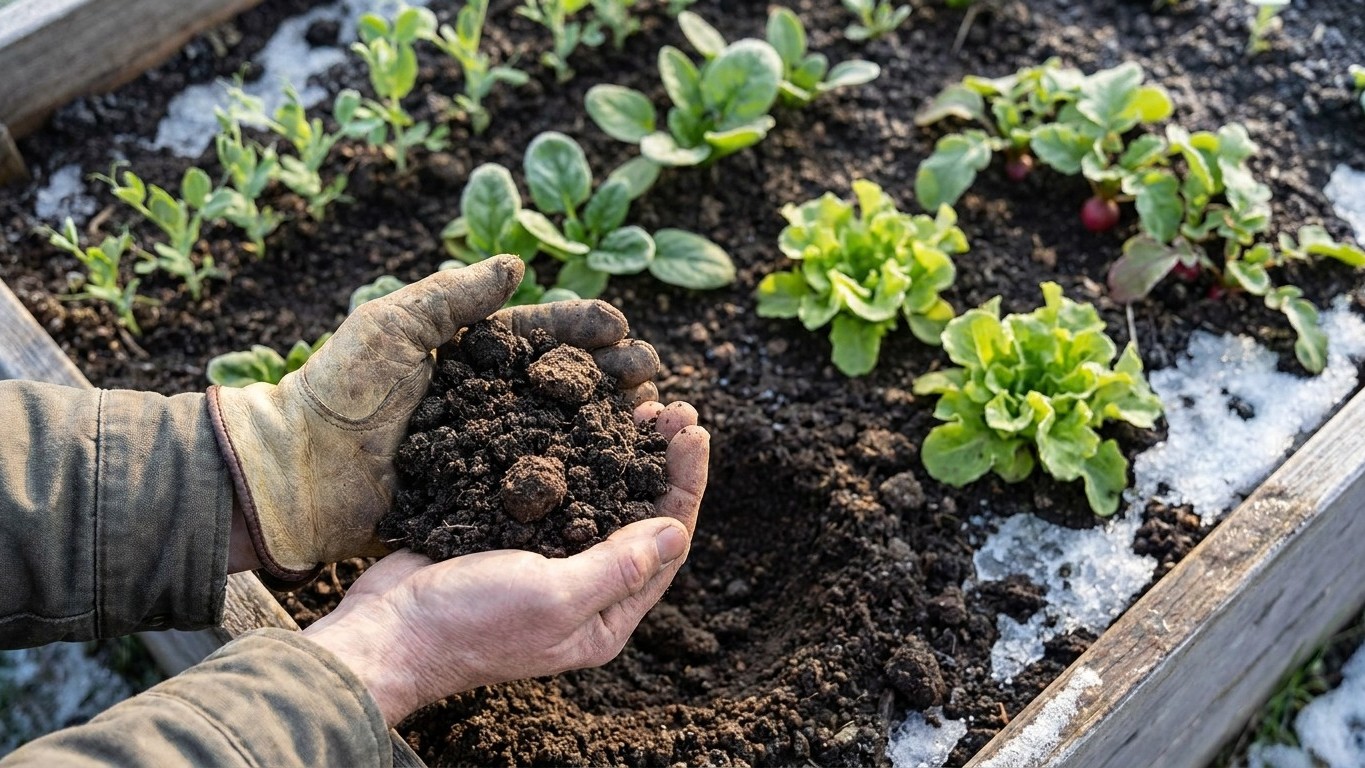

Minnesota’s April is a transition month, not a planting month for most of the garden. Cold-hardy crops like peas, spinach, lettuce, radishes, and onion sets can go into the ground in southern Minnesota toward the end of April if the soil has dried out, but frost risk lingers into the last week of the month even in the Twin Cities. Everywhere north of the metro, keep the trowel in the shed a little longer.
What goes in the ground in April

Soil temperature decides this month, not the date on the calendar. NOAA’s 1991-2020 Climate Normals put the last spring frost for the Twin Cities between April 17 and April 30, based on 32°F freeze probabilities. That’s a window, not a deadline, and it only applies to the mild southern part of the state. Northern Minnesota runs two to three weeks tighter at both ends, which means growers up there should treat late April the way the Twin Cities treats early April: still frozen ground, still a real freeze risk, still too early for anything but the toughest crops.
In the early part of the month, most Minnesota soil is either still frozen a few inches down or waterlogged from snowmelt. Neither condition is workable, and pushing seed into cold, wet ground usually means rot before germination. Wait for the soil to crumble in your hand rather than clump like clay.
Once the ground dries and warms toward the back half of April, southern Minnesota gardeners can direct-sow a short list of genuinely cold-tolerant crops: peas, spinach, lettuce, radishes, and mustard greens all germinate in cool soil and shrug off a light frost. Onion sets and shallot sets can go in the same window. Seed potatoes are a judgment call near the end of the month in the south, better held until early May farther north. Garlic planted the previous fall is already pushing up green shoots by now and needs nothing but a look to confirm it survived winter.
What doesn’t belong outdoors yet: tomatoes, peppers, beans, squash, cucumbers, and anything else that dies at 32°F. A warm afternoon in the 60s doesn’t change the soil temperature six inches down, and a late-month freeze inside that April 17-30 window will kill tender transplants overnight. A cold frame or a low tunnel over hoops can buy a week or two of protection for hardy greens and let you push the season slightly, but it doesn’t turn April into frost-free planting weather.
What to start under cover
Work backward from the frost window instead of forward from a fixed date. If the last frost for your area falls between April 17 and April 30, count back the number of weeks a given crop needs before it’s ready to move outside, and that tells you when to start seed indoors, no matter what the calendar says.
Tomatoes and peppers need roughly six to eight weeks of indoor growth before they go into the garden, and since they can’t go outside until well after the last frost date (usually into late May in Minnesota once soil has truly warmed), starting them in April is already late in southern counties and about right farther north. If you’re starting tomato or pepper seed for the first time this month, expect smaller transplants at setting-out time rather than the leggy, rootbound plants that come from a February start with no place to go.
Crops that transplant out later, like winter squash, melons, and cucumbers, only need three to four weeks indoors, so starting them in mid-April lines up well with a late-May move outside. Start them any earlier and they outgrow their pots before the ground is warm enough to take them.
The two failure modes are mirror images of each other. Start too early and you get pale, stretched seedlings tangled in a rootbound cell pack, stressed before they ever see soil. Start too late and the plant never has time to fruit before the first fall frost arrives, which NOAA’s data places between October 11 and October 23 for the Twin Cities. Count the weeks both directions and the sweet spot usually reveals itself.
What is ready to pick
Outdoors, April offers little in most of Minnesota. Anything still standing from fall, like overwintered kale or leeks that made it through the snow, can be checked as the ground thaws, and a hard freeze the night before doesn’t ruin them the way it would a summer crop. Cold-frame greens planted the previous fall or very early in spring may be ready for a light cutting if they’ve had enough light and warmth to size up.
Indoors is where the fresh food actually comes from this month. Sprouts and microgreens started on a windowsill or under a grow light are ready within one to two weeks of sowing and give a reliable green harvest while the garden itself is still bare. Forced rhubarb, brought in from a dormant crown and kept in the dark and warm, can produce tender stalks weeks ahead of what the outdoor plant will offer once it emerges.
April is also the month stored crops start to turn, so a walk through the root cellar or basement shelf earns its keep. Squash with a soft spot or a sweet smell near the stem end is on its way out and should be used first. Potatoes that have started sprouting eyes are still edible once the sprouts are removed, but they’re losing quality fast. Onions gone soft at the neck or sprouting green shoots belong in the next meal, not back on the shelf.
The jobs that matter this month
April rewards the gardener who treats it as prep month rather than planting month, and there’s plenty of real work with a real deadline attached.
Before the trees leaf out
Dormant pruning of fruit trees and berry canes needs to happen before buds swell and break, because cuts made after leaf-out cost the plant stored energy it needed for the season. This is also the last reasonable window to finish any bare-root planting of trees, shrubs, or canes, since they establish best while still dormant and the soil is workably moist.
Soil and structure
As soil dries enough to walk on without leaving footprints in mud, this is the moment to test it and work in compost or amendments before anything goes in the ground. Raised beds that heaved or cracked over winter need repair now, and any fencing or trellis damaged by snow load should get fixed before plants need the support. Turning the compost pile, now that it’s thawed and workable, speeds up finished compost for use later in the season.
Tools, seed, and planning
Cleaning and sharpening tools takes an afternoon and saves frustration all season. If seed hasn’t been ordered yet, popular varieties sell out fast once the ground actually opens up elsewhere in the country, so this is a real deadline, not a suggestion. It’s also the last calm window to sketch out crop rotation for the coming season, before the rush of actual planting crowds out planning time. Finally, a second check of stored crops for rot, on top of the harvest check above, protects the rest of the stash from one bad squash spoiling its neighbors.
What not to do in April
The most common mistake is planting warm-season crops into cold soil because a stretch of 60-degree afternoons feels like spring has arrived. Air temperature and soil temperature are not the same thing, and seed or transplants set into soil that’s still in the 40s will sit and rot rather than grow, even if the frost date has technically passed.
Working the soil while it’s still wet is a close second. Minnesota’s clay-heavy soils compact hard when tilled or dug wet, creating dense clumps that take the rest of the season to break back down. Wait for the squeeze test: grab a handful, and if it holds together in a slick ball, it’s too wet to work.
Pulling mulch off perennial beds too early, chasing a warm spell, exposes crowns and emerging shoots to the next cold snap, which can undo an entire winter’s worth of insulation in one night. Leave winter mulch in place until new growth is clearly pushing through and the frost window has genuinely closed for your area.
Nitrogen fertilizer applied before roots are actively growing mostly washes away or feeds weeds rather than the crop it was meant for. Hold off until plants are established and visibly putting on growth, then feed with intention rather than on a fixed schedule.
Checking this against your own county
A statewide frost window is a starting point, not an instruction for your particular yard. Elevation, distance from Lake Superior or the smaller lakes that dot the state, and simple north-south position all shift these dates by weeks in either direction. The April 17-30 last-frost window and the October 11-23 first-frost window both apply to the Twin Cities; northern Minnesota gardeners should expect both windows to run two to three weeks tighter, meaning a later last frost in spring and an earlier first frost in fall.
The University of Minnesota Extension service tracks these regional differences in far more detail than any statewide figure can, and it’s worth checking their county-level guidance before committing seed to soil.
Common questions
Can I plant tomatoes outdoors in Minnesota in April?
No. Tomatoes are killed by frost, and the last frost window for even the mild Twin Cities area runs from April 17 to April 30. Start tomato seed indoors instead and plan to transplant outdoors well after that window closes, once nighttime soil temperatures have caught up.
Is it too early to plant peas in Minnesota in April?
Peas are one of the few crops built for exactly this window. They germinate in cool soil and tolerate a light frost, so once the ground has dried enough to work, peas can go in even before the last frost date has passed.
=How do I know if my soil is ready to work in April?
Grab a handful and squeeze it. If it holds together in a slick, muddy ball, it’s still too wet and needs more drying time. If it crumbles apart loosely, it’s ready for digging, amending, or seeding.
Does the USDA hardiness zone tell me when to plant in April?
Not directly. The USDA Plant Hardiness Zone Map, which places Minnesota between zones 3a and 5a, is built on one variable: average annual extreme minimum winter temperature. It tells you which perennial plants can survive winter in your area, but it says nothing about spring frost timing, which is what actually governs April planting decisions.