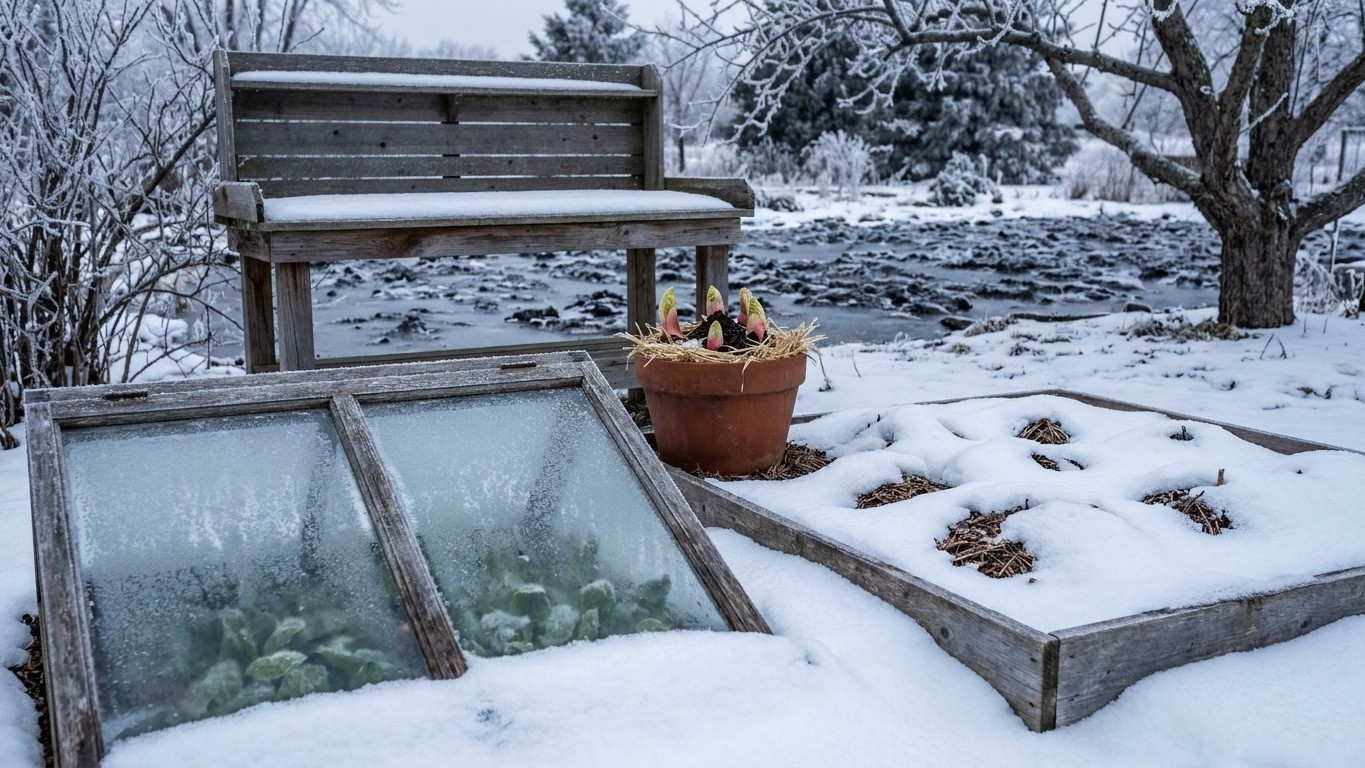

Nothing goes into open ground in Minnesota in January. The soil is frozen solid, often a foot or more down, and the state’s hardiness range of 3a-5a means the ground won’t soften until well into spring. What this month actually offers is forcing, cold-frame management, indoor starts for the slowest crops, and the planning work that decides how the rest of the season goes.
What goes in the ground in January

The decision here isn’t the calendar page, it’s soil temperature and the frost window behind it. Minnesota’s last spring frost falls between April 17 and April 30 across the Twin Cities area, and northern counties run two to three weeks tighter on both ends. That gap between now and a workable, thawed bed is the whole story for January.
So the honest answer is that direct sowing and outdoor transplanting are both off the table this month. No peas, no hardy greens, no alliums going into open soil, because there is no open soil to speak of. What’s left is narrower, but real.
Garlic and shallots that went into the ground back in fall are already tucked under their mulch layer, and January’s only job with them is leaving that mulch alone, not adding to the planting. If a cold frame or low tunnel was set up before freeze-up with a hardy crop already established underneath, spinach or mache that sprouted in fall, it can keep limping along through the coldest weeks, protected but not actively planted.
Forcing is where January earns its keep. Rhubarb crowns dug and brought into a dark, cool space (a basement or an unheated but frost-free room works) will push tender pink stalks in a matter of weeks, no soil temperature required. Witloof chicory roots, if you grew or bought them, force the same way into pale, tight heads of Belgian endive. Neither counts as planting in the field, but both put something in the kitchen while the garden sits frozen.
Bare-root fruit trees and cane fruit are worth ordering now, since nurseries sell through their best varieties early, but the actual planting waits for thawed, workable ground, typically weeks after the last frost window closes for good measure with woody stock. January’s role with these is paperwork and patience, not a shovel.
What to start under cover
Indoor seed starting in January is about counting backward from that April 17-30 frost window, not forward from the calendar. The slowest, most patience-testing crops are the ones that earn a January start, because they need ten to twelve weeks of growing before they’re ready to move outside, and even then they go under cover or into a hardened-off transition rather than straight into cold soil.
| Crop | Weeks before last frost | Approx. start window |
|---|---|---|
| Onions (from seed) | 10-12 weeks | Mid to late January |
| Leeks | 10-12 weeks | Mid to late January |
| Celery and celeriac | 10-12 weeks | Mid to late January |
| Artichokes (grown as annuals) | 8-10 weeks | Early to mid February |
Run the math for your own county and you’ll see why this table matters more than a fixed date. Counting twelve weeks back from April 17 lands in late January; counting the same twelve weeks back from April 30 pushes into early February. Northern growers, sitting two to three weeks earlier on their own last-frost range, need to shift this whole table earlier still.
The two ways this goes wrong are opposite problems. Start onions or leeks too early, before the light is strong enough to keep pace with the heat of an indoor setup, and you get leggy, rootbound seedlings sitting in cell trays for months, stressed before they ever see a garden bed. Start them too late, treating January like it’s still fall, and you run out of runway. Alliums that don’t get their full ten to twelve weeks under lights rarely bulk up to a decent size before the season turns hot and pushes them into bolting instead of bulbing.
What is ready to pick
Little to nothing is coming out of the open garden in Minnesota this month, and there’s no point pretending otherwise. But a household that put up food in fall isn’t living on nothing.
Kale and leeks left in the ground under a heavy mulch and a blanket of snow can sometimes still be dug out, snow cover acting as its own insulation against the worst of the cold, though a hard-frozen bed may simply refuse to give them up until a thaw. It’s worth checking after any warm spell rather than assuming they’re lost.
Cold frames with fall-sown spinach, mache, or claytonia are the more reliable source of fresh greens this month, since the frame itself buffers the worst of the swings even when the outside air is well below freezing. Harvest sparingly, since growth has essentially stopped and what’s there needs to last.
Indoors, sprouts and microgreens are the fastest fresh food available, ready in days rather than weeks, and they don’t care what the thermometer outside says. A jar of sprouting seeds on a counter or a shallow tray of microgreens under a window solves the fresh-green gap better than anything grown outdoors this month.
Storage crops need a walk-through now, not a wait. Squash, potatoes, and onions kept in a root cellar or cool basement should get checked for soft spots, sprouting, or the sweet smell that signals rot starting. One bad squash left in a bin can take down its neighbors within days, so pulling questionable ones out is cheap insurance.
The jobs that matter this month
January carries real deadlines even though nothing is being planted outside, and skipping them costs the whole season rather than just the month.
- Dormant pruning of apple, pear, and plum trees, along with raspberry and blackberry canes, is best done now while the plants are fully dormant and the structure is easy to see without leaves in the way.
- Seed ordering should happen early, since popular varieties, especially cold-hardy and short-season types bred for a zone 3a-5a growing window, sell out well before the ground thaws.
- Soil testing can be arranged now even if a fresh sample has to wait for thawed ground, so results are back and read before spring planning starts in earnest.
- Rotation planning on paper, mapping which beds held tomatoes, brassicas, or alliums last, prevents the disease buildup that comes from planting the same family in the same spot year after year.
- Tool maintenance, sharpening pruners and hoes, oiling wood handles, cleaning rust off shovels, is a low-cost job that pays back the first week of real fieldwork.
- Structural repairs to raised beds, trellises, and fencing are easier to spot and fix while nothing is growing and the yard is otherwise idle.
None of these are filler tasks. A tree pruned now heals into spring growth cleanly; one pruned after sap starts rising bleeds and stresses. Seed ordered in January arrives in time; seed ordered in March might not arrive before the starting window has already passed.
What not to do in January
The most common mistake this month is starting warm-season crops, tomatoes, peppers, basil, far too early because a mild stretch of weather made spring feel closer than it is. Minnesota’s last frost window doesn’t move because January had a warm week. Seedlings started this early sit indoors for so long under artificial light that they turn leggy and rootbound long before the soil is anywhere near ready to receive them. Wait for the counting-backward math in the section above rather than the mood of the weather.
A related error is uncovering mulch or removing row cover after a January thaw, assuming the worst of winter has passed. It hasn’t. A freeze that follows a thaw is harder on perennial roots and fall-planted garlic than steady cold ever was, because the freeze-thaw cycle heaves soil and can expose roots that were otherwise insulated. Leave winter protection in place until there’s a real, sustained shift in the season, not a single warm afternoon.
Feeding nitrogen this month, whether to indoor seedlings pushed too hard or to dormant perennials outside, is also a mistake. Seedlings fed heavily before they have real root systems put on soft, weak top growth that flops and struggles once transplanted. Dormant plants outside have no use for nitrogen at all right now; it does nothing but wash away or, worse, encourage a flush of tender growth right before the next hard freeze arrives.
Checking this against your own county
Everything above is a starting point built around one climate station, not an instruction for every yard in the state. Elevation, distance from Lake Superior, and simple north-south position shift Minnesota’s frost windows by weeks, not days; the caution built into the frost data here already flags that northern Minnesota runs two to three weeks tighter at both the spring and fall ends than the Twin Cities figures used above.
The University of Minnesota Extension is the right next stop for county-level planting guidance, since it accounts for exactly the local variation a state-wide page like this one can’t.
Common questions
Can I plant garlic in Minnesota in January?
No. Minnesota garlic goes into the ground in fall, several weeks before the ground freezes, so it can root before winter. January’s only garlic job is leaving the mulch layer undisturbed over what’s already planted.
What vegetables can I start indoors in January in Minnesota?
Onions, leeks, and celery are the classic January starts, since they need ten to twelve weeks of indoor growth before the last frost window of April 17-30. Faster crops like tomatoes and peppers should wait, since starting them now leads to leggy, rootbound seedlings.
Is there anything to harvest in a Minnesota garden in January?
Outdoors, very little, though overwintered kale or leeks under snow and mulch can sometimes still be dug after a thaw. Cold frames with fall-sown greens, along with indoor sprouts and microgreens, are the more dependable sources of fresh food this month.
What is the biggest gardening mistake to avoid in Minnesota in January?
Starting warm-season seedlings too early because of a mild stretch of weather. The last frost window doesn’t shift with a warm week, and seedlings started too soon end up weak and rootbound long before the soil is ready for them.