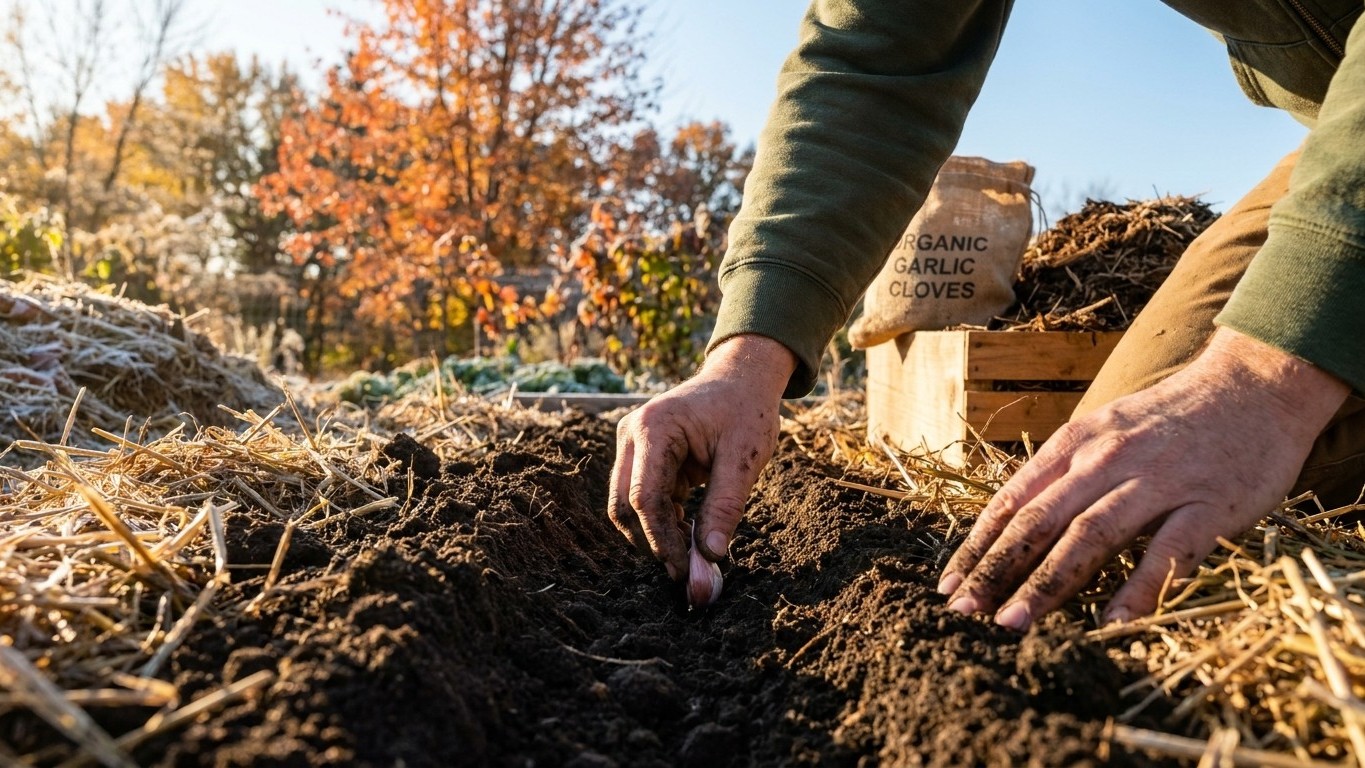

October in Minnesota is garlic month, not seed-starting month. The first fall frost lands somewhere between October 11 and October 23 across the state, so this is the point where new vegetable sowing stops and fall planting of garlic, shallots, and dormant perennials takes over. Anything still in the ground that isn’t frost-hardy needs to come out before that window closes.
What goes in the ground in October

The frost window does the deciding here, not the calendar page. NOAA’s 1991-2020 climate data puts the first fall freeze for the Twin Cities area between October 11 and October 23, and that’s the mild end of the state. Once that freeze lands, tender growth is done for the season. So the real question for early October is whether you’re still ahead of that date or already past it, and that depends on where in Minnesota you’re gardening.
Garlic and shallots are the headline crop this month. Both go into the ground now, roughly four to six weeks before the soil locks up, so the cloves and sets can root before winter without pushing top growth. Plant them in full sun, in soil that drains well, and mulch heavily once the ground starts to firm up. That mulch layer is what gets them through a Zone 3a to 5a winter (USDA Plant Hardiness Zone Map, 2023) without heaving out of the soil.
Bare-root and dormant planting
October is also bare-root and dormant-stock season. Trees, shrubs, and perennials sold bare-root or in dormant form can go in as long as the ground is still workable, meaning you can dig it without fighting frozen clumps. The plant isn’t growing top-side, so it isn’t stressed by cool air the way a leafy transplant would be, and the roots have weeks left to settle before the ground freezes solid.
If you want greens over winter, this is the last call for cold frames and low tunnels. Spinach, mâche, and claytonia sown under cover now can sit through the cold and start growing again as soon as light returns in late winter, well ahead of anything sown in open ground come spring. Forcing rhubarb or chicory indoors, using roots dug and brought into a dark, cool space, is another option for gardeners who want something fresh when the outdoor garden has gone quiet.
What to start under cover
New vegetable starts are essentially over for the season. What’s left under cover this month is about stretching the calendar in both directions rather than launching new crops from scratch.
Hardy greens sown into a cold frame or under a low tunnel now, spinach, arugula, mâche, are working against the freeze window rather than toward it. Count backward from the first frost date for your area rather than from a fixed day on the calendar: if frost typically lands around the third week of October where you garden, seed needs roughly four to six weeks of growth before that point to establish enough root and leaf to survive under cover. Sow later than that and the seedlings stay too small to handle sustained cold, even protected.
The two failure modes here run in opposite directions. Start too early in the fall and the greens grow lush and tender right into the first hard freeze, with no time to harden off. Start too late and germination slows in cooling soil, leaving thin, underdeveloped plants that don’t have the reserves to hold through winter. Neither extreme gets you the early spring harvest a cold frame is supposed to deliver.
Indoors, this is a reasonable month to begin sprouts and microgreens on a windowsill or under a grow light, since they run their whole cycle in one to three weeks and don’t depend on outdoor conditions at all. It’s also a sensible time to pot up any herbs you want to bring indoors for winter, giving them a few weeks near a sunny window before the heat comes on full-time and the air dries out.
What is ready to pick
This is one of the better harvest months of the year, right up until frost changes the picture. Winter squash, pumpkins, and the last of the potatoes should be out of the ground before a hard freeze, since freezing damages the skin and shortens storage life. Carrots, beets, and parsnips actually improve with a light frost, converting starches to sugar, so there’s no rush to pull those the moment temperatures dip, only before the ground freezes solid around them.
Brussels sprouts and kale follow the same logic. A touch of cold sweetens both, so October is often when they taste best, not a reason to harvest early out of nerves. Apples ripening on the tree should come off as they mature rather than all at once; a slight twist that releases the fruit easily from the spur is the simplest test for readiness.
Tomatoes and peppers are the crops on the clock. Once frost is forecast within the October 11 to October 23 window, green tomatoes can be picked and ripened indoors on a windowsill or in a paper bag rather than left to blacken on the vine. Anything still setting fruit outdoors this late usually won’t finish, so there’s little lost in pulling it early.
For stored crops from earlier in the season, this is a good month to check squash, onions, and potatoes in storage for soft spots or sprouting, pulling any that are turning before they spread rot to the rest of the bin.
The jobs that matter this month
October’s real value is in the work that has nothing to do with sowing seed. Garlic planting sits at the top of the list, but there’s a full second tier of tasks that either pay off through winter or cost real ground come spring.
Tender bulbs, dahlias, gladiolus, cannas, need to be dug before a hard freeze hits the soil where they sit, since freezing temperatures at root depth kill them outright. Dig them on a dry day, let them cure somewhere airy for a few days, then store in a cool, dark spot in slightly damp peat or vermiculite.
Mulching perennial beds is worth doing once the ground has cooled but before it freezes solid, since mulch applied too early can trap heat and encourage the kind of late growth that then gets killed by frost anyway. Waiting for that cooldown, rather than mulching by the calendar, protects roots without inviting rot.
Cleanup and planning
Clearing spent plant debris matters more in fall than most gardeners realize, since diseased leaves and stems left in place overwinter as a source of infection for next season. Healthy debris can go to compost; anything showing blight, mildew, or rust should be bagged and removed from the property instead.
This is also the practical window for draining and storing hoses and irrigation lines before a freeze splits them, testing soil so amendments can be worked in while the ground is still open, and cleaning and sharpening tools before they sit unused all winter. Seed catalogs for the following season often start circulating now too, and ordering early avoids missing out on popular varieties that sell through by midwinter.
What not to do in October
The most common mistake is trusting a warm afternoon over the actual soil and forecast conditions. A stretch of 60-degree days in early October doesn’t mean the frost window has moved; NOAA’s climate data still puts the first freeze for the Twin Cities area between October 11 and October 23, and a single warm week doesn’t cancel that out. Tender crops left uncovered on the strength of nice weather can still get hit hard once temperatures drop overnight.
Feeding nitrogen to lawns or perennials late in the month is another classic misstep. Nitrogen pushes soft new growth, and that growth has no time to harden off before cold arrives, which means it dies back anyway and wastes the plant’s stored energy in the process. If soil testing shows a need for fertility, phosphorus and potassium are the safer late-season additions; nitrogen is better saved for spring.
Pruning fruit trees and canes now is also a mistake worth avoiding. Fresh pruning cuts made before trees are fully dormant can stimulate new growth right at the wrong moment, and open wounds heal more slowly in cool, damp fall weather, leaving an entry point for disease over winter. That job is better saved for late winter, once the tree is truly dormant and the growing season is still months off.
Finally, resist uncovering cold frames or pulling mulch after a mild stretch. A few warm days don’t mean winter has backed off, and greens or bulbs exposed too early can lose the protection they need for the next cold snap.
Checking this against your own county
A statewide frost window is a starting point, not a instruction for your specific yard. Elevation, distance from the Great Lakes’ lake-effect zones, and the simple fact that northern Minnesota runs two to three weeks tighter than the Twin Cities on both ends of the season all shift these dates in ways a single state-level range can’t capture. Local microclimates, a south-facing slope, a low spot that collects cold air, a spot sheltered by a windbreak, move things further still.
For a planting calendar built around your specific county, the University of Minnesota Extension is the reliable next stop, with data and guidance calibrated to conditions across the state rather than one reference point.
Common questions
Can I still plant garlic in late October in Minnesota?
Yes, as long as the ground is still workable. Garlic roots best in cool soil before winter sets in fully, and even a late planting usually has enough time to establish before the ground freezes solid, particularly with a mulch layer added after planting.
Should I cover my vegetable garden before the first frost?
Covering only helps crops that can tolerate cold once protected, like leafy greens under a cold frame or row cover. Tender crops like tomatoes and peppers won’t survive a hard freeze even under cover, so harvesting before the frost window arrives is the more reliable move for those.
Is it too late to start a fall cover crop in October?
It depends heavily on how far into the month it is and how far north the garden sits. Cover crops need weeks of growth to establish roots before the ground freezes, so anything sown very late in the month, especially in northern Minnesota, may not get enough of a head start to be worth the seed.
Why do carrots and kale taste better after a frost?
Cold triggers these plants to convert stored starches into sugars as a natural defense against freezing, which is why a light frost tends to sweeten root vegetables and hardy greens rather than damage them, unlike tender crops that have no such defense.
Gardeners who plant by the Moon can check the October 2026 moon planting calendar, a tradition rather than a proven method.
Related guides
Elsewhere? See what to plant in October in every state and province.