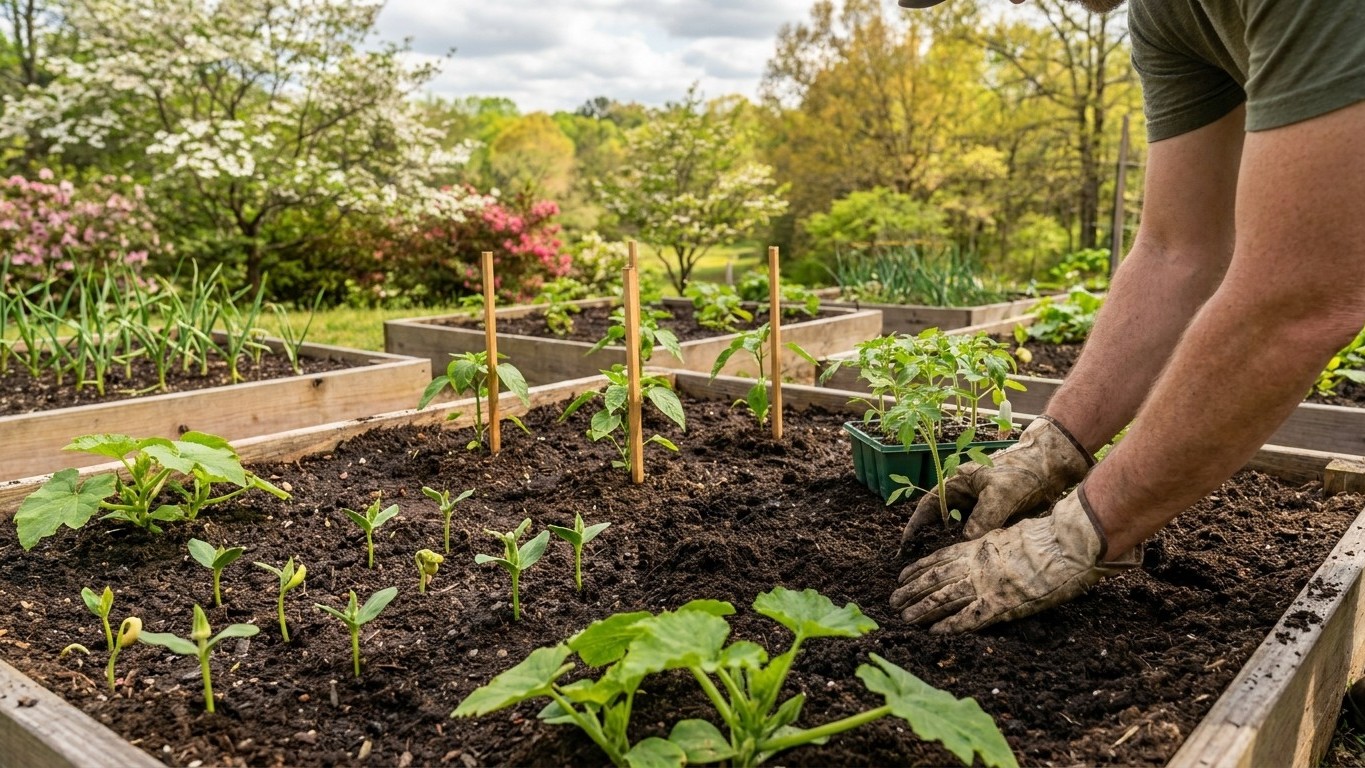

By April, Mississippi‘s last frost window has already closed across most of the state, which means this is one of the busiest planting months of the year. Warm-season crops go into the ground for real this month, cool-season holdovers finish up, and the garden shifts from cautious to full speed almost overnight.
What goes in the ground in April

The reference frost window for the state runs from March 6 to March 22, based on NOAA’s 1991-2020 Climate Normals for the airport station used to calculate these figures. That means by the time April opens, most of Mississippi is past its 30-70% freeze probability window, and soil temperature, not the calendar, becomes the deciding factor for what you plant.
Warm soil is the real gatekeeper. Beans, sweet corn, squash, cucumbers, southern peas, and okra can all be direct-sown once the soil has warmed enough that seeds won’t just sit and rot. Sweet potato slips go in as the danger of a late cold snap fades. Tomatoes, peppers, and eggplant started indoors earlier in the season can move outside as transplants, but only after a proper hardening-off period, not the day the weather forecast looks warm.
Northern Mississippi, sitting in the cooler end of USDA hardiness zone 7b, tends to lag a week or two behind the southern part of the state, which reaches into zone 9a. That gap matters more in April than in almost any other month, because it’s the difference between planting warm-season crops with confidence and planting them into soil that’s still too cold to support good germination.
North vs. south Mississippi in April
| Crop group | North Mississippi | South Mississippi |
|---|---|---|
| Warm-season direct sow (beans, squash, corn) | Mid to late April, once soil has warmed | Early to mid April |
| Tomato/pepper transplants | After hardening off, mid April | Early April, sometimes late March |
| Sweet potato slips | Late April | Early to mid April |
Coastal and far-southern counties can often push a week or two ahead of that window; the hill country and the far north should hold a bit longer, especially in low spots where cold air pools overnight.
What to start under cover
Not everything worth planting in April goes straight into open soil. Melons and winter squash benefit from a head start under cover, since they need a long, steady run of heat before the first fall frost, which lands between November 7 and November 22 for the reference station. Starting them indoors or in a protected cold frame in early April buys extra weeks of growth before they face outdoor conditions.
The arithmetic is simple once you know your own county’s frost pattern rather than relying on a statewide average. Count the weeks a crop needs to reach transplant size, then work backward from the point when your local soil is reliably warm enough to receive it. For gardeners in the cooler northern counties, that means starting a little earlier under cover than someone on the coast, where soil warms faster and transplants can go out sooner.
The two ways this goes wrong are familiar to anyone who’s gardened more than one season. Start too early, and you end up with rootbound, leggy seedlings that sulk for weeks after transplanting, especially peppers and eggplant, which resent being held too long in small containers. Start too late, and warm-season crops with long maturity windows, like winter squash or pumpkins, run out of runway before the fall frost arrives. A second round of peppers or eggplant started under cover in early April, timed for a May transplant, is a reasonable hedge against losing an early planting to a stray cold spell.
What is ready to pick
April harvests in Mississippi lean heavily on what went into the ground back in fall and late winter. Overwintered collards, kale, and mustard greens are at their best right now, often sweeter after exposure to the last cool nights. Spring cabbage planted earlier in the season is sizing up, and any lettuce or spinach that survived the winter is bolting toward its final harvest before the heat pushes it to seed.
Radishes planted in late winter come out fast this month, usually within three to four weeks of sowing, and green onions are ready whenever they reach pencil thickness. Established asparagus beds hit their stride in April, with spears pushing up steadily enough to harvest every day or two during peak flush. Overwintered herbs, cilantro and parsley in particular, are also at their most productive before the first real heat sends them bitter or to seed.
Strawberries planted the previous fall typically start coloring up toward the end of the month in much of the state, earlier in the south. The tell for readiness is simple: berries should be fully red, not just blushed, since strawberries don’t ripen further once picked. For anything still in storage from last season, onions, potatoes, and winter squash, this is the month to check bins for soft spots or sprouting, since warmer indoor temperatures accelerate spoilage.
The jobs that matter this month
April rewards gardeners who stay ahead of the plants rather than reacting to them. Staking and caging tomatoes and peppers now, before they sprawl, saves hours of frustration later and keeps fruit off the ground where rot and pests take hold. Waiting until a plant has already flopped over means fighting stems that have set their growth habit, and that fight rarely ends well.
Mulching goes hand in hand with staking. As temperatures climb, a two to three inch layer of straw or shredded leaves around warm-season crops holds soil moisture steady and keeps weed pressure down before it explodes with the heat. This is also the point to settle into a consistent watering rhythm rather than watering on whim. Deep, less frequent watering builds stronger root systems than frequent shallow sprinkles, especially for newly transplanted tomatoes and peppers still establishing themselves.
Succession sowing keeps the harvest window open instead of collapsing into one glut. Beans, corn, and squash all benefit from staggered plantings every two to three weeks through the month, so the kitchen isn’t flooded with zucchini one week and empty the next. Pest scouting matters just as much right now: aphids, flea beetles, and cutworms tend to show up early on tender new growth, and catching them in the first week is far easier than fighting an established infestation later. A quick walk through the rows every few days, checking undersides of leaves, catches most problems while they’re still small enough to hand-pick or treat with minimal intervention.
What not to do in April
The most common mistake this month is trusting warm air over cold soil. A run of 80-degree afternoons doesn’t mean the ground six inches down has caught up, and seeds planted into soil that’s still cool tend to rot or germinate weakly rather than take off. Checking soil temperature, or simply waiting a few extra days after a warm spell settles in, beats guessing based on the thermometer on the porch.
Hardening off transplants too quickly is the second classic error. Moving tender seedlings straight from a controlled indoor setup into full sun and wind for a whole day can scorch leaves or stunt growth for weeks. A gradual introduction, a few hours outside the first day, building up over a week, gives plants time to adjust their cell structure to handle direct light and temperature swings.
Nitrogen timing trips up a lot of gardeners too. Heavy nitrogen applications right as tomatoes and peppers are setting their first flowers push leafy growth at the expense of fruit set, leaving gardeners with lush, green plants and disappointing yields. Save the heavier feeding for after the first fruit has set, and lean on phosphorus and potassium in the early weeks instead. Uncovering cold frames or row covers too early after a mild stretch is the last trap, since a late cold night can undo weeks of careful protection in a single evening.
Checking this against your own county
A statewide April guide is a starting point, not a fixed instruction. Mississippi stretches across two USDA hardiness zones, 7b in the north and up to 9a along the coast, and elevation, local cold pockets, and distance from the Gulf all shift these windows by a week or two in either direction. The frost dates cited here come from a single reference station, and suburban and rural gardens often see frost linger later in spring than that station shows.
For a planting calendar built around your specific county, the Mississippi State University Extension Service is the most reliable next stop, with local agents who can speak to conditions your zip code actually experiences rather than a statewide average.
Common questions
Is it too late to plant tomatoes in April in Mississippi?
No. April is actually the prime month for setting out tomato transplants across most of the state, since the reference frost window closes by March 22. Northern counties may still want to wait a week or two into the month before transplanting to be safe.
Can I still direct-sow cool-season greens in April?
It’s a narrow window. Lettuce and spinach sown early in the month can still mature before heat triggers bolting, but waiting past mid-April in most of the state risks bitter, quickly-bolted plants rather than a usable harvest.
What’s the biggest risk to warm-season crops planted in early April?
Cold soil, not cold air, is the main threat. Even after the frost window closes, soil that hasn’t fully warmed can rot seeds or stunt young transplants, particularly in northern Mississippi or in shaded, poorly-drained beds.
Do coastal Mississippi gardens really plant earlier than the rest of the state?
Generally, yes. Coastal and far-southern counties sit in the warmer end of the state’s hardiness range and typically see soil warm up a week or two ahead of the hill country and northern counties, shifting planting dates earlier accordingly.